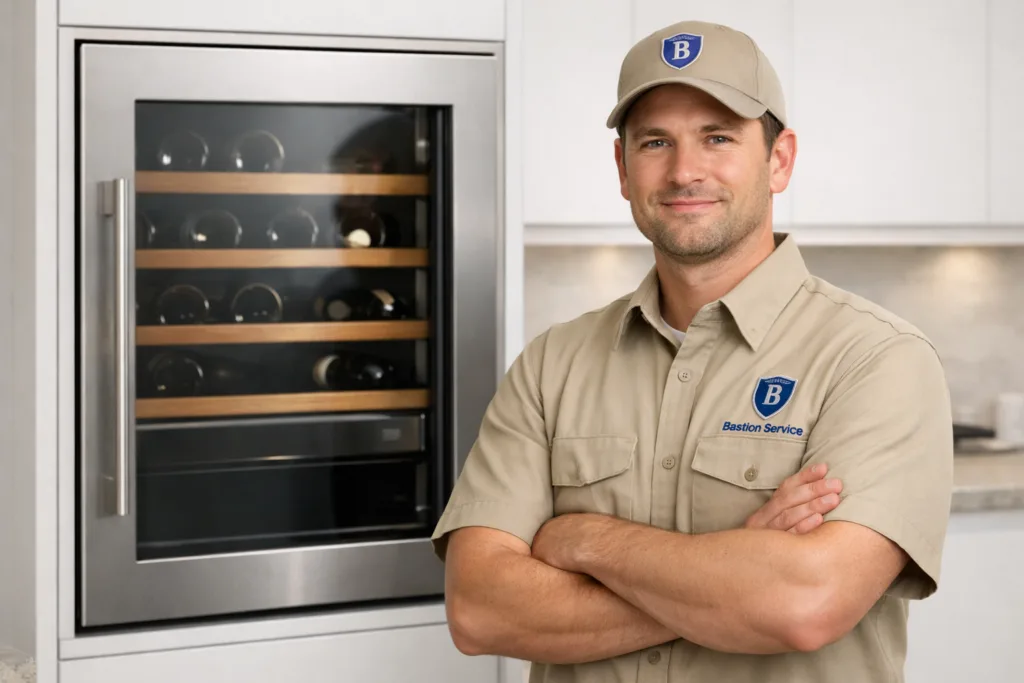
A wine cooler that suddenly stops staying consistent can be frustrating because the symptom you notice first is not always the part that has failed. Weak cooling, extra moisture, fan noise, or an unresponsive display can each come from more than one underlying issue, so it helps to look at the full pattern before deciding on repair.
Common KitchenAid Wine Cooler Problems in Sawtelle Homes
KitchenAid wine coolers are designed to maintain a narrow temperature range with steady airflow and quiet operation. When one part of that system starts slipping, the cabinet often gives early warning signs.
Not Cooling Enough
If bottles are no longer staying at the selected temperature, the problem may involve condenser airflow, a circulation fan, a temperature sensor, a start device, or an electronic control fault. Some units still appear to run normally while the interior stays too warm, which can make the problem easy to miss until the temperature drift becomes more obvious.
This symptom is worth addressing early because a struggling cooling system may run longer than normal, placing extra stress on other components.
Temperature Swings or Overcooling
When the cabinet cycles between too warm and too cold, or when bottles near the back seem colder than the rest of the interior, the issue often points to sensing or control problems. A faulty thermistor, thermostat-related issue, or poor internal air movement can all create uneven storage conditions.
Fluctuation is especially important with wine storage because the appliance may seem to be working, even while the actual cabinet temperature is becoming unreliable.
Fan Noise, Buzzing, or Constant Running
A KitchenAid wine cooler should make some normal operating sounds, but a louder fan, repeated clicking, rattling shelves, or a compressor that seems to run without much rest usually signals a change in performance. In many cases, the source is airflow-related. Dust buildup, restricted ventilation, a worn fan motor, or a door that is not sealing tightly can all force the unit to work harder.
If noise appears together with warmer temperatures, that combination usually deserves faster attention than noise alone.
Condensation or Water Around the Unit
Moisture inside the cabinet, droplets on shelves, or water near the base can come from a blocked drain path, a gasket leak, warm room air entering the compartment, or frost interfering with normal drainage. Condensation problems can seem minor at first, but repeated moisture can lead to odors, shelf wear, and cabinet staining around the appliance.
Control or Display Problems
If the buttons stop responding, the display behaves erratically, or the cooler does not seem to follow the selected setting, the issue may be in the user interface, control board, wiring, or sensor feedback. Control problems can be confusing because they sometimes mimic cooling failures even when the sealed cooling system itself is still functional.
What These Symptoms Often Mean
Wine coolers rely on several systems working together: sensing, control response, airflow, heat removal, and door sealing. A service visit usually focuses on narrowing down which one is failing rather than assuming every warm cabinet has the same cause.
- Cabinet is warm but still running: often tied to airflow restrictions, fan trouble, dirty coils, or early compressor-start issues.
- Cooling is inconsistent: commonly linked to sensor problems, control issues, or uneven air circulation.
- Visible condensation or puddling: may point to drainage problems, gasket wear, or warm air infiltration.
- No response from controls: can involve the display, control board, wiring, switches, or power-related faults.
- Repeated clicking or failed restart: may indicate a start component problem or compressor strain.
Because different failures can create similar symptoms, the most efficient repair path starts with identifying the actual cause instead of replacing parts by guesswork.
When to Schedule Service
It is usually time to schedule service when the cooler no longer holds a stable temperature, runs far longer than it used to, develops ongoing moisture issues, or starts making new noises that continue across multiple cycles. The same applies if the display stops responding correctly or the unit shuts off and struggles to start again.
Many homeowners wait because the appliance is still partly working. With a wine cooler, partial operation can be misleading. A cabinet that is only a little warm or only occasionally noisy may already be compensating for a deeper issue in the fan, controls, or cooling system.
Repair Versus Replacement
Not every KitchenAid wine cooler problem leads to the same recommendation. Repairs are often worthwhile when the issue involves fans, sensors, controls, door seals, drainage, or accessible electrical components. Those problems are typically more direct to isolate and correct.
Replacement becomes more likely when diagnosis finds a major sealed-system problem, a failing compressor, or several age-related issues happening at the same time. In those situations, the decision usually comes down to whether the repair will restore reliable temperature control without leading to more follow-up problems soon after.
A practical repair plan should consider:
- the exact failed component or system
- the overall condition of the wine cooler
- how consistently it has been performing lately
- whether the repair addresses the root cause rather than a side effect
Helpful Checks Before the Appointment
Before service, it helps to note a few details about how the unit is behaving. These observations can make diagnosis faster and more accurate.
- Check the set temperature and compare it with the actual cabinet feel.
- Note whether the display, lighting, and controls are working normally.
- Listen for clicking, buzzing, rattling, or unusually loud fan operation.
- See whether the problem is constant or comes and goes.
- Make sure the door closes fully and the gasket sits flat.
- Confirm the cooler has enough ventilation around it.
Even simple details can help separate a door-seal or airflow issue from a deeper cooling or control failure.
Focused KitchenAid Wine Cooler Repair for Sawtelle Households
In Sawtelle homes, wine cooler problems are usually easiest to solve when the symptom pattern is taken seriously early, before weak cooling turns into a complete loss of temperature control. Whether the issue is fan noise, condensation, control trouble, or a cabinet that will not stay cold enough, the best next step is to identify which system is actually failing and then weigh the repair against the condition of the unit.
That approach helps protect both the appliance and what is stored inside it while avoiding unnecessary parts replacement or temporary fixes that do not last.