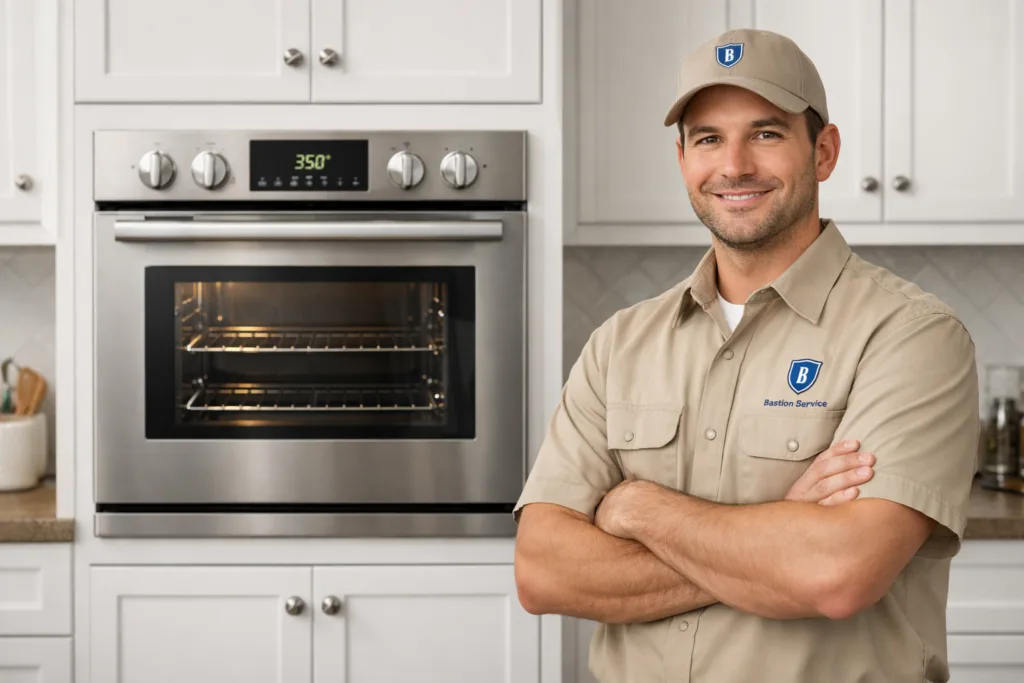
Cooking problems often start subtly. A dish that used to finish on time suddenly needs another ten minutes, the top rack browns too fast, or preheat takes long enough to disrupt the whole meal plan. Those patterns usually point to a specific oven fault rather than normal aging, and identifying the symptom clearly is the best way to narrow down what needs attention.
Common oven issues homeowners notice
In West Hollywood homes, the most frequent oven complaints include no heat, slow preheat, uneven baking, unreliable temperature control, control panel malfunctions, and doors that do not seal the way they should. Some failures happen all at once, while others develop gradually and become obvious only after several disappointing meals.
An oven that runs too cool can leave food undercooked even when the timer looks right. An oven that overheats may burn the outside while leaving the center unfinished. In both cases, the cause can be different from what it appears on the surface. A temperature sensor, heating element, igniter, relay, control board, door gasket, or wiring issue can all affect cooking performance in different ways.
What specific symptoms can mean
Oven not heating at all
If an electric oven stays cold, a failed bake element, broil element, thermal protection component, or control issue may be responsible. On gas models, a weak or failed igniter is a common cause when the oven will not light or takes too long to start heating. If the symptom involves burner heat and oven temperature at the same time, Range Repair in West Hollywood may be the better service path.
Slow preheat
Slow preheat often signals weak heating performance rather than a complete failure. One element may be partially working, the igniter may be drawing current without igniting properly, or the control may not be cycling heat as it should. Homeowners sometimes assume the oven is still functional because it eventually gets warm, but extended preheat usually means the appliance is straining to reach normal cooking temperature.
Uneven baking or roasting
When one side of a tray cooks faster than the other, the issue may involve inconsistent heat distribution, a faulty sensor, poor element performance, or heat loss from the door area. If baked goods are repeatedly coming out too dark on top and too pale underneath, it helps to look beyond recipe variables and consider whether the oven is cycling correctly.
Temperature swings during cooking
Some fluctuation is normal, but wide temperature swings can make everyday cooking frustrating. Meals may finish early one night and run late the next, even with the same settings. That can point to a sensor problem, control board issue, wiring fault, or a heating component that is no longer responding reliably under load.
Door, hinge, and seal problems
A door that will not close evenly can let heat escape and force longer cook times. Worn hinges, a flattened gasket, or alignment problems may seem minor, but they can affect temperature stability across the entire cooking cycle. If the kitchen feels unusually hot during use or the oven seems to run constantly, a poor seal is worth checking.
Display or control failures
A blank display, unresponsive buttons, intermittent beeping, or settings that change on their own can prevent normal use even when the heating system itself is still intact. These issues often involve the user interface, main control, wiring connections, or incoming power. If the unit is installed into cabinetry as a separate built-in appliance, Wall Oven Repair in West Hollywood may be the more accurate service match.
How related cooking appliances can change the diagnosis
Not every cooking complaint belongs to the oven alone. In some kitchens, the symptom starts on the surface cooking area and only seems related to the oven because both appliances are used together. If the trouble is centered on burner ignition, burner temperature, or a cracked glass cooking surface, Cooktop Repair in West Hollywood may be the better place to start.
There are also cases where homeowners use the words oven and stove interchangeably even though the failing parts are tied more closely to the full cooking unit. If the problem includes surface burners, oven heat, and overall cooking performance in one appliance, Stove Repair in West Hollywood may be more relevant.
When to stop using the oven
It is wise to stop using the oven if it trips the breaker, shows persistent error codes, shuts off unexpectedly during cooking, sparks, smells like burning insulation, or has visibly damaged elements or wiring. Continued operation can increase damage and make what started as a manageable repair more expensive.
For gas ovens, any ongoing gas odor should be treated as a safety concern first. The appliance should not be used again until the source of the smell is properly evaluated. Even when the oven still produces some heat, unreliable ignition is not something to ignore.
Repair or replace?
Repair is often the sensible choice when the issue is limited to a defined part failure and the oven is otherwise in solid condition. A bad igniter, failed element, sensor issue, hinge problem, or control component can frequently be addressed without replacing the whole appliance.
Replacement may make more sense when there are multiple failing systems, recurring electrical problems, severe interior damage, or repair costs that approach the value of the unit. The important part is knowing which situation you are actually dealing with. A symptom that looks major can turn out to be a targeted repair, while a small nuisance can sometimes point to broader control or wiring trouble.
What to expect from service in West Hollywood
The most useful appointment starts with the symptom pattern. Does the oven fail during preheat, only at higher temperatures, after self-cleaning, or only on certain settings? Those details help separate heating faults from control issues and seal problems from temperature calibration concerns.
For homeowners in West Hollywood, good oven service means more than getting the appliance warm again for one meal. It means identifying the actual cause, checking whether related components have been stressed, and helping restore reliable everyday cooking performance.