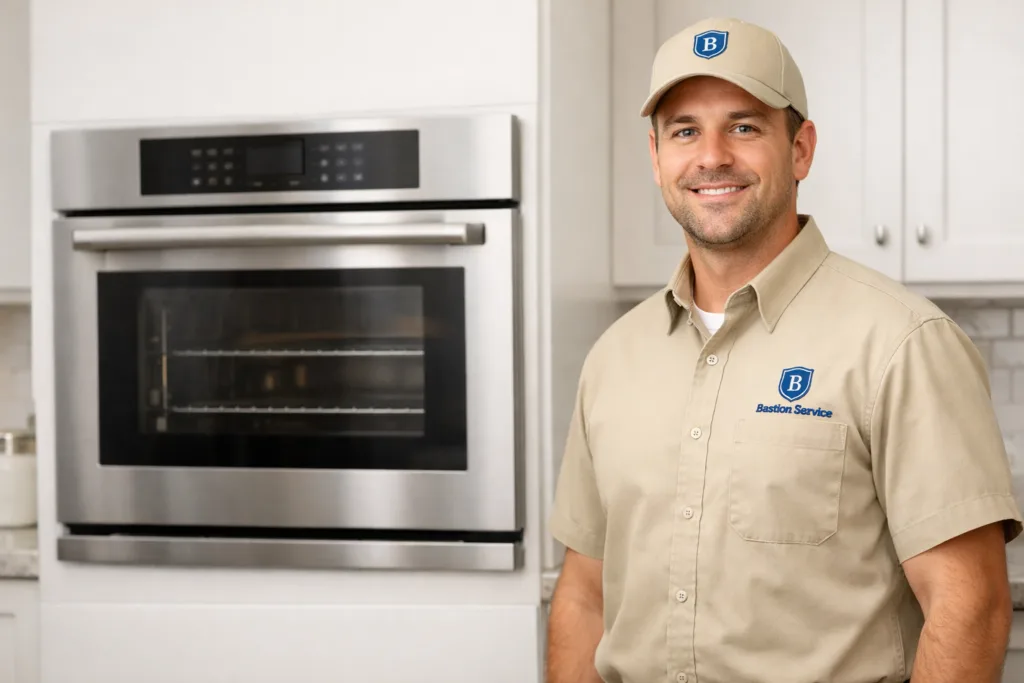
Common Maytag oven issues in West Hollywood homes

Oven problems rarely stay minor for long. A unit that starts out preheating slowly can turn into one that never reaches temperature, cooks unevenly, or shuts down mid-cycle. With Maytag ovens, the same kitchen symptom can come from several different parts, so the most useful approach is to match the behavior to the likely failure points before deciding on repair.
In West Hollywood households, the most common complaints tend to center on heat performance, temperature accuracy, startup failures, and electronic control problems. The details matter. Whether the oven is fully dead, partly heating, or running hotter than the setting changes the repair path significantly.
Oven not heating
If the oven will not heat at all, the cause may be a failed bake element, broil element, igniter, temperature sensor, wiring issue, or electronic control problem. In some cases, the display and lights still work normally, which can make the appliance seem less damaged than it is. That is why a dead-cold oven and a powered-on control panel should be treated as two separate clues, not a contradiction.
On gas models, a weak igniter may glow without actually drawing enough current to open the gas valve properly. On electric models, a damaged element or relay can prevent the oven from producing usable heat even though the cycle appears to start.
Slow preheat
Slow preheat often points to a heating component that is still working, but no longer working well. An electric oven may be operating with one weakened element instead of both heating circuits contributing as expected. A gas oven may have an igniter that has degraded enough to delay ignition. Temperature sensors and control issues can also cause the oven to miss the target range and stretch preheat far beyond normal.
This symptom is easy to ignore because the oven still seems usable. Over time, though, longer preheat can turn into inconsistent cooking and eventual no-heat failure.
Uneven baking and hot spots
When one side of a pan browns faster than the other, cookies bake differently from front to back, or casseroles come out overdone on the edges and underdone in the center, the oven is not distributing or regulating heat correctly. That may involve a drifting sensor, weak element output, calibration problems, or airflow issues inside the cavity.
Uneven baking is especially frustrating because it affects results before the appliance seems obviously broken. Homeowners often adapt by rotating pans more often or increasing cook times, but that usually masks the underlying fault rather than solving it.
Temperature swings or overheating
Some temperature variation during normal cycling is expected, but large swings are not. If the oven burns food at the set temperature, shuts off unpredictably, or seems much hotter than the display indicates, the issue may involve the sensor, control board, relay failure, or a calibration error that has gone beyond simple adjustment.
Overheating matters for more than meal quality. Excess heat can stress door components, interior finishes, nearby wiring, and electronic parts if the problem continues unchecked.
Control panel not responding
If the keypad, knob interface, or display stops responding, the failure may be in the user interface, the control board, the power supply to the control, or a communication fault between components. Sometimes only certain buttons fail. Other times the display is blank, flickering, or resets during operation.
Intermittent control issues should be taken seriously because they can interrupt heating cycles and make the oven unreliable even before it stops working entirely.
Error codes, odors, or shutdowns
Error codes can help narrow the issue, but they are not a complete diagnosis on their own. Multiple faults can trigger similar codes, and some codes are the result of a symptom rather than the root cause. Burning smells, clicking, humming, repeated shutdowns, or visible sparking should not be dismissed as normal appliance behavior.
If there is an electrical odor, charring, or obvious damage inside the oven, it is safer to stop using the appliance until it has been inspected.
Why the symptom pattern matters
Two ovens can both be described as “not heating right” while needing completely different repairs. One may have a failed sensor causing bad temperature feedback. Another may have a control relay sticking intermittently. A third may have an element that is partially failed and only heating under certain conditions.
That is why symptom details are so important. Helpful observations include:
- Whether the oven reaches any heat at all
- How long preheat now takes compared to normal
- Whether the problem affects bake, broil, or both
- If the issue happens every cycle or only sometimes
- Whether the control panel shows an error, resets, or stays responsive
- If the oven is overheating, underheating, or fluctuating between both
Those patterns make it easier to identify whether the likely problem is a heating component, sensor circuit, door-related issue, power problem, or main control failure.
When to stop using the oven
Some faults are annoying but relatively contained. Others can create a bigger repair if the oven keeps running in a failed state. It is wise to pause use when you notice any of the following:
- The oven trips power or shuts off during operation
- Food is burning far faster than expected at normal settings
- There is a burning smell that does not seem related to spilled food
- The bake or broil element shows blistering, separation, or visible arcing
- The door does not close securely or the latch system is malfunctioning
- Error codes return repeatedly after resetting the unit
Continuing to use the appliance in those conditions can increase wear on controls, wiring, and heating parts, and it can make the final repair more involved than the original problem.
Repair versus replacement
Many Maytag oven problems are repairable, especially when the issue is isolated to a common service part such as an igniter, heating element, sensor, switch, or certain control-related components. If the oven is otherwise in solid condition and has been performing well up to this failure, repair is often the reasonable choice.
Replacement becomes more worth considering when the oven has multiple active problems, a history of repeat failures, extensive electrical damage, or a repair total that no longer makes sense for the appliance’s condition. The decision should be based on the actual failure and overall state of the unit, not just age by itself.
For many homeowners in West Hollywood, the turning point is whether the problem is contained and serviceable or part of a broader decline in reliability.
What a focused service visit should accomplish
A useful oven service appointment should do more than confirm that the appliance is not working properly. It should identify which component or system is responsible, explain whether the symptom is likely to worsen with continued use, and clarify whether the repair is straightforward or part of a larger pattern.
That matters because “not heating” is only the starting complaint. The real question is whether the underlying cause is a single failed part, an intermittent control issue, a power-related fault, or something that changes the value of repairing the oven at all.
How to describe the problem before scheduling service
If you are arranging Maytag oven repair in West Hollywood, a few details can make the appointment more productive. Try to note:
- The full model number if it is available
- Whether the oven is gas or electric
- If bake, broil, or both are affected
- Any error code shown on the display
- Whether the oven is cold, slow, uneven, or overheating
- Any recent clicking, humming, sparking, or burning smell
That information helps narrow the likely cause and gives a better sense of whether the problem points to a typical heating repair or a more complex electronic issue.
Getting back to reliable cooking
An oven that cannot hold temperature or start consistently affects everyday cooking fast. Meals take longer, baking becomes unpredictable, and simple routines become harder to plan around. In most cases, the best next step is to identify exactly why the Maytag oven is failing and then weigh the repair against the appliance’s overall condition.
For West Hollywood households, the goal is not just getting the oven to turn on again. It is restoring dependable performance, accurate heat, and confidence that the appliance can handle normal daily use without the same problem returning right away.