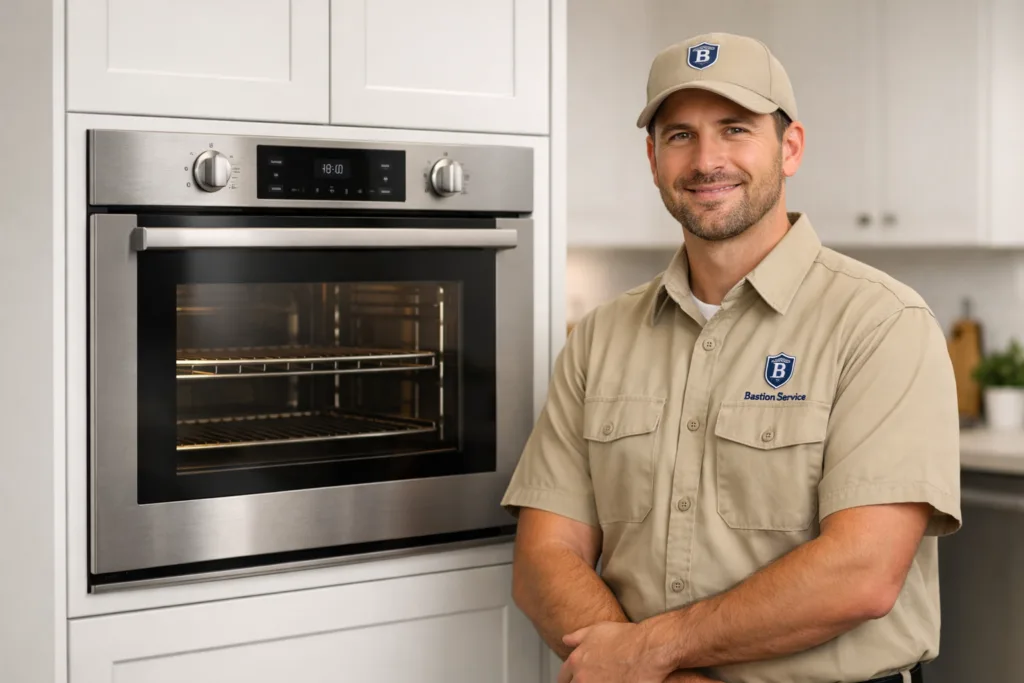
Oven problems tend to show up in everyday cooking first: cookies that brown unevenly, casseroles that need extra time, a broil function that works while bake does not, or a unit that appears to run without ever reaching the selected temperature. With Blomberg ovens, those symptoms can come from several different causes, so the most useful repair path starts with the exact way the failure appears in normal use.
What common Blomberg oven symptoms usually mean
Oven will not heat at all
If the cavity stays cold, the issue may involve a failed bake element, a weak or nonworking igniter on gas models, a temperature sensor problem, a control fault, or an electrical supply issue. In some cases the display and lights still work, which can make the oven seem partially functional even though the heating circuit is not operating correctly.
A total no-heat condition is usually more than an inconvenience. It often points to a part that has fully failed rather than simply drifted out of calibration.
Slow preheat
When preheat starts but takes much longer than it used to, the oven may still be heating with reduced output. A weakening igniter, a partially failing element, or a sensor that is feeding incorrect temperature information can all cause long preheat times. This is one of the most common signs that a Blomberg oven is still running but no longer performing the way it should.
Uneven baking
If one rack bakes faster than another, the rear of the oven cooks differently than the front, or familiar recipes suddenly become unreliable, the cause may be inconsistent heat distribution, a sensor issue, or reduced heating strength. Uneven results are often dismissed as cookware or recipe problems at first, but recurring patterns usually point back to the oven.
Temperature swings
Some cycling is normal, but large swings are not. If the oven overheats, falls well below the set temperature, or alternates between undercooking and burning food, a sensor, control, or relay problem may be involved. In practical terms, this often shows up as meals that never finish on time or baked goods that stop coming out consistently.
Control panel or startup problems
If buttons do not respond, the display behaves erratically, or the oven will not begin a cycle, the problem may be electronic rather than mechanical. Control-related failures can be simple or more involved depending on whether the issue is isolated to the interface, the power supply, or the main control itself.
Signs the problem is getting worse
Homeowners in West Hollywood often notice a progression before a complete failure. Preheat gets slower over a few weeks. The oven starts needing higher settings to produce the same result. Broil may still work while bake weakens. Error codes may appear only occasionally at first, then return more often.
These patterns matter because they help separate a single failed component from a broader issue. A gradual change usually suggests a part losing performance over time, while a sudden loss of function can indicate an electrical interruption or a component that has completely failed.
When to stop using the oven
It is best to stop using the oven if you notice sparking, repeated breaker trips, a strong burning smell, visible damage to a heating element, or the appliance shutting off mid-cycle more than once. If a gas oven has a persistent gas odor, do not continue testing it. Leave the area if needed and address the gas concern before arranging appliance service.
Continuing to run an oven with an active electrical or gas-related problem can increase the risk of additional damage and make the final repair more involved.
Issues connected to self-clean and door lock problems
Some Blomberg ovens begin acting up during or after a self-clean cycle. The door may stay locked, the controls may stop responding normally, or an error may appear that was not present before. High heat during self-clean can expose weak components, especially sensors, latches, and electronic controls.
If the door will not unlock or the oven is stuck in an unusable state after self-clean, the repair usually depends on identifying whether the failure is in the lock mechanism itself or in the control system that manages it.
Repair or replace: what usually makes sense
Many oven problems are worth repairing when the failure is limited to one identifiable part, such as an igniter, heating element, sensor, latch assembly, or related wiring issue. Repair decisions become harder when the oven has repeated electronic failures, multiple failing components, or signs of more extensive control damage.
For a household in West Hollywood, the real question is whether the repair is likely to restore stable daily use. If it will bring back reliable heating and normal cooking performance without stacking costs into future visits, repair is often the better choice. If the unit has a history of recurring breakdowns, replacement may be the more practical long-term answer.
How symptom-based diagnosis helps
Two ovens can show the same basic complaint and need completely different repairs. “Not heating” can mean a failed element, a weak igniter, a sensor issue, a control problem, or a power supply fault. “Uneven baking” can point to temperature accuracy, airflow, or reduced heat output. That is why symptom-based testing matters more than guessing based on the most common part failure.
A useful service visit should connect what you are seeing in the kitchen to the component or system causing it. That makes it easier to decide whether to move forward with repair and what result to expect once the work is completed.
What homeowners can note before service
- Whether the oven fails in bake, broil, or both
- If preheat completes normally, slowly, or never finishes
- Whether the display shows an error code
- If the problem began suddenly or worsened over time
- Whether food is undercooking, overcooking, or baking unevenly
- If the issue started after a self-clean cycle or power interruption
Those details can make diagnosis faster and help narrow down whether the problem is likely to be a heating component, sensor, control, or supply issue.
Blomberg oven repair for everyday cooking problems
When an oven is central to weeknight meals, small performance changes matter. An appliance that runs too cool, overshoots temperature, or takes too long to preheat can disrupt basic cooking routines long before it stops working entirely. Addressing those symptoms early can prevent more frustrating failures and help restore predictable performance for everyday use.