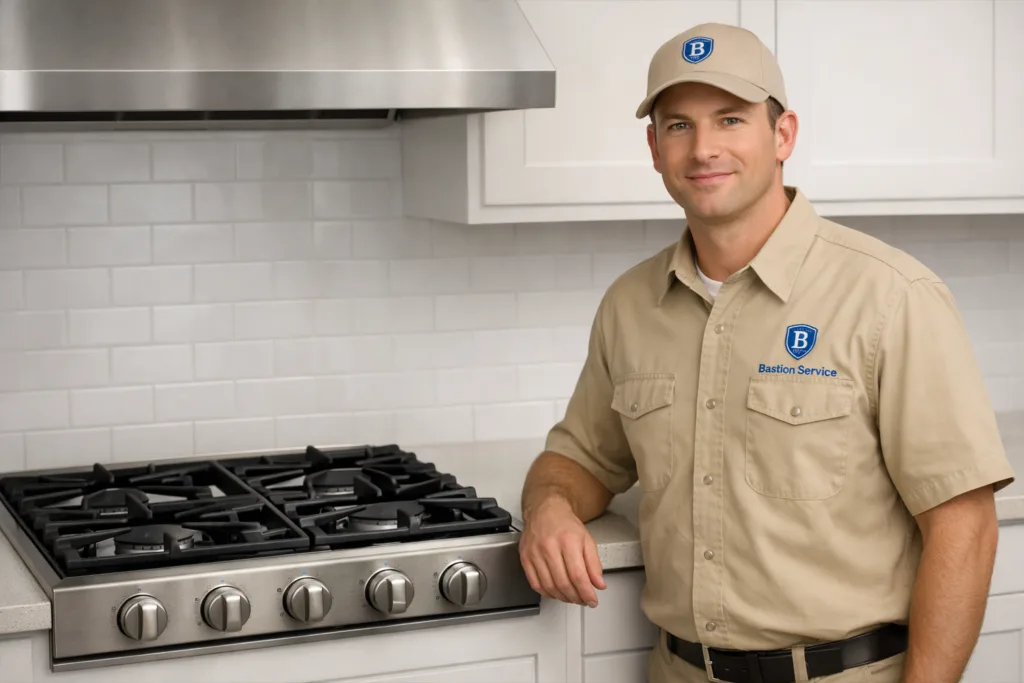
Cooktop issues often start small and then turn into daily frustration: a burner that clicks several times before lighting, a zone that takes too long to heat, or controls that seem inconsistent from one use to the next. With Monogram models, the symptom pattern usually tells you a lot about whether the problem is isolated to one burner assembly, tied to a control component, or related to wiring, power, or surface damage.
Common Monogram cooktop issues homeowners notice first
Many service calls begin with one clear complaint, but the useful details are usually in how the problem behaves. Does one burner fail every time, or only after the cooktop has been used for a while? Does the clicking stop eventually, or continue even after ignition? Does the heat level stay low, surge, or cut in and out? These distinctions help narrow the repair path.
Burner will not ignite
On gas Monogram cooktops, a burner that will not light may be dealing with a blocked burner port, misaligned cap, moisture around the igniter, a worn spark electrode, or an issue in the ignition circuit. If the other burners work normally, the fault is often localized. If ignition problems affect multiple burners, the cause may be more central to the spark system or related controls.
Clicking that does not stop
Continuous clicking can happen when ignition components are wet, dirty, out of position, or beginning to fail. Sometimes the burner does light, but the spark keeps firing anyway. That can point to a switch problem or a condition that prevents the system from recognizing normal ignition. Repeated use in this state can add wear and make the problem less predictable.
Weak, uneven, or inconsistent heat
When a cooktop heats slowly or unevenly, the issue may not be the obvious surface element alone. Depending on the Monogram model, the cause may involve an element, an infinite switch, a sensor, an induction-related detection problem, or a control fault that prevents steady output. If pans are taking longer to heat or one side of a burner seems weaker than the other, the pattern matters.
Controls that do not respond properly
If the cooktop powers on but settings do not match actual performance, or the controls respond only sometimes, the problem may involve a switch assembly, interface component, internal control board, or incoming electrical issue. Intermittent control behavior is worth addressing early because it can affect cooking results and, in some cases, lead to wider electrical stress inside the unit.
What different symptom patterns can suggest
Looking at the whole pattern is often more useful than focusing on one moment when the cooktop failed. In Mar Vista homes, these are some of the most common ways symptoms point toward the likely repair path:
- Only one burner acts up: often suggests a burner-specific issue such as an igniter, switch, element, or local wiring problem.
- Several burners show similar problems: may indicate a shared control, harness, or power-supply issue.
- The problem appears after the cooktop heats up: can point to a part that fails under heat stress rather than when the unit is cold.
- Performance changes from day to day: may reflect moisture, loose connections, or a component that is beginning to fail intermittently.
- Breaker trips, visible sparking, or scorching appears: this should be treated as a stop-use condition until the cooktop is evaluated.
Cracked glass and surface damage
For glass or smooth-top Monogram cooktops, visible cracks are more than a cosmetic issue. A damaged surface can affect safety, heating consistency, and the stability of cookware during use. If the crack is near a heating area or seems to be spreading, it is best not to continue normal cooking until the condition is assessed.
Even when the cooktop still powers on, a cracked surface may allow heat or moisture to affect components below. That can turn a surface problem into an electrical one. Chips near the control area, impact damage, or a burner area that looks discolored after a crack appears are all signs that service should be scheduled promptly.
When homeowners should stop using the cooktop
Some symptoms are inconvenient. Others are signs that continuing to use the appliance is not a good idea. Stop using the cooktop and arrange service if you notice:
- persistent clicking that does not stop
- a burner that will not regulate heat
- smoke, scorching, or a burning odor
- controls changing behavior unexpectedly
- tripped breakers during operation
- cracked glass on a smooth-top surface
If there is a strong or persistent gas smell, do not treat it as a routine appliance issue. Stop using the cooktop, leave the area if needed, and contact the gas utility or emergency service first. Appliance repair should come only after the immediate safety concern is addressed.
Repair versus replacement for a Monogram cooktop
Most homeowners weigh the same few factors: the age and condition of the cooktop, whether the problem is isolated or widespread, the condition of the cooking surface, and whether previous repairs have already been piling up. A repair is often the better choice when the fault is limited to one burner circuit, ignition component, control part, or other defined issue and the rest of the cooktop is in solid condition.
Replacement becomes more likely when there are multiple failing functions, significant glass damage, recurring control trouble, or signs that several major components are wearing out at the same time. The goal is not just to restore operation for the moment, but to decide whether the appliance is likely to return to stable day-to-day cooking use.
What a service visit should clarify
A useful visit should do more than confirm that the cooktop is malfunctioning. It should identify which component or condition is actually responsible, whether there is any secondary damage, and whether the issue appears isolated or part of a broader wear pattern. That gives homeowners in Mar Vista a realistic sense of the next step instead of leaving the decision to guesswork.
For Monogram cooktop repair, the most helpful outcome is a direct explanation of what failed, what needs attention first, and whether restoring safe, consistent performance makes sense for the condition of the unit. That keeps the repair focused on the cooking problem you are actually dealing with at home.