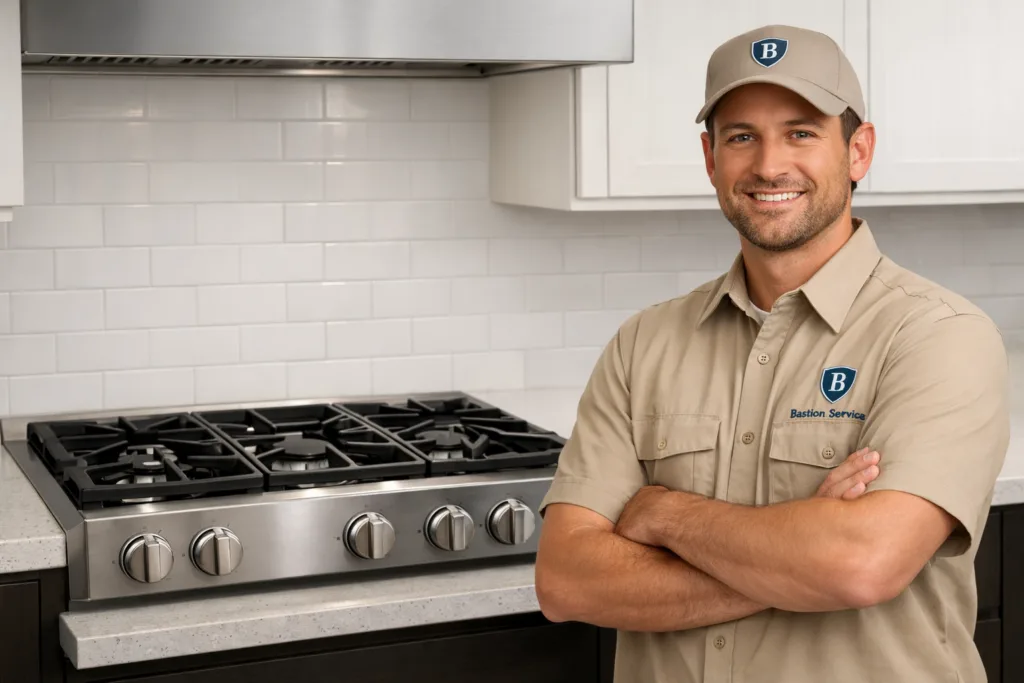
Cooktop problems tend to interrupt the most routine parts of the day, especially when a burner suddenly stops working or heat becomes unpredictable. With Wolf units, the same symptom can come from different failures, so it helps to evaluate what the appliance is doing before assuming a part is bad. A burner that will not light, constant clicking, erratic flame, or a control that no longer responds normally each points to a different repair path.
Start with the symptom pattern
One of the easiest ways to narrow down a Wolf cooktop issue is to notice whether the problem affects one burner or several. A single burner that misfires often suggests a localized issue such as debris in the burner ports, a misaligned cap, a worn igniter, or a switch problem tied to that position. When multiple burners begin acting up at the same time, the cause may involve shared ignition components, power supply problems, or a broader control fault.
That distinction matters in Mar Vista homes because it helps separate a minor burner-specific issue from a repair that affects overall cooktop operation. It also helps determine whether the appliance can be used cautiously in a limited way or whether it should be taken out of service until checked.
Common Wolf cooktop problems and what they often mean
Burner not igniting
If a gas burner clicks but does not light, the issue may be as simple as moisture after cleaning or as involved as a failed spark module. Other common causes include clogged burner openings, an improperly seated burner cap, or an igniter that is no longer producing a consistent spark. If the burner lights with a match but not with normal ignition, that usually points more directly to the ignition system than to gas flow.
Clicking that does not stop
Persistent clicking is one of the most common complaints with gas cooktops. Sometimes it happens because food residue or moisture is interfering with the igniter area. In other cases, the switch is sticking or the spark system continues firing even after the flame is established. If the clicking continues after the burner lights, the cooktop is not operating as it should, and continued use can lead to added wear on ignition components.
Weak or uneven flame
A Wolf burner should produce a stable flame pattern. If the flame looks uneven, low, patchy, or inconsistent around the burner ring, blocked ports or burner alignment problems are often involved. A weak flame can also affect cooking results long before the burner stops working completely. Pans may heat unevenly, simmering may become hard to control, and boil times may get noticeably longer.
Electric element not heating properly
On electric cooktop models, a surface element that stays cold may indicate a failed element, a faulty switch, or a wiring problem below the surface. If the opposite happens and the burner overheats regardless of the selected setting, the control may no longer be regulating output correctly. That is not just inconvenient; it can make normal cooking unsafe and should be diagnosed before regular use continues.
Burner heats inconsistently
Intermittent operation can be harder to pin down because the cooktop may seem normal for part of the day and fail later. This can happen with worn switches, heat-sensitive electrical faults, loose connections, or components that fail once they warm up. When a burner cycles unpredictably, it is usually a sign that the problem is advancing rather than improving.
Controls feel loose or unresponsive
If knobs feel unusually loose, settings do not match the heat produced, or the cooktop responds late or erratically, the control side of the appliance may need attention. In some cases, the visible knob is not the issue at all and the internal switch behind it has worn out. On premium cooking appliances, control problems can affect both performance and safety, especially when a burner does not reliably follow the selected setting.
Signs the cooktop should not be used until it is checked
Some issues can wait a short time; others should move to the top of the list. It is best to stop using the cooktop if you notice any of the following:
- A burner that clicks continuously
- A burner that releases gas but does not ignite reliably
- Flame that is unusually weak, unstable, or irregular
- An electric element that overheats or will not cycle down
- Controls that activate unpredictably
- Visible sparking, burning smells, or signs of heat damage near the controls
If there is a strong or persistent gas odor, do not treat it as a normal appliance repair issue. Stop using the cooktop and follow appropriate gas safety steps before arranging service.
What homeowners can check before scheduling repair
There are a few simple observations that can help make the service call more productive. First, check whether the problem happens on one burner or all burners. Next, look for obvious residue, recent spillover, or moisture around the burner head and igniter area. If the cooktop was cleaned shortly before the problem started, trapped moisture may be part of the issue. For electric models, note whether the element fails completely or heats but does not regulate.
It is also useful to pay attention to timing. Does the problem happen every time, only after the cooktop has been on for a while, or only on certain settings? That kind of symptom history often helps separate a surface cleaning issue from a switch, igniter, element, or wiring failure.
Repair or replacement depends on the overall condition
Many Wolf cooktop problems are worth repairing when the issue is isolated and the appliance is otherwise in solid condition. Igniters, switches, burner components, elements, and certain wiring-related problems are often repairable without replacing the entire unit. In those cases, the key question is whether the repair restores stable day-to-day performance.
Replacement becomes more likely when there are multiple failing components, repeated breakdowns, or damage that affects the cooktop beyond a single repair. Surface condition matters too. If a unit has functional issues along with broader wear to controls, burner assemblies, or the top itself, the long-term value of repair may be limited. A practical repair plan should be based on the actual fault, the appliance condition, and how reliably the cooktop can be returned to service.
What a service visit should clarify
A useful appointment should identify whether the failure is confined to one burner or tied to a shared system, confirm which parts are involved, and explain whether continued use risks more damage. That gives homeowners in Mar Vista a realistic way to decide on next steps instead of replacing parts by guesswork.
When a cooktop is part of daily meal prep, the goal is not just to get a flame or element back temporarily. It is to restore safe, predictable performance so the appliance works the way it should every time you cook.