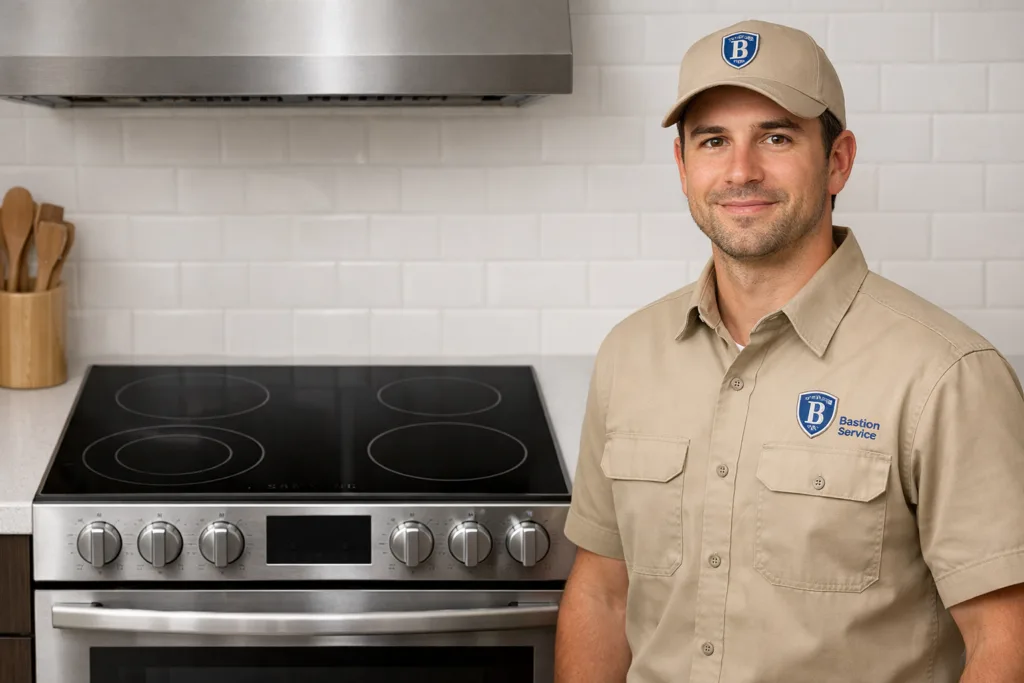
Cooking problems on a Samsung cooktop often start with one burner acting differently from the others. A front element may stay cool, a gas burner may click several times before lighting, or the heat may jump from low to high without much control in between. Those details matter because they usually point to different failures, even when the surface symptom sounds similar.
Common Samsung cooktop symptoms in Mar Vista homes
Daily cooking wear shows up in patterns. Some issues are obvious right away, while others develop slowly enough that they are easy to dismiss until meal prep becomes frustrating or unsafe.
Burner will not heat
On electric Samsung cooktops, a burner that stays cold can be caused by a failed radiant element, a bad infinite switch, loose wiring, or a power supply issue. On induction models, the problem may involve pan detection, control faults, or a module issue rather than the cooking zone itself. If only one burner is affected, that often helps narrow the repair path quickly.
Gas burner clicks but does not ignite
For gas units, repeated clicking without a flame may be tied to moisture, food debris around the burner cap, a misaligned cap, a weak spark, or trouble in the ignition circuit. Sometimes the burner lights only after several tries, which can indicate a developing issue rather than a complete failure. If that pattern keeps returning, it is worth having it checked before it turns into a no-light condition.
Uneven or unpredictable heat
If a burner heats too aggressively on low settings or takes too long to respond on higher settings, the cause may be a worn control, element problem, or sensor-related fault depending on the model. Homeowners often notice this when sauces scorch unexpectedly or pans take much longer than usual to preheat.
Constant clicking
Continuous clicking is common after spills or cleaning, especially when moisture reaches the igniter area. If the sound continues after the surface has fully dried and the burner parts are seated correctly, the cooktop may have a failing switch, ignition component, or wiring issue. Persistent clicking should not be ignored, especially if it happens when the burner is off.
Controls not responding normally
Touch panels, indicators, and control knobs can also be part of the problem. A burner that seems dead may actually be receiving the wrong signal from the control side. Delayed response, random beeping, flickering indicators, or settings that change unexpectedly can all point to a deeper electrical or control fault.
What to check before scheduling repair
A few simple observations can help separate a minor setup issue from a fault that needs service:
- Check whether the problem affects one burner or multiple burners.
- On gas models, make sure the burner cap is clean and seated correctly.
- Confirm the cooktop has power and that no breaker has tripped.
- Notice whether the issue started after a spill, deep cleaning, or recent electrical interruption.
- Pay attention to sounds, smells, or changes in indicator lights.
These details can make diagnosis faster and more accurate, especially when the symptom is intermittent.
Signs the problem is more than routine wear
Some symptoms suggest a simple burner-area issue, but others point to a problem that should be addressed sooner rather than later. Service is usually the smarter choice when you notice any of the following:
- A burner repeatedly fails after temporarily working again
- Heat levels no longer match the selected setting
- The cooktop trips power or shuts down unexpectedly
- Ignition keeps clicking long after the burner should be lit or off
- Cracks in the glass surface or visible scorching near controls
Intermittent failures are especially important to watch. A burner that works every other day is often on its way to a full breakdown, and continued use can place extra stress on switches, igniters, or control components.
Gas, electric, and induction issues are not diagnosed the same way
Samsung cooktops are built in different configurations, and repair decisions depend heavily on the type of unit in the home. Gas cooktops are often diagnosed through ignition behavior, flame quality, burner assembly condition, and switch performance. Electric radiant models are more likely to involve element continuity, regulator behavior, or wiring faults. Induction models add another layer because power modules, communication errors, and cookware detection can mimic a burner failure.
That is why symptom-based diagnosis matters more than replacing parts based on guesswork. The same complaint of “one burner not working” can lead to very different repairs depending on the platform.
When a cracked glass top changes the repair decision
A cracked surface is not just a cosmetic issue. On smooth-top electric and induction Samsung cooktops, glass damage can affect safety, cleaning, heat transfer, and the long-term stability of the unit. Small cracks can spread with normal cooking use, especially around high-heat zones. If the glass is cracked and the cooktop also has heating or control problems, it is important to weigh both issues together before moving ahead with repair.
Repair or replace?
Many Samsung cooktop problems are repairable when the fault is limited to a burner assembly, igniter, switch, control input, or related component. Replacement becomes a more realistic option when the unit has multiple failures at once, major glass damage, repeat electrical problems, or signs that several high-cost parts are wearing out together.
For most homeowners in Mar Vista, the best decision comes down to three questions:
- Is the problem isolated or affecting the whole cooktop?
- Will the repair restore normal daily cooking performance?
- Does the overall condition of the appliance support further investment?
The goal is not simply to make one burner work for a few weeks. It is to determine whether the appliance can return to safe, consistent use in a household kitchen.
When to stop using the cooktop
Some symptoms call for caution right away. Stop using the unit if you notice sparking beyond normal ignition, a strong burning smell from the controls, visible damage around wiring areas, or a persistent gas odor. For gas-related odor concerns, leave the area if necessary and contact the gas utility or emergency service before arranging appliance repair. Once immediate safety concerns are addressed, the next step is a clear diagnosis and a practical repair plan based on the exact symptom pattern.
What homeowners in Mar Vista can expect from a focused repair visit
A useful service call should narrow the issue to the affected system, verify whether the problem is isolated or part of a larger failure, and help you decide whether repair is the sensible next step. That may mean addressing a single burner problem, correcting an ignition fault, or identifying when a cooktop is no longer a good candidate for continued repair.
If your Samsung cooktop is heating unevenly, refusing to ignite, clicking constantly, or showing control problems, paying attention to the exact behavior usually leads to the fastest path toward a lasting fix.