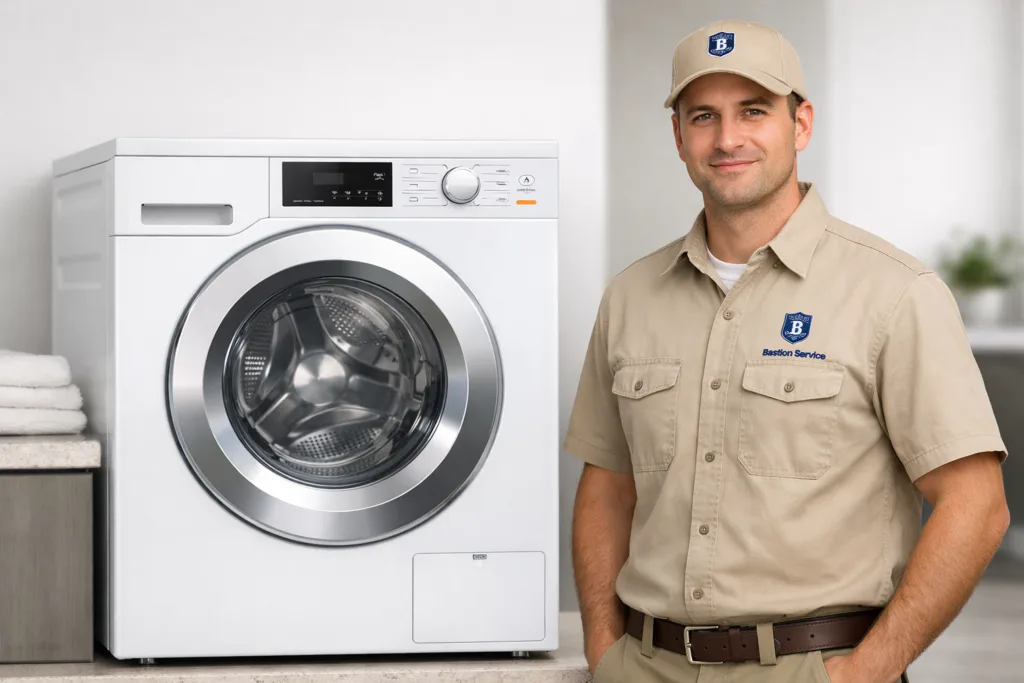
Many dryer problems look similar from the outside, but the underlying cause can be very different. A Miele dryer that leaves clothes damp may have a heating issue, a restricted vent path, inaccurate moisture sensing, or a shutdown related to overheating. Sorting out the symptom pattern first usually saves time, prevents unnecessary parts replacement, and helps determine whether repair makes sense for the appliance’s condition.
Common Miele dryer problems in Manhattan Beach homes
Dryer runs but does not heat
If the drum tumbles normally but the load stays cool and wet, the fault may involve the heating circuit, safety devices, controls, or incoming power. In some cases, the dryer still appears to run correctly, which can make the problem seem minor at first. Homeowners often notice this when a normal load finishes with clothing still damp or when multiple cycles are needed to get basic results.
Loss of heat should not be treated as a problem that will correct itself. Repeated operation without proper heating can lead to longer run times, more wear on internal components, and frustration with inconsistent drying performance.
Long dry times and repeated damp loads
When clothes eventually dry but only after unusually long cycles, airflow is often the first area to consider. Lint buildup, crushed venting, partial exhaust restriction, or weak airflow can all keep moisture from leaving the dryer efficiently. Miele dryers can also show longer drying times when sensors are not reading the load correctly or when heat output has dropped below normal.
Typical signs include towels staying heavy, jeans drying unevenly, or loads that seem almost finished but still need extra time. If the same laundry routine suddenly starts taking much longer, that change is worth checking rather than working around.
Dryer will not start or stops mid-cycle
A no-start condition can come from a door latch problem, control issue, power supply fault, or a safety-related interruption. When the machine powers on but refuses to begin a cycle, the problem may be tied to start logic, door sensing, or a component that is preventing operation.
If the dryer starts and then shuts off before the load is done, overheating protection, airflow restriction, or an intermittent electrical fault may be involved. A shutdown that happens after the machine has been running for a while is often more informative than a complete no-start, because it suggests the dryer is reacting to changing temperature or internal conditions.
Noise, vibration, or burning odor
Dryers usually become noisy for a reason. Thumping can point to support wear, scraping may indicate contact inside the drum area, and rattling may come from loose components or foreign objects. A high-pitched squeal often suggests moving parts that are no longer operating smoothly.
A burning smell deserves prompt attention. That odor can be related to overheating lint, friction from worn parts, electrical failure, or a slipping component. If the smell is new, strong, or appears with excess heat, it is safest to stop using the dryer until the cause is identified.
Why symptom patterns matter with Miele dryers
Miele dryers use brand-specific controls, sensors, and operating logic, so the same visible complaint can come from very different failures. For example, a machine that seems to have weak heat may actually be responding to poor airflow. A dryer that shuts down during operation may be protecting itself rather than simply failing to run. Looking at how the problem appears, when it happens, and whether it affects every cycle helps narrow the repair path.
This matters even more when the dryer still works some of the time. Intermittent issues can be tempting to ignore, but partial performance often means the problem is developing rather than resolved. Catching that stage early may help avoid added strain on controls, heating parts, or moving components.
Signs the problem is getting worse
Household dryers often show a progression before complete failure. What begins as an occasional long cycle may turn into repeated damp loads. A small vibration can become a loud mechanical noise. A dryer that stops once may start shutting off more often as heat builds inside the machine.
Watch for patterns such as:
- Loads that used to dry in one cycle now needing two or more
- Different results from the same cycle settings
- Heat that seems weaker or less consistent than before
- Shutdowns that happen only after the dryer has been running for a while
- New sounds during tumbling, startup, or slowdown
- Hot exterior surfaces or unusually warm laundry room conditions
These changes usually indicate a fault that is progressing, not random behavior.
When to stop using the dryer and schedule service
Service is usually the better next step when the appliance shows repeat symptoms instead of a one-time irregular cycle. That includes no heat, drying times that keep increasing, mid-cycle shutdowns, a drum that sounds wrong, or an odor that was not present before. Continued use can turn a contained repair into a broader one if overheating, electrical strain, or mechanical wear is involved.
Stop using the dryer promptly if you notice any of the following:
- A burning smell or signs of overheating
- The breaker trips repeatedly during operation
- Grinding, scraping, or banging from the drum area
- The dryer becomes extremely hot but clothing remains damp
- The unit shuts off mid-cycle more than once
Repair or replace?
Repair is often worth considering when the dryer is otherwise in good condition, the issue appears isolated, and the machine has been meeting the household’s needs up to this point. Replacement becomes more likely when there are multiple active problems, a pattern of repeat failures, or major component needs combined with overall wear.
A helpful way to think about the decision is to look at four factors: what failed, whether that failure is isolated or part of a larger pattern, how the dryer has performed recently, and whether the expected repair would restore reliable day-to-day use. One well-defined problem is different from a machine that has been slowly becoming less dependable across several cycles and functions.
What to note before a service visit
A few observations from daily use can make troubleshooting faster and more accurate. Try to note whether the dryer heats at all, whether the drum turns normally, whether every cycle is affected, and whether the problem appears immediately or only after some run time. If there is an error display, an unusual smell, or a sound that repeats at the same point in the cycle, that pattern is useful information.
It also helps to pay attention to the laundry itself. Clothes that are hot but still damp may suggest one path, while clothes that stay cool through the whole cycle suggest another. Loads that dry unevenly, with some items finished and others still wet, can also help identify whether airflow, sensing, or heat delivery is at the center of the problem.
Focused help for Miele dryer issues in Manhattan Beach
For homeowners in Manhattan Beach, the most useful next step is to match the visible symptom to the most likely cause and then confirm the repair path before moving forward. Whether the concern is no heat, long dry times, no start, shutdowns, or new drum noise, a symptom-based inspection helps clarify the issue, the urgency, and whether repair is the sensible solution for the appliance.