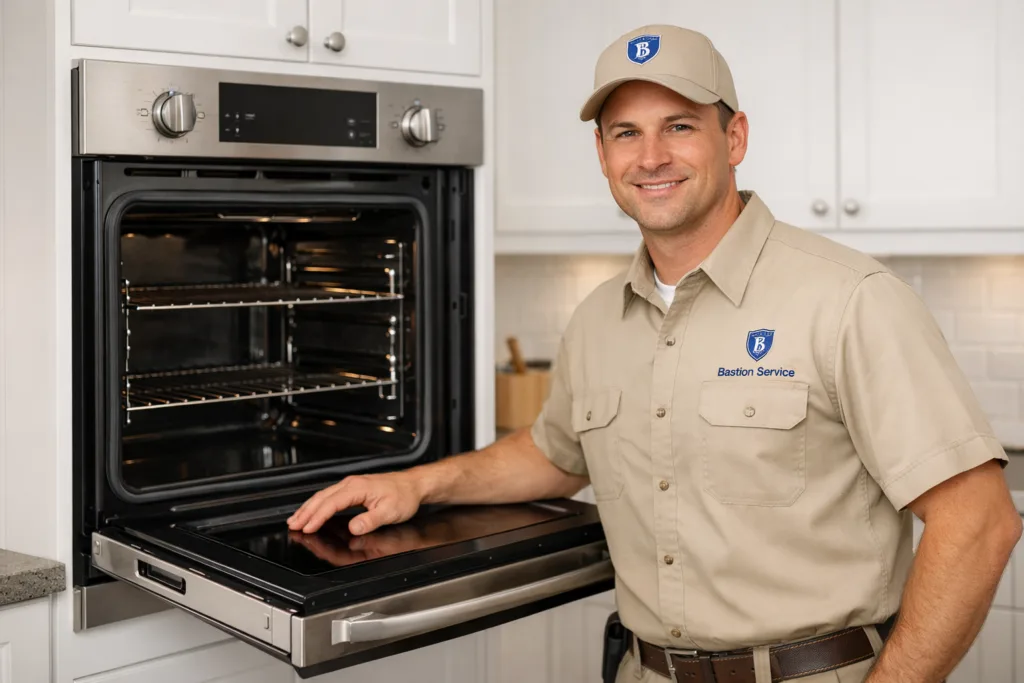
Most Maytag oven problems reveal themselves in patterns. An oven that never quite reaches temperature behaves differently from one that overheats, shuts off mid-cycle, or works on broil but not bake. Paying attention to those patterns helps narrow the issue faster and avoids replacing parts based on assumptions.
Common Maytag oven symptoms and what they often point to
Oven not heating at all
If the cavity stays cold, the cause usually depends on whether the oven is gas or electric. On many gas Maytag models, a weak igniter is a frequent culprit. It may glow and still fail to draw enough current to open the gas valve properly. On electric models, a failed bake element, damaged wiring connection, bad sensor, relay problem, or control fault may be responsible.
One useful clue is whether any heat functions still work. If broil heats but bake does not, that often points in a different direction than a complete no-heat condition. If the display works but the oven never warms, that also suggests the issue is likely isolated to the heating system rather than full power loss.
Slow preheat
A Maytag oven that eventually gets hot but takes much longer than normal should not be dismissed as minor wear. Slow preheat often signals a weak igniter, a partially failed heating element, a sensor drifting out of range, or a control that is not cycling heat correctly. In daily use, this can show up as longer dinner prep times, recipes finishing late, or the need to add extra minutes every time you bake.
When preheat gets progressively slower, it usually means a component is weakening rather than a one-time glitch. That is often the best time to address the issue before the oven stops heating altogether.
Uneven baking
Cookies browning on one side, casseroles staying cool in the center, or pans needing constant rotation can indicate poor temperature regulation. Sometimes the root problem is a sensor that reads inaccurately. In other cases, the bake element is not cycling correctly, the door gasket is leaking heat, or the control is not maintaining steady operation.
Uneven baking can also overlap with airflow and rack placement concerns, but when long-trusted recipes start failing without any change in technique, the appliance itself is often the reason.
Temperature swings or overheating
All ovens cycle above and below the set temperature to maintain an average, but large swings are different. If food burns unexpectedly, the cavity feels excessively hot, or the oven seems unable to settle at the selected setting, the problem may involve the temperature sensor, control board, relay, or calibration drift.
Overheating deserves prompt attention because it can damage internal components, affect door seals, and make the oven unreliable for everyday cooking.
Control panel or display problems
Some Maytag ovens develop issues at the keypad or display first. Buttons may stop responding, the screen may flicker, settings may reset, or error messages may appear intermittently. These symptoms can come from a failing control, membrane keypad problem, wiring issue, or power supply fault inside the unit.
If the panel behaves unpredictably, it is helpful to note whether the problem happens only during cooking, after self-clean, or at random. That timing can help identify whether heat stress or an electrical issue is involved.
Door lock or self-clean problems
After a self-clean cycle, some ovens develop lock-related faults, control errors, or no-start conditions. The high temperatures used during self-clean can stress door lock parts, thermal protections, wiring, and electronic controls. A door that stays locked, unlocks late, or prevents the next cooking cycle often needs diagnosis rather than repeated resets.
How gas and electric Maytag oven failures differ
Gas and electric ovens can show similar symptoms while failing for different reasons. A gas oven with delayed ignition, weak heating, or intermittent starting often leads back to the igniter or ignition circuit. An electric oven with poor heat output may involve the bake element, broil element, terminal connections, sensor, or board.
That distinction matters because visible signs can be misleading. A gas igniter can glow and still be too weak to operate correctly. An electric element can look intact while being electrically open. Proper testing is what separates the likely cause from the actual failed part.
Signs the oven should not keep being used
Some problems move beyond inconvenience and into safety or damage concerns. It is best to stop using the oven if you notice:
- Electrical burning smells
- Breaker trips during preheat or cooking
- Delayed gas ignition or repeated clicking without normal heating
- Runaway temperatures or obvious overheating
- Sparking, arcing, or visible element damage
- A door that will not close, unlock, or latch correctly
Continuing to run an oven under these conditions can worsen the original fault and create additional repair needs.
What homeowners in Palos Verdes Estates often notice first
In many homes in Palos Verdes Estates, the earliest warning sign is not total failure. It is usually a change in cooking results. Preheat stretches longer than it used to. Baked dishes need extra time. One rack cooks much faster than another. The oven seems fine on some days and off on others.
These softer symptoms matter because they often appear before a full breakdown. Addressing the problem at that stage may keep the repair simpler and help avoid a sudden loss of the oven when it is needed most.
Repair or replace?
Replacement is not always the smartest response to an oven problem. Many Maytag oven issues are tied to specific serviceable parts, especially when the appliance is otherwise in good shape and the cavity, racks, hinges, and insulation are still holding up well. Repair is often worth serious consideration when the fault is limited and the rest of the unit has been performing normally.
Replacement becomes more likely when there are multiple major failures at once, repeated electronic problems, heavy internal wear, or a repair cost that approaches the value of the appliance. The key is understanding whether the issue is isolated or part of a broader decline.
What a service visit should clarify
A worthwhile appointment should answer a few practical questions clearly:
- Which component or system is actually failing
- Whether the oven is safe to use in its current condition
- Whether the repair is likely to restore normal baking and roasting performance
- Whether the problem appears isolated or age-related
- Whether repair makes financial sense compared with replacement
That kind of symptom-based testing gives homeowners a better basis for action than guesswork, especially when the same outward issue could come from several different parts.
Preparing for Maytag oven repair in Palos Verdes Estates
Before service, it helps to note the exact behavior of the oven. Useful details include whether the problem affects bake, broil, or both, whether the display stays on, whether error codes appear, how long preheat takes, and whether the issue began after a self-clean cycle or power interruption. Even small details can shorten the path to the real cause.
For Maytag oven repair in Palos Verdes Estates, the goal is simple: identify the fault accurately, avoid unnecessary parts replacement, and restore cooking performance in a way that makes sense for the household.