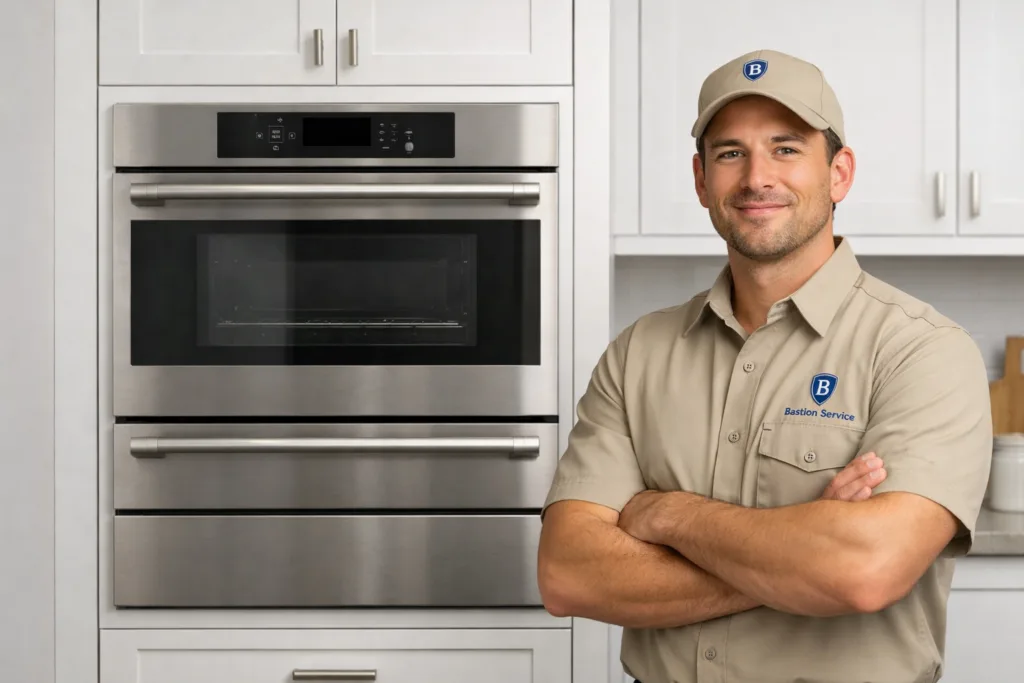
Start with the way the oven is failing

Monogram ovens can develop similar-looking problems for very different reasons. An oven that will not heat at all is a different repair path from one that reaches temperature slowly, runs hotter than the setting, or bakes unevenly from front to back. Looking at the exact behavior first helps narrow the likely cause and prevents guessing based on one symptom alone.
In many Palos Verdes Estates homes, the first signs are subtle. Cookies brown too fast on one side, roasting takes longer than usual, or the oven seems hot enough but results are inconsistent. Those early changes often point to a sensor, element, igniter, door seal, or control issue before the oven fails completely.
Common Monogram oven symptoms and what they often mean
Oven will not heat
If the control panel turns on but the cavity stays cold, the fault may involve the bake element, broil element, igniter, temperature sensor, relay, wiring, or electronic control. Some ovens appear normal on the display even though the heating circuit is not engaging. That is why a symptom-based diagnosis matters more than replacing the first part that seems likely.
Uneven baking
Food that comes out overdone on one rack and underdone on another can point to poor heat distribution, a drifting sensor, a partially failed heating component, or a door that is leaking heat. Homeowners usually notice this with baking first, but it can affect casseroles, roasted vegetables, and any recipe that depends on stable oven temperature.
Slow preheat
When preheat times get longer, the oven may still be heating but not at full performance. Electric models may have a weak element or control problem. Gas models may have an igniter that is no longer drawing the right current to open the gas valve properly. Slow preheat often starts gradually and becomes more obvious over time.
Temperature swings
All ovens cycle on and off to hold temperature, but large swings can cause undercooked centers, scorched edges, and unpredictable cook times. A temperature sensor out of range, calibration drift, or a control issue can all cause wider-than-normal variation.
Display or keypad problems
An unresponsive panel, flashing display, beeping without input, or recurring error codes may involve the touch interface, main control, or power supply. These problems can affect more than convenience. If the control cannot read input correctly or manage heating cycles, cooking performance suffers even when the oven still powers on.
Door not closing properly
A damaged gasket, bent hinge, worn latch, or alignment issue can let heat escape. That can lead to long cook times, poor browning, and temperature inconsistency. Door-related faults may also show up after a self-clean cycle if the latch does not return to normal operation.
What homeowners can check before scheduling repair
A few basic checks can help rule out simple issues before service is scheduled:
- Make sure the oven is set to a bake or broil mode and not only running the light or timer.
- Confirm the household breaker has not partially tripped.
- Look for obvious damage to the door gasket or signs the door is not sealing evenly.
- Remove heavy foil, oversized pans, or misplaced racks that may interfere with airflow.
- Note any error code and when it appears, such as during preheat, during self-clean, or after the oven has been running for a while.
If the same symptom continues after these checks, the problem is usually beyond a simple reset and needs proper testing.
Signs the problem is becoming more serious
Some oven problems stay inconvenient for a while before turning into complete failure. Others raise a safety concern right away. It is smart to stop using the oven and arrange service if you notice any of the following:
- The oven trips the breaker
- The cavity does not shut off properly
- The control locks up or repeatedly flashes errors
- There is a strong burning smell unrelated to food residue
- The oven heats far above the set temperature
- The door latch will not release after a cycle
Continuing to use the oven in these conditions can make the original fault harder to isolate and may place added strain on other components.
Repair or replace: what usually drives the decision
For many households in Palos Verdes Estates, the choice depends on the failed part, the oven’s overall condition, and whether the problem appears isolated or part of a broader decline. A single failed sensor, igniter, element, latch, or interface issue is often worth repairing. Replacement becomes more likely when there are multiple electrical faults, repeated control failures, or a longer history of performance problems.
Age alone does not decide the question. A well-kept Monogram oven with one defined failure can still make sense to repair, while a unit with recurring heating complaints and growing parts issues may not. The most useful answer comes from matching the symptom pattern to the actual failure rather than treating every no-heat or uneven-bake complaint the same way.
How Monogram oven problems are typically diagnosed
Useful service usually involves more than checking whether the oven powers on. The process may include verifying heating operation, comparing actual temperature behavior to the set temperature, testing the sensor circuit, evaluating the condition of the elements or igniter, inspecting door sealing, and reviewing control response. That kind of step-by-step approach is often what separates a lasting repair from a temporary guess.
When the symptom is inconsistent, details from daily use can help. Knowing whether the oven fails only during preheat, only at higher temperatures, or only after extended cooking can make diagnosis faster and more accurate.
Symptom details that help speed up service
Before an appointment, it helps to make note of what the oven is doing in real use. Helpful details include:
- Whether the oven reaches any heat at all
- How long preheat is taking compared with normal
- If the issue affects bake, broil, or both
- Whether the display shows an error code
- If the problem began after a self-clean cycle or power outage
- Whether the door feels loose, misaligned, or hard to latch
These observations do not replace testing, but they can help point the repair in the right direction from the start.
What to expect after the repair decision
Once the failed component or circuit is identified, the next step is deciding whether the repair is sensible for the condition of the oven. Homeowners generally want to know not just what failed, but whether the repair is likely to restore normal cooking performance without leading to more near-term issues. That is especially important when the complaint involves controls, recurring temperature problems, or multiple symptoms happening together.
For Palos Verdes Estates homeowners, the goal is straightforward: restore reliable baking and roasting performance, make sure the oven responds properly to the set temperature, and confirm that normal kitchen use can resume without guesswork.