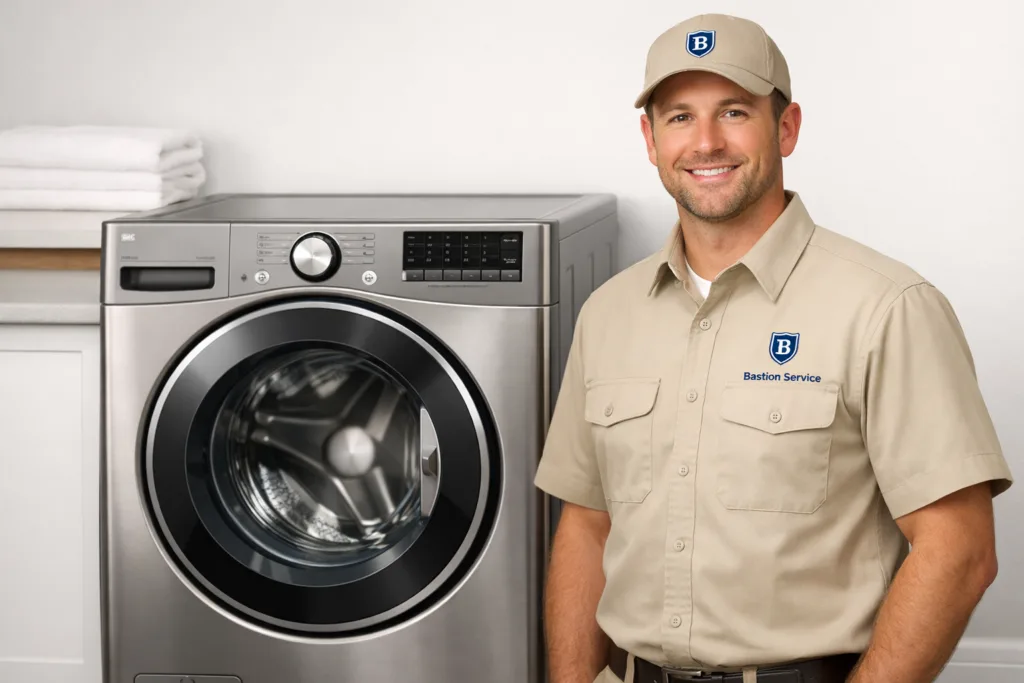
Washer problems are easiest to solve when the symptom is narrowed down before any parts are replaced. On LG machines, a single complaint such as “won’t finish” or “leaves clothes wet” can trace back to very different causes, including drainage problems, a door-lock fault, a water supply issue, an imbalance condition, or an electronic control failure. For homeowners in Mid-City, the most useful starting point is to look at exactly where the cycle breaks down.
Common LG washer problems in Mid-City homes
LG washers use sensors, control boards, locks, pumps, and high-efficiency wash systems that all have to work together. When one part of that chain fails, the washer may still power on and seem partly functional, which can make the problem harder to judge from the outside. A machine may fill but not agitate, drain but not spin properly, or stop with a code that points to a system rather than a single failed part.
That is why symptom-based troubleshooting matters. The more consistent the pattern is, the easier it is to separate a simple load issue from a repairable component failure.
Washer not draining or not spinning
If the tub is still full at the end of the cycle, common causes include a blocked drain path, a failing drain pump, a hose restriction, or a control problem that prevents the washer from moving into the drain phase. If the water leaves the tub but clothes remain much wetter than normal, the issue may be in the spin portion of the cycle instead.
On LG washers, poor spinning can be related to repeated imbalance detection, worn suspension components, motor-related issues, or a control that is limiting spin speed because something else in the cycle is not reading correctly. If this happens often, continued use can add stress to the suspension system and leave laundry consistently under-spun.
Leaks, overflow, or water on the floor
Water under the machine can come from different places depending on when the leak appears. A leak during fill may suggest inlet hose connections, water valve problems, or internal hose issues. Water that shows up later in the cycle may point to the drain system, pump housing, or movement inside the cabinet during spin.
Front-load LG washers can also leak from the door boot area if the seal is damaged, out of position, or collecting debris that prevents a tight closure. If the washer is overfilling, the problem may involve water inlet valves, pressure sensing, or control-related faults. Because even a small leak can damage nearby flooring and trim, it is best not to ignore recurring moisture around the machine.
Washer shakes, bangs, or walks during spin
Some vibration is normal, but repeated violent shaking is not. If the cabinet moves excessively, bangs against the floor, or shifts during high spin, the cause may be as simple as an uneven load or as involved as worn suspension parts or a tub support problem. In some cases, a newer installation may still have setup-related issues affecting stability.
When the same behavior keeps happening on ordinary loads, the washer should be checked before more cycles are run. Repeated off-balance spinning can increase wear on internal parts and may also strain hoses and other connections behind the machine.
Cycle stops, error codes, or failure to start
LG washers often display error codes or stop at a repeatable point in the cycle. That information is helpful, but it does not automatically identify the exact failed part. The same code can sometimes be caused by a blockage, a sensor issue, a wiring fault, or a control problem.
If the washer will not start at all, a door lock issue is one common possibility. If it starts but pauses, drains unexpectedly, or never reaches final spin, the pattern can help narrow the problem. A cycle that fails only under load may also point to a different repair path than one that fails immediately after pressing start.
Signs the problem is getting worse
Washer issues do not always stay minor. A slow drain can become a complete no-drain failure. A machine that occasionally goes off balance can turn into one that cannot complete a spin cycle without stopping. A small leak can spread into flooring damage or moisture problems in the laundry area.
It is usually smart to stop using the washer and arrange service if you notice any of the following:
- Water leaking during every load
- The tub staying full after the cycle ends
- A burning smell or repeated breaker trips
- Harsh grinding, scraping, or banging sounds
- The same error code appearing over and over
- The door not locking or not unlocking correctly
Problems that may look similar but are not the same repair
One reason LG washer repair can be frustrating for homeowners is that similar symptoms can come from different systems. For example, clothes that come out too wet do not always mean the drain pump has failed. The washer may be draining normally but refusing full spin because it detects imbalance, cannot lock the door properly, or sees another condition that prevents the cycle from completing.
Likewise, a washer that “won’t fill” may actually be filling too slowly because of supply restrictions or clogged inlet screens, while a machine that seems dead may have a latch or control issue rather than a power loss. Looking at the full behavior of the machine usually tells more than focusing on a single symptom alone.
When repair usually makes sense
Repair is often the better choice when the washer is in otherwise good condition and the failure is limited to a serviceable part such as a pump, valve, hose, latch, sensor, or suspension component. Many LG washer problems fall into that category, especially when the issue began recently and the machine has not had a history of repeated major failures.
In Mid-City homes, repair becomes less appealing when the washer has several issues at once, shows signs of heavy internal wear, or has already had multiple significant breakdowns. The goal is not just to get the machine running again, but to decide whether the repair path makes sense for the appliance overall.
How to prepare before service
A few notes before an appointment can make diagnosis faster and more accurate. It helps to write down whether the washer fills, drains, tumbles, locks, and spins, and to note the stage where the cycle stops. If there is an error code, the exact code matters. If there is leaking, try to identify whether it appears during fill, wash, drain, or spin.
It is also useful to mention whether the issue happens on every load or only with certain cycle settings. A washer that fails only on large loads can point in a different direction than one that fails empty during a test cycle. Those details help separate a simple usage issue from a mechanical or electrical fault.
What Mid-City homeowners should avoid doing
It is tempting to keep restarting the machine, forcing extra drain cycles, or running smaller loads to work around the problem. Sometimes that gets laundry through for a short time, but it can also hide a worsening fault. Repeated resets do not solve a weak pump, a damaged lock, or a failing control board.
It is also best to avoid taking apart the washer without a clear reason, especially on models with electronic controls and sealed assemblies. Misdiagnosis can lead to unnecessary part replacement and added downtime, while the original problem remains unresolved.
Choosing service based on the actual symptom
The best repair decision usually comes down to what the washer is doing right now: not draining, not spinning, leaking, failing to fill, stopping mid-cycle, or making abnormal noise. Once that pattern is identified, it becomes much easier to judge the likely repair path, the urgency of the problem, and whether continued use is likely to cause more damage.
For households in Mid-City, that kind of focused evaluation is the most reliable way to move from a frustrating washer problem to a repair decision that fits the condition of the machine.