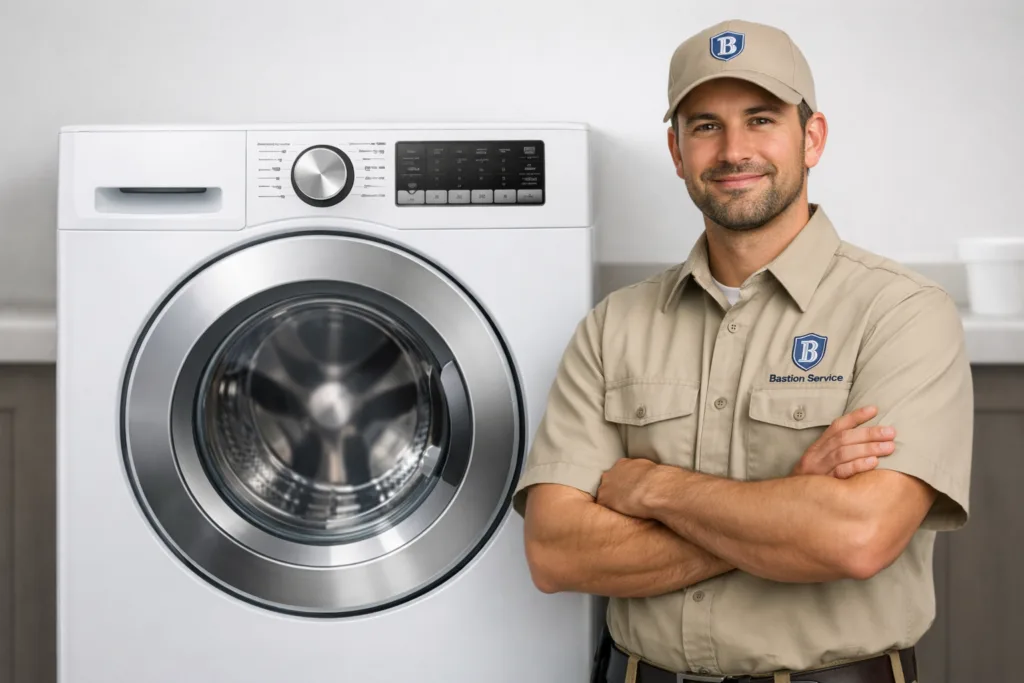
Household laundry routines tend to break down fast when a washer starts leaving clothes wet, stopping mid-cycle, or leaking onto the floor. With Samsung machines, the same outward symptom can come from several different causes, so the best next step is to match the repair plan to what the washer is actually doing.
Common Samsung washer symptoms and what they can mean
Some failures are sudden, such as a washer that will not power on or a tub that stays full of water after the cycle ends. Others develop over time, including louder spinning, repeated balance problems, longer wash times, or inconsistent cycle behavior. Looking at when the problem happens during fill, wash, drain, or spin helps narrow down whether the issue is related to water flow, a moving part, a sensor, or the electronic control system.
Washer not draining
If water remains in the tub at the end of the cycle, the washer may have a blocked drain path, a failing drain pump, a restriction in the hose, or a control issue that never sends the machine into proper drain mode. In some cases, the pump can be heard humming without moving water, which often points to an obstruction or pump failure rather than a simple cycle interruption.
A drainage issue should not be ignored for long. Standing water can leave clothing sour, strain the pump, and prevent the machine from moving into a full spin cycle.
Clothes still soaked after the cycle
Wet laundry does not always mean the washer failed to spin at all. It can also mean the machine reduced spin speed because of a balance problem, sensed a door lock issue, or could not drain completely before spin. On Samsung washers, repeated soaked-load complaints often overlap with suspension wear, drain problems, or faults that interrupt the final part of the cycle.
Leaks during use
Leaks can show up at different points in the cycle, and the timing matters. Water appearing during fill may suggest an inlet, dispenser, or hose connection problem. A leak during agitation or tumbling can point to a door boot, tub-related issue, or oversudsing condition. Water showing up mainly during drain-out can indicate a cracked pump housing, loose connection, or split drain hose.
Even a slow leak is worth addressing early because repeated moisture can affect flooring, walls, and the area around the laundry setup.
Shaking, banging, or walking across the floor
A single off-balance load can happen in almost any washer, especially with bulky items. Repeated heavy vibration with normal loads is different. That pattern may indicate worn suspension components, leveling issues, basket support wear, or a spin system problem that becomes more obvious at high speed.
If the machine is slamming during spin, continued use can make the repair more involved by increasing stress on other internal parts.
Will not start or stops before the cycle finishes
When the control panel lights up but the washer does not begin, the fault may involve the door or lid lock, user interface, control board, or a condition that prevents the machine from moving to the next step safely. If it starts and then stops partway through, the cause may be tied to filling, draining, sensing, or overheating protection.
Intermittent start and stop problems are especially easy to misread because they can imitate each other. That is one reason symptom-based testing matters more than replacing parts by guesswork.
Error codes and unusual cycle behavior
Samsung washers often display codes that point the technician in the right direction, but the code itself is not the full diagnosis. A water supply code may stem from inlet valves, pressure sensing, hose setup, or low flow. A balance-related code may be caused by loading habits in one case and worn suspension in another. The code is helpful, but the full symptom pattern is what determines the repair path.
When it makes sense to stop using the washer
Some washer problems can wait a short time; others should be treated as urgent. It is usually best to stop running the machine if you notice any of the following:
- Water leaking onto the floor
- Grinding, scraping, or sharp banging sounds
- A burning smell or excessive heat
- Power loss, tripped breakers, or erratic electrical behavior
- Standing water that will not drain out
- Violent shaking during spin
Running more cycles under those conditions can turn a limited repair into a larger one, especially if moisture spreads or moving parts are already under strain.
How Samsung washer diagnosis usually works
Useful service begins by confirming the complaint and checking the systems tied to that symptom. For a drain complaint, that means inspecting the drain path, pump operation, and any related control or sensing issues. For a spin complaint, the technician may evaluate balance control, suspension, lock function, and whether drainage completed correctly. For leaks, the source has to be traced to the point in the cycle where water escapes.
This matters because many washer symptoms overlap. A machine that will not spin can really be a drain problem. A machine that stops mid-cycle can really be reacting to a lock, water level, or control fault. Good diagnosis separates the failed component from the look-alike symptoms around it.
Repair or replace: what homeowners in Mid-City often consider
Repair is often the sensible option when the washer has been working well overall and the issue is limited to one identifiable failure, such as a pump, valve, latch, hose, or suspension-related problem. Replacement becomes more likely when the machine has multiple active issues, signs of major internal wear, repeated electronic problems, or visible deterioration that suggests more than one repair may be coming.
The condition of the washer as a whole matters just as much as the current symptom. A single repair on an otherwise solid machine is different from putting money into a washer that has ongoing leak history, severe spin damage, or repeated cycle failures.
What to check before scheduling service
Before arranging a repair visit, a few simple observations can help make the symptom easier to identify:
- Note whether the issue happens during fill, wash, drain, or spin
- Check if an error code appears and whether it repeats
- Look for water near the front, back, or underneath the machine
- Notice whether the washer hums, clicks, or goes silent when it should drain or spin
- Pay attention to whether the problem happens with every load or only certain ones
These details can make the service call more efficient and help confirm whether the problem is mechanical, water-related, or electronic.
Practical next steps for Mid-City households
If your Samsung washer is leaking, failing to drain, leaving loads too wet, or making stronger spin noise than usual, it is usually better to address it sooner rather than keep testing it. Many washer problems start small and become more expensive after repeated use.
For homeowners in Mid-City, the most useful approach is to have the washer evaluated based on the exact symptom pattern, then decide whether the repair is worthwhile based on the machine’s condition, the scope of the failure, and the likely outcome after service.