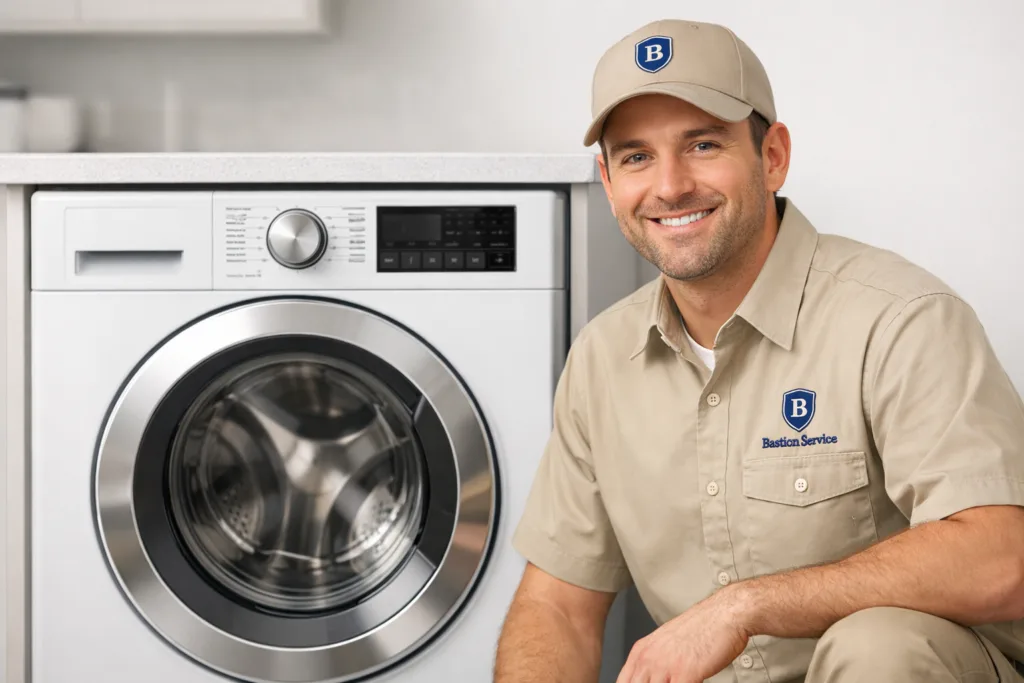
Washer failures tend to affect more than laundry day. A machine that leaves clothes soaked, pauses mid-cycle, or leaks at the front can quickly disrupt the household routine and create avoidable mess inside the home. With Blomberg washers, the most useful way to approach the problem is to match the symptom to the stage of the cycle where it happens: fill, wash, drain, spin, or door release.
Start with what the washer is doing, not just the error
Two washers can show the same basic complaint and fail for very different reasons. A unit that will not spin may actually be unable to drain. A washer that seems dead may have power but cannot proceed because the door is not locking correctly. A cycle that stops early may be reacting to a water level issue, a heating problem, or a communication fault between controls.
That is why symptom pattern matters. Noticing whether the drum still contains water, whether the door stays locked, whether the unit hums without draining, or whether the problem appears only on certain cycles can help narrow the fault much faster.
Common Blomberg washer problems in Mid-City homes
Not draining or leaving clothes too wet
If the cycle ends with standing water in the drum or laundry comes out unusually heavy, the washer may have a blocked drain path, a failing drain pump, a restricted filter, or a condition that prevents full spin speed. Sometimes the machine is protecting itself because it cannot confirm that water has left the tub as expected.
This issue should not be ignored for long. Re-running wet loads can add stress to the pump and keep moisture trapped inside the washer.
Leaking during fill, wash, or spin
Leaks are easiest to solve when the timing is clear. Water appearing right as the washer begins filling may point to an inlet or hose issue. Water at the door area can suggest a boot, seal, loading, or sudsing problem. Leaks that show up while draining or spinning may be tied to the pump, drain hose, internal connections, or movement during high-speed spin.
Even a small recurring leak is worth addressing quickly because it can damage flooring, trim, or the surrounding laundry area.
Shaking, banging, or moving across the floor
Excess vibration is not always just a heavy load. An unbalanced basket, poor leveling, worn suspension components, installation problems, or internal wear can all cause a Blomberg washer to strike the cabinet or walk during spin. If the noise has become more severe over time, the machine should be checked before repeated use causes added damage.
Not filling, filling slowly, or stopping early
When the washer does not take in enough water, starts and then stalls, or seems to wait too long before moving forward, the cause may involve the inlet valve, supply flow, clogged screens, pressure sensing, or control-related issues. In practical terms, the machine may be waiting for conditions it never sees, so the cycle appears frozen.
Door locked, cycle stuck, or unit will not start
Front-load washers rely on proper door-latch operation before the cycle can begin and before the door can safely unlock at the end. If the door remains locked, the cycle will not start, or the controls appear unresponsive, the problem may be with the latch assembly, wiring, control system, or a drain issue that keeps the washer from releasing the door.
Poor wash results or detergent residue
If clothes do not come out clean, detergent remains in the dispenser, or fabrics smell musty after a cycle, the fault may not be a simple soap issue. Low fill performance, temperature problems, restricted circulation, overloaded cycles, or incomplete draining can all affect wash quality. Looking at the full pattern is more helpful than changing detergent and hoping for improvement.
Error codes and repeated beeping
Error codes are useful clues, but they are only part of the picture. A code may indicate a drain, lock, temperature, or fill problem, yet the underlying cause could be a failed component, wiring fault, intermittent sensor issue, or a condition created by the previous cycle. The code matters most when paired with the washer’s actual behavior.
Signs the problem may involve heating or control issues
Some Blomberg washer complaints are less obvious than a leak or no-spin condition. Cycles that run unusually long, stop at nearly the same point every time, or leave laundry less clean than expected can point to heating-related faults or control problems. If the washer cannot heat water when the program expects it to, it may pause, extend the cycle, or fail to complete normally.
Likewise, a machine that responds inconsistently to button selections, skips parts of the cycle, or powers on but does not act correctly may have a user interface or main control issue rather than a mechanical one.
When to stop using the washer
It is best to stop running the machine if you notice any of the following:
- Water leaking onto the floor
- A burning smell or signs of overheating
- Grinding, scraping, or harsh banging sounds
- Repeated failure to drain
- The breaker tripping during operation
- The washer moving aggressively during spin
Continuing to use the washer in these conditions can turn a limited repair into a larger one and may increase the risk of water damage inside the laundry area.
What homeowners in Mid-City should note before service
A few details can make diagnosis much more direct. It helps to know whether the problem happens on every cycle or only certain settings, whether the drum still contains water when the cycle ends, whether unusual noise begins during drain or spin, and whether the issue appeared suddenly or gradually. If an error code is displayed, writing it down is useful, but so is noting what the machine was doing right before the code appeared.
These observations often reveal whether the likely fault is tied to water movement, balance, door locking, sensing, or control behavior.
Repair or replace depends on the failure, not just the age
A Blomberg washer is often worth repairing when the problem is isolated to a serviceable component such as a pump, latch, valve, hose, suspension part, or related electrical item. In those cases, restoring normal operation may be straightforward if the rest of the machine is still in solid condition.
Replacement becomes a stronger consideration when there are multiple issues at once, signs of major internal wear, recurring failures over a short period, or damage that affects several systems together. The best decision usually comes after the source of the failure is confirmed rather than guessed from one visible symptom.
What useful washer service should accomplish
Good residential washer service should do more than swap a part based on a guess. It should verify how the machine behaves during fill, agitation or tumble, drain, spin, and door release, then connect the failure to the actual component or condition causing it. That gives the homeowner a more realistic understanding of whether repair makes sense and what to expect next.
For households in Mid-City, that matters because laundry disruption is rarely just about the appliance itself. It affects timing, clothing, bedding, and the ability to keep up with the week. A focused diagnosis and repair plan helps reduce repeat breakdowns and unnecessary downtime.
Why early attention usually saves trouble
Washer problems rarely correct themselves. A slight leak can become floor damage. A slow drain can turn into a no-drain condition. Mild vibration can develop into heavy cabinet impact and added internal wear. Addressing a Blomberg washer problem early is often the simplest way to avoid larger repair needs later.
If your washer is stopping mid-cycle, failing to drain, leaking, refusing to lock, or producing much louder spin noise than normal, the next step should be based on the exact symptom rather than trial and error.