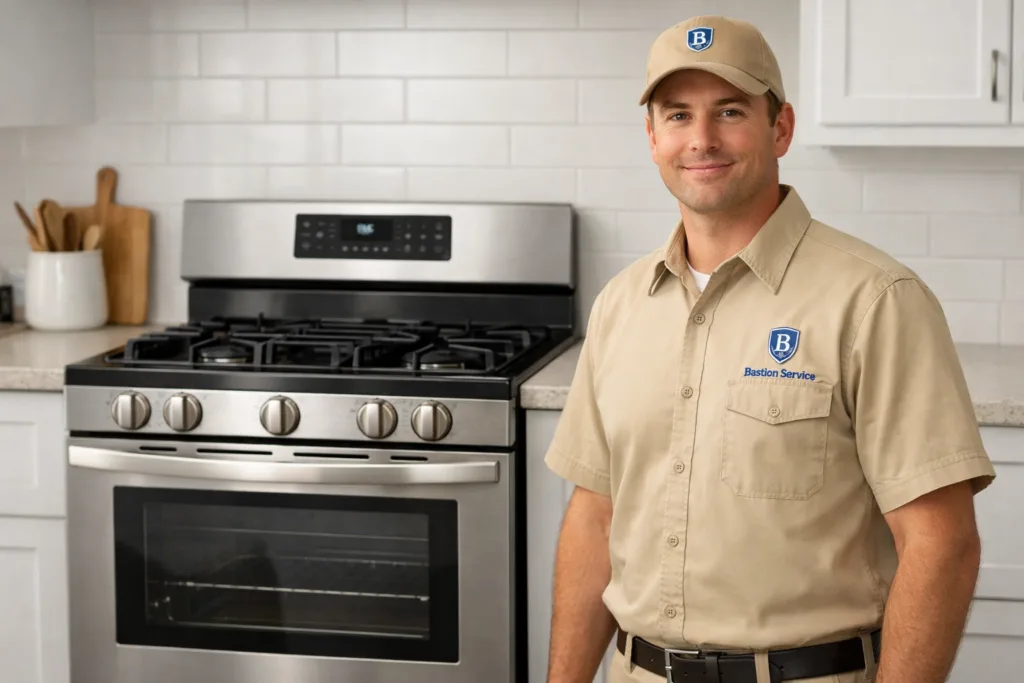
Range problems rarely stay small for long. A burner that clicks every time you try to cook, an oven that never seems to hit the set temperature, or a control panel that responds inconsistently can turn routine meals into guesswork. For homeowners in Culver City, the most useful approach is to match the symptom to the likely system involved before deciding on a repair.
Common LG range problems and what they may mean
Many LG range issues fall into a few recognizable patterns. Surface burner problems usually involve ignition, heating, switching, or wiring. Oven problems tend to center on temperature sensing, heat production, airflow, or electronic control. When the display or touch controls act up, the fault may be related to power supply, interface components, or the main control itself.
That matters because one symptom can have several possible causes. An oven that cooks too slowly may have a weak bake element, a worn igniter, a sensor reading incorrectly, or a control issue affecting heat cycles. A gas burner that clicks repeatedly may be dealing with moisture, misalignment, a dirty burner assembly, or a failing ignition component.
Symptoms homeowners often notice first
Burners that will not ignite or heat properly
On gas LG ranges, delayed ignition, nonstop clicking, or a burner that lights only occasionally often points to an ignition problem rather than a gas supply problem inside the appliance. Burner caps that are not seated correctly, food debris around the ports, moisture after cleaning, worn spark parts, or switch issues can all create similar behavior.
On electric models, a burner that stays cold, overheats, or cycles unevenly may involve the surface element, terminal connection, infinite switch, or related wiring. If one burner behaves differently from the others, that usually helps narrow the fault to a specific component instead of a whole-range power problem.
Oven that runs hot, cool, or unevenly
Temperature complaints are among the most common reasons for LG range service. If the oven takes far too long to preheat, browns unevenly, or leaves some dishes undercooked, the problem may be in the bake system, broil support during preheat, sensor accuracy, convection airflow, or control calibration.
Uneven cooking is not always caused by user settings. A failing temperature sensor may report the wrong reading to the control, causing heat cycles that are too short or too long. On electric ranges, weakened elements can still glow but not produce consistent heat. On gas models, an igniter may draw enough power to glow without opening the gas valve properly.
Control panel issues and error codes
If the display is partially blank, buttons do not respond, settings change unexpectedly, or the unit will not start a cycle, the issue may be electronic rather than mechanical. Some LG ranges also store or show fault codes that point toward sensor, communication, or control trouble.
Intermittent control problems can be especially frustrating because they may appear and disappear. In those cases, testing matters more than guessing. Replacing a visible panel without confirming whether the board, harness, or incoming power is at fault can lead to unnecessary expense.
Door, seal, and stability problems
Not every range complaint starts with heat. A door that will not close fully, a worn gasket, or a unit that rocks on the floor can affect temperature consistency and everyday safety. Heat escaping around the door can make preheat times longer and cooking less predictable. An unstable range can also make stovetop use uncomfortable and increase spill risk.
Why accurate diagnosis matters
Ranges combine heat, gas or high electrical load, sensors, and electronics, so similar symptoms can come from very different failures. Repeated clicking might be a simple moisture issue or a failing ignition switch. Poor baking results might come from a sensor drift problem or from an element that has stopped cycling correctly.
A proper diagnosis should identify what failed, whether there is more than one issue, and whether continued use could make the problem worse. That helps homeowners in Culver City make a better decision about timing, cost, and whether repair is reasonable for the condition of the appliance.
When to stop using the range and schedule service
It is usually time to schedule service when the oven cannot maintain temperature, a burner does not ignite reliably, the cooktop heats unpredictably, or the controls behave erratically. Problems like these tend to affect both cooking results and safe operation.
- Stop using a gas burner if it clicks repeatedly and does not light properly.
- Pause oven use if preheat takes unusually long or temperatures swing enough to ruin meals.
- Do not ignore sparking, breaker trips, overheating smells, or visible damage around switches or controls.
- If there is a strong or persistent gas smell, stop using the appliance immediately and contact the gas utility or emergency service before arranging repair.
Repair or replace: what usually makes sense
Many LG range problems are worth repairing when the failure is limited to a burner component, igniter, sensor, element, switch, fan, or another defined part. Repair is often the better choice when the range is otherwise in good condition and has been performing well until the current problem appeared.
Replacement may make more sense when multiple major systems have failed, electronic issues keep returning, or the total repair path approaches the value of the appliance. Cosmetic condition can matter too. If the cavity, cooktop, door, and controls all show heavy wear, a repair may restore only part of the range’s overall usability.
What a service visit should clarify
A focused LG range service visit should do more than confirm that something is wrong. It should narrow the fault to the specific system involved, explain whether the symptom is caused by one failed part or several related issues, and outline what repair would actually restore. That is especially helpful when the complaint is broad, such as “the oven does not cook right” or “the burner works sometimes.”
For homeowners in Culver City, that means getting a repair recommendation based on testing rather than assumption. Whether the issue is ignition trouble, inconsistent oven heat, clicking burners, or control failure, the goal is a repair path that fits the actual condition of the range and restores normal cooking with less guesswork.