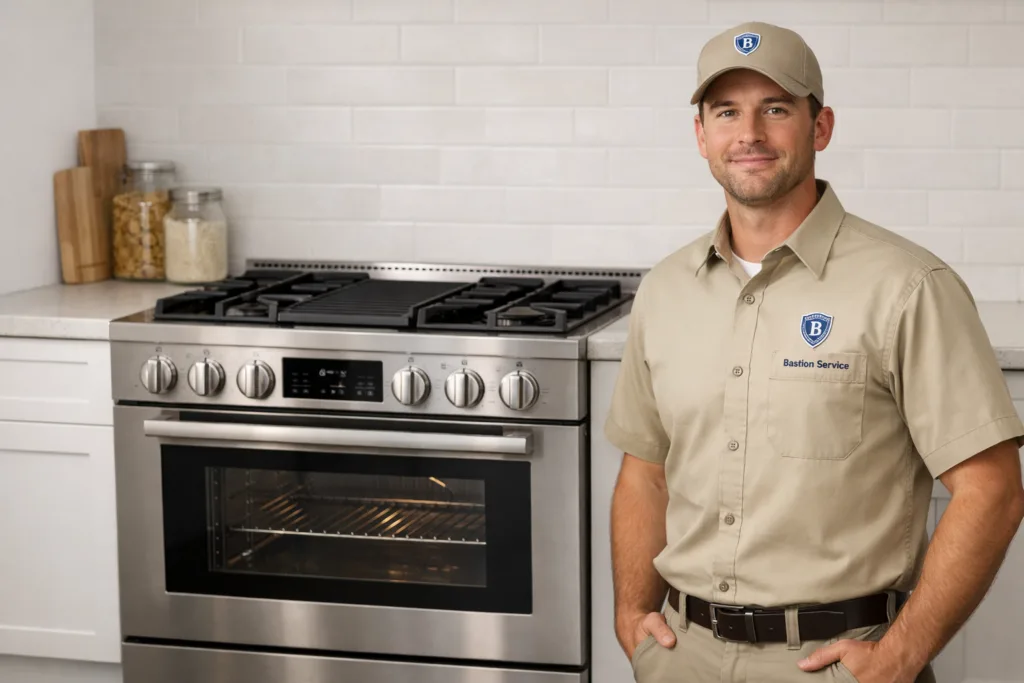
Common Miele range symptoms and what they can mean

Miele ranges often give warning signs before a complete failure. Sometimes the problem is obvious, such as a burner that will not ignite. In other cases, the range still works, but cooking becomes less predictable. Paying attention to the symptom pattern helps narrow down whether the issue involves ignition parts, temperature sensing, heating components, wiring, or the control system.
Burner clicks but does not light
This is one of the most common complaints on a gas range. A steady clicking sound with no flame can point to moisture around the burner, a misaligned burner cap, a dirty ignition area, or a failing spark ignition component. If the burner lights only after repeated attempts, that usually suggests the problem is developing rather than random.
If clicking continues after the burner is already lit, the issue may be tied to the ignition switch or related electrical parts. That kind of symptom should not be ignored, especially if it happens on more than one burner.
Oven is not heating properly
An oven that stays cold, heats too slowly, or never reaches the selected temperature can be caused by several different faults. Depending on the model, the problem may involve the igniter, bake or broil heating component, temperature sensor, relay, or electronic control. From the user side, these failures can look very similar.
Homeowners in Culver City often first notice this as longer preheat times, undercooked centers, or meals that suddenly take much longer than they used to. If the same recipe is no longer reliable, the range is usually telling you something is off in the heating system.
Uneven baking or roasting
When one side of the oven browns faster than the other, or dishes come out overdone on top and underdone in the middle, the issue may be more than simple calibration. Uneven cooking can be linked to weak heating performance, faulty temperature feedback, convection problems on applicable models, or control issues that affect cycling.
This kind of problem matters even if the oven technically still turns on. A premium range should produce stable, repeatable results, not force you to rotate pans constantly or guess at extra cooking time.
Display problems or unresponsive controls
A blank display, intermittent buttons, failed mode selection, or error messages can all point to electrical or control-related faults. In some cases the range may still partly function, while timers, oven features, or temperature settings behave unpredictably. In others, the appliance may stop responding entirely.
Because electronic symptoms can overlap with power supply or wiring issues, replacing parts without testing is often expensive and inconclusive. Accurate troubleshooting is especially important when the cooktop and oven seem to fail in different ways at the same time.
Flame looks weak, uneven, or inconsistent
If a gas burner lights with an irregular flame, heats unevenly, or seems weaker than normal, the problem may involve the burner head, cap positioning, ignition performance, or gas delivery within the appliance. Even when the burner still works, inconsistent flame can affect boiling, simmering, and overall cooking control.
A burner that suddenly behaves differently from the others is worth checking early, since ongoing use can sometimes create additional wear or carbon buildup around the affected area.
Signs the problem is getting worse
Many range issues begin as occasional inconveniences and then become more frequent. A burner that fails once a week may eventually stop lighting altogether. An oven that runs slightly cool may progress to major temperature swings. Watching for escalation helps you decide when service should move from optional to necessary.
- Preheat times keep getting longer
- The same burner fails repeatedly
- Temperature results vary from one use to the next
- Controls respond inconsistently or reset unexpectedly
- More than one function starts acting up at once
When multiple symptoms appear together, the repair path may be different than it would be for a single isolated failure. That is often the point when a proper diagnosis becomes the most cost-effective next step.
When to stop using the range
Some issues are more than routine inconvenience. If the range shows persistent ignition failure, unusual sparking, a burning electrical smell, breaker trips during operation, or oven heat that seems uncontrolled, it is best to stop using the appliance until it has been evaluated.
For gas-related concerns, safety comes first. If you notice a strong or persistent gas odor, do not continue testing the range. Leave the area if needed and contact the gas utility or emergency services before scheduling appliance repair.
Repair or replace: what usually makes sense
For many households, repair is still the better option when the range is otherwise in good condition and the issue can be traced to a specific failed part or system. That is especially true when performance has been stable up until one clear symptom appeared.
Replacement becomes more reasonable when the appliance has repeated major failures, multiple systems breaking down at the same time, or repair costs that no longer match the condition of the range. The key is to base the decision on the confirmed fault rather than on guesswork from the symptom alone.
A burner ignition issue and a widespread control failure may both show up as “the range is acting up,” but they are very different repair conversations. Knowing which category your Miele range falls into is what makes the decision clearer.
What to note before scheduling service
If you are arranging Miele range repair in Culver City, a few details can make troubleshooting faster and more focused. Try to notice whether the issue affects the oven, the cooktop, or both. It also helps to know whether the problem happens every time, only after preheating, only on certain settings, or only on one burner.
- Any error code shown on the display
- Whether the clicking is constant or intermittent
- If the oven misses temperature high or low
- Whether the problem began suddenly or gradually
- If recent cleaning, moisture, or power interruption came before the issue
These details do not replace testing, but they do help connect the symptom to the most likely failure path.
Why symptom-based diagnosis matters on a Miele range
Miele cooking appliances are built with integrated controls and model-specific components that can make one symptom appear to come from several different causes. An oven that does not heat well may not need the same repair as another oven showing nearly identical behavior. A burner ignition complaint may be caused by something simple, or it may reflect a deeper ignition circuit problem.
That is why symptom-based repair is usually the right approach for Culver City homeowners. It reduces unnecessary parts replacement, helps avoid repeat breakdowns caused by misdiagnosis, and gives you a realistic view of whether the appliance is worth repairing now.
What homeowners in Culver City can expect from a repair visit
A useful service visit should focus on how the range actually behaves in your kitchen, not just on the name of the symptom. That means checking ignition performance, heating response, control behavior, and any error history that helps identify the failed system. Once the fault is narrowed down, it is much easier to explain the repair path and whether it makes sense to proceed.
For households that rely on the range every day, timely repair matters because small cooking inconsistencies quickly turn into missed meals, workarounds, and frustration. When the problem is identified correctly, the next step is usually much simpler than continuing to live with unreliable burners or an oven you cannot trust.