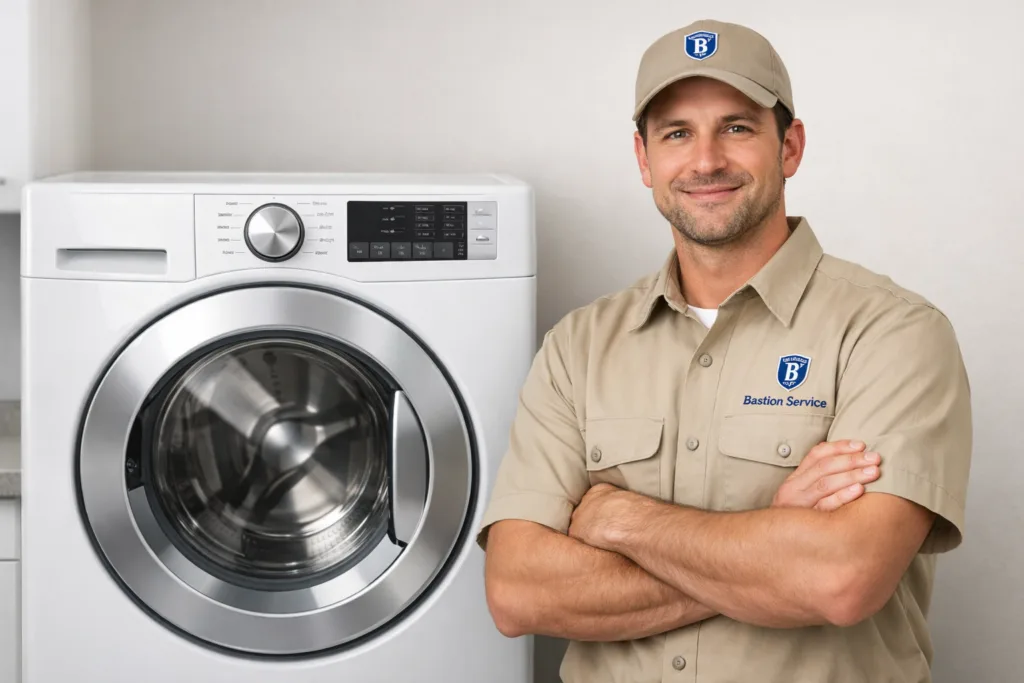
Washer problems tend to show up in the middle of a busy week, and the symptoms are not always as straightforward as they seem. A machine that will not spin may actually be struggling to drain first. A washer that appears to leak from underneath may have a hose issue, a pump problem, or simply too much detergent creating excess suds. For homeowners in Palms, the most useful starting point is understanding what the symptom pattern suggests before deciding on repair.
What different washer symptoms usually mean
Washer will not start
If your Amana washer does nothing when you press start, the problem may involve power to the unit, a lid switch, a door lock, the user interface, or the main control. Some models also refuse to begin a cycle if the washer cannot confirm that the lid or door is fully secured. When the machine looks completely dead, it is important to separate a power issue from a failed component inside the washer.
Washer fills but does not agitate or spin
This often points to a drive-related problem rather than a water supply issue. Depending on the model, the cause may be a worn belt, shift actuator, motor problem, capacitor, or control failure. If the tub fills normally but clothes just sit in water, the washer may be unable to transition from sensing and filling into wash action.
Washer drains slowly or not at all
Standing water at the end of the cycle usually means the drain path is restricted or the pump is failing. Small items can also lodge where they should not be and interfere with drainage. A drain issue often creates additional symptoms such as long cycle times, repeated stopping, or clothes left unusually wet because the washer cannot complete a proper spin after the water remains in the tub.
Washer shakes, bangs, or walks
Severe vibration is more than a nuisance. An unlevel machine, overloaded drum, worn suspension parts, or tub support problem can cause the washer to slam during spin. If the movement is forceful enough to shift the machine across the floor, continued use can increase wear on internal parts and may lead to additional damage over time.
Washer leaks during part of the cycle
When the leak appears matters. Water on the floor during fill can suggest an inlet hose or valve area issue. A leak during washing may point to a tub, hose, or door boot problem depending on the style of washer. Water showing up during drain and spin may be tied to the pump or drain hose. Noticing whether the leak happens early, mid-cycle, or near the end helps narrow the repair path.
Clothes come out dirty, soapy, or too wet
Poor wash results are not always caused by a failed wash system. This symptom can come from weak agitation, incomplete draining, reduced spin speed, water inlet trouble, load imbalance, or detergent misuse. If garments still feel heavy with water after the cycle, the machine may be spinning poorly even if it seems to complete the program.
Signs the problem may be getting worse
Some washer issues stay manageable for a short time, but others tend to escalate quickly. It is smart to stop using the appliance and arrange service if you notice any of the following:
- Water leaking onto the floor
- Burning smells during operation
- Grinding, scraping, or loud knocking sounds
- The breaker tripping when the washer runs
- The drum refusing to spin with a full load
- Repeated cycle cancellations or mid-cycle shutdowns
These symptoms can indicate more than routine wear. Continuing to run the washer may put extra strain on the motor, pump, suspension system, or controls, and may also create avoidable water damage in the laundry area.
Common causes behind poor wash performance
When the washer technically runs but results are disappointing, the issue often gets overlooked because the machine is not completely inoperable. In reality, poor cleaning performance usually means something in the cycle is no longer happening correctly.
Examples include:
- Low or inconsistent water fill affecting detergent distribution
- Weak or absent agitation leaving soils in fabrics
- Drain problems allowing dirty water to remain in the tub
- Spin problems that leave clothing too wet for proper rinsing and finishing
- Sensor or control issues that interrupt normal cycle progression
It is also worth checking load habits. Oversized loads, tightly packed items, and too much detergent can create symptoms that mimic mechanical failure. A good inspection separates user-correctable issues from actual part failure.
When repair makes sense
Many Amana washer problems are repairable when the failure is limited to one system and the rest of the appliance is in decent condition. Drain pump issues, lid switch faults, certain drive problems, water inlet failures, and some control-related symptoms are often worth addressing if the washer has otherwise been reliable.
Repair is usually the better option when:
- The washer has a single clear symptom rather than several unrelated ones
- The cabinet and tub structure are still in good shape
- There is no severe rust, major corrosion, or repeated water damage
- The machine has not already had multiple major repairs in a short period
When replacement may be the better choice
Sometimes the smarter decision is to move on from the machine rather than continue investing in it. Replacement becomes more reasonable when the washer has multiple failing systems, significant structural wear, ongoing leaks that have caused broader damage, or a major internal failure on an older unit.
A homeowner in Palms usually gets the best value by looking at the overall picture: the current symptom, the washer’s condition, repair history, and whether the proposed fix is likely to restore normal laundry use rather than provide only a short-term improvement.
Helpful details to note before service
If you are scheduling Amana washer repair in Palms, a few observations can make the visit more productive. Try to note:
- Whether the washer fills, agitates, drains, and spins
- At what point the cycle stops
- If the problem happens on every load or only sometimes
- Whether the issue is worse with heavy items like towels or bedding
- If any unusual sounds appear during wash, drain, or spin
- When and where any leaking is visible
That information helps connect the symptom to the most likely system involved and can reduce unnecessary guesswork.
What homeowners in Palms should expect from washer service
Good residential washer service should focus on the actual failure, not just the most obvious symptom. A proper evaluation should determine whether the trouble is tied to draining, filling, spinning, vibration, controls, or a combination of issues. From there, homeowners can weigh the repair path against the washer’s overall condition and expected reliability after the fix.
If your Amana washer has started stopping mid-cycle, leaving clothes soaked, or making louder noises than usual, addressing it early often prevents a smaller issue from turning into a larger and more expensive one.