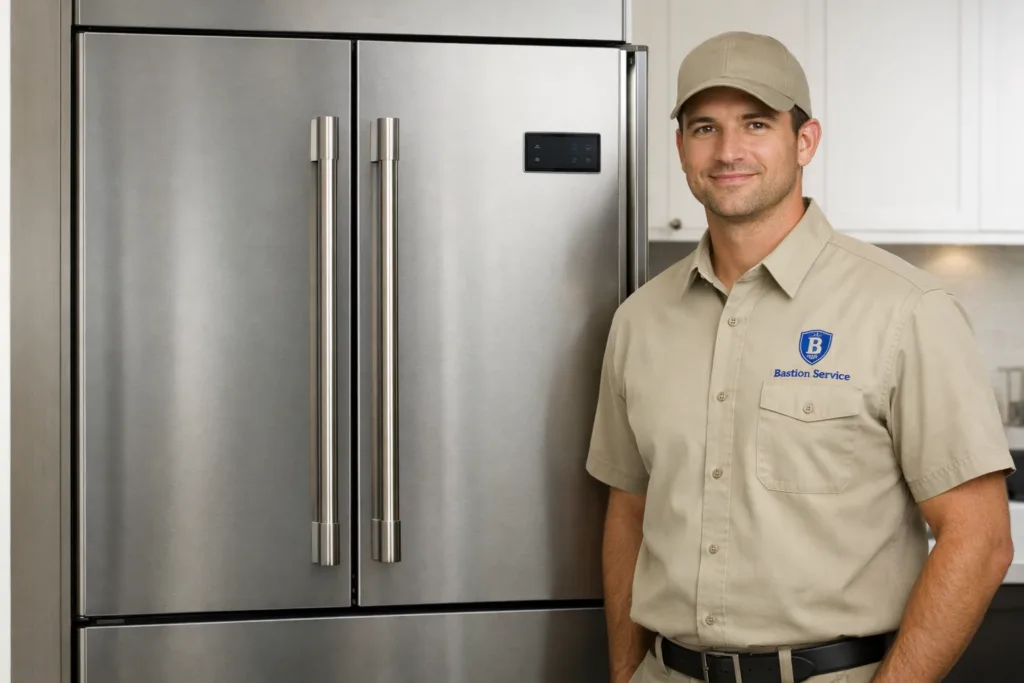
A Dacor refrigerator that suddenly runs warm, develops frost, or starts leaving water on the floor can affect everything from grocery storage to daily meal planning. In many homes, the most useful approach is to match the repair path to the exact symptom pattern instead of assuming every cooling issue points to the same failed part.
What different cooling symptoms often mean
Refrigerator problems rarely show up in exactly the same way. One unit may stop cooling in both sections at once, while another still freezes reasonably well but leaves the fresh-food compartment too warm. Those differences help narrow the likely cause.
If the freezer seems cold but the refrigerator section is warming, likely concerns include restricted airflow, frost around the evaporator area, a failing fan motor, or a defrost problem. If both sections are warm, the diagnosis may shift toward condenser airflow, start components, controls, or a more serious cooling-system issue. A unit that cools unevenly from morning to night can also point to sensors, intermittent fan operation, or a control fault.
Common Dacor refrigerator problems in Rancho Palos Verdes homes
Fresh-food section is too warm
This is one of the most common complaints with built-in and full-size refrigeration. You may notice milk spoiling early, produce softening faster than usual, or the top shelves feeling warmer than the lower ones. In many cases, the root cause involves weak internal air circulation, frost blocking vents, or a component in the defrost system not doing its job.
Freezer is not holding temperature
When the freezer rises above normal temperature, ice cream may soften, ice cubes may clump together, and frozen foods may begin to thaw at the edges. Causes can include poor condenser cooling, fan failures, control issues, or problems in the sealed cooling system. If the freezer cannot stay cold, the refrigerator side usually follows.
Water leaking under or inside the refrigerator
Leaks can come from a blocked defrost drain, a supply line issue, excess condensation, or an ice maker problem. Water inside drawers or under crispers often points in a different direction than water collecting on the floor in front of the unit, so the location of the leak matters. Quick attention helps prevent cabinet swelling, flooring damage, and hidden moisture buildup.
Frost buildup that keeps returning
Recurring frost is more than a cosmetic issue. It can reduce airflow, affect temperature stability, and force the refrigerator to run longer than it should. Frost around vents, on the back freezer wall, or near door openings may indicate a defrost failure, a door sealing problem, or warm air getting into the cabinet.
Clicking, buzzing, humming, or rattling noises
Not every refrigerator noise signals a major repair, but a new sound that repeats predictably deserves attention. A clicking compressor that does not start, a noisy evaporator fan, vibration against surrounding cabinetry, or unusual sounds near the ice maker area can all produce different symptom patterns. Timing matters here: noise during startup, after door closure, or during ice production can help identify the source.
Ice maker or dispenser problems
If the ice maker slows down, stops completely, or makes smaller cubes than normal, the issue may involve temperature performance, water flow, sensors, or the ice maker assembly. Since weak freezer cooling often shows up first in ice production, these complaints should be evaluated along with the overall temperature condition of the appliance.
Signs the refrigerator should not be ignored
Some symptoms give a clear warning that waiting is likely to make the repair more difficult or more expensive. Service is usually worth scheduling when you notice:
- Food temperatures rising in either compartment
- The refrigerator running almost constantly
- Water collecting repeatedly under the unit
- Frost returning soon after being cleared
- Repeated clicking without normal cooling recovery
- Sharp swings between overly cold and too warm
A refrigerator that is only failing part of the day can be especially misleading. Intermittent problems sometimes allow the unit to appear normal for hours before temperatures drift again, which can put stored food at risk without obvious warning.
Why Dacor refrigerator issues can be misleading
High-end refrigeration systems often show subtle symptoms before a complete breakdown. Longer run times, soft ice cream, warmer door shelves, condensation near the gasket, or sporadic frost may all seem unrelated at first. In reality, they can be connected by one underlying airflow, sensor, fan, or defrost issue.
That is why replacing parts based only on a general cooling complaint can miss the actual cause. Two refrigerators with the same “not cooling” description may need entirely different repairs once the operating pattern is checked more closely.
When continued operation can cause more trouble
Using the refrigerator while it struggles can increase stress on other components. Restricted airflow and heavy frost can force longer run times. Dirty condenser conditions can raise operating temperature and reduce efficiency. Door sealing issues can pull in moisture continuously, creating more frost and additional temperature instability.
Leaks create a separate concern. Even a small amount of recurring water can damage nearby flooring, trim, or cabinetry over time. If the appliance is built into surrounding kitchen finishes, catching moisture problems early becomes even more important.
Repair or replacement depends on the diagnosis
Many Dacor refrigerator problems are repairable, especially when the issue involves fan motors, drains, ice maker components, door gaskets, sensors, controls, or start-related electrical parts. Those are very different from cases involving major cooling-system failures or repeated high-cost breakdowns in an older unit.
The decision usually comes down to three things:
- The exact failed component or system
- The overall age and condition of the refrigerator
- Whether the repair restores reliable operation without stacking new costs on top of old ones
A refrigerator that appears to have a severe cooling failure may still turn out to have a targeted, repairable fault. On the other hand, a unit with mild but recurring symptoms can sometimes reveal a larger underlying issue. The best choice depends on what testing shows, not just on the first visible symptom.
What homeowners can note before service
A few observations can make troubleshooting more efficient. Before a visit, it helps to note:
- Whether the freezer and refrigerator sections are both affected
- Whether the problem is constant or intermittent
- Where frost or leaking appears
- What type of noise you hear and when it happens
- Whether ice production changed before cooling performance dropped
- Whether there was a recent power interruption or outage
For households in Rancho Palos Verdes, those details can help separate a door-sealing issue from a defrost problem, or an airflow complaint from a larger cooling-system concern.
Focused help for Dacor refrigerator repair in Rancho Palos Verdes
Dacor refrigeration problems are best handled by following the symptom trail carefully rather than treating every warm cabinet, leak, or frost complaint as the same repair. If your refrigerator is showing temperature swings, poor airflow, unusual noise, or ongoing moisture issues, the next step is to identify the failing component and determine whether a targeted repair makes sense for the unit’s condition.