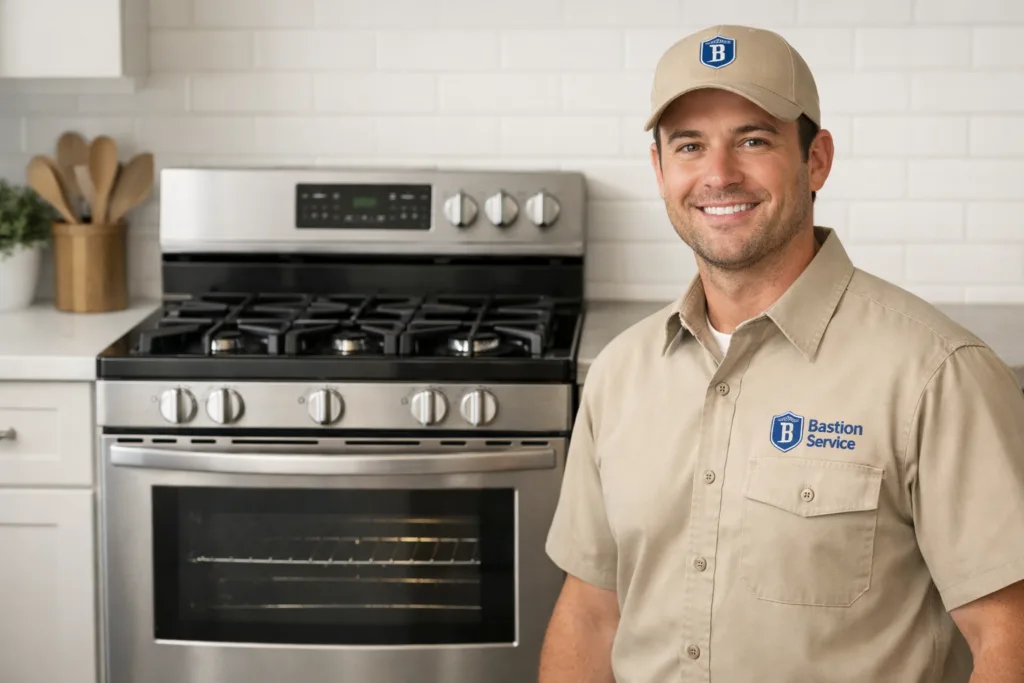
Cooking problems tend to show up in everyday ways first: a front burner that suddenly stops working, an oven that needs extra time to finish dinner, or a control panel that responds only part of the time. With Kenmore ranges, those symptoms can come from several different components, so the most cost-effective repair usually starts with matching the failure pattern to the right system instead of assuming one part is to blame.
How symptom patterns help narrow down the problem
A range combines surface cooking, oven heating, temperature regulation, ignition, and electronic control functions in one appliance. Because of that, similar complaints can have very different causes. An oven that seems too cool may have a weak heating component, a bad sensor, or a control issue. A gas burner that clicks but does not light may be dealing with misalignment, debris, moisture, or an ignition fault.
Looking at how often the issue happens, whether it affects one burner or all of them, and whether the problem is getting worse helps identify where to focus. In Beverly Hills homes, this matters because targeted testing is often the difference between a straightforward repair and spending money on parts that do not solve the underlying issue.
Common Kenmore range problems in Beverly Hills homes
Surface burner will not heat or ignite
On electric Kenmore ranges, a cold burner may point to a failed surface element, a damaged receptacle, or a faulty infinite switch. If the burner heats only on certain settings, inconsistent control operation may be part of the issue. On gas models, failure to ignite can be tied to spark ignition trouble, blocked burner ports, burner cap placement, or a worn switch sending unreliable spark signals.
If only one burner is affected, the fault is often local to that burner’s components. If multiple burners are acting up, the diagnosis may shift toward shared ignition or electrical problems.
Burner clicks repeatedly
Continuous clicking on a gas range is a common complaint. Sometimes it starts after cleaning, boiling over, or moisture getting into the igniter area. In other cases, the clicking continues because a switch is stuck or the ignition system is no longer behaving normally. If the burner lights but keeps clicking, that still points to a problem worth correcting, especially if it happens often.
Oven is not heating well
When the oven preheats slowly, never reaches the selected temperature, or leaves food pale and underdone, likely causes depend on the model type. Electric ovens may have a weakened bake or broil element. Gas ovens often rely on an igniter that can glow but still be too weak to open the gas valve properly. A sensor or control issue can also create the impression of poor heating even when the visible heating parts seem normal.
Uneven baking or temperature drift
If one side of a dish browns faster, cookies finish inconsistently from rack to rack, or recipes suddenly need much longer than before, the oven may be cycling poorly. Some temperature variation is expected during normal operation, but large swings usually suggest a sensor problem, a failing igniter, an element that is not producing full heat, or a control board issue affecting cycling accuracy.
Oven works sometimes, then stops
Intermittent failures are often more frustrating than complete shutdowns. A Kenmore range that works one day and not the next may have a loose connection, heat-sensitive control problem, failing relay, or component that cuts out as it warms up. These issues are easy to misread because the appliance may appear normal during part of the visit unless the symptom history is considered carefully.
Display, keypad, or control issues
A blank display, unresponsive keypad, flashing error behavior, or oven functions that do not start consistently may indicate trouble with the electronic control, user interface, power supply, or wiring connections. In some cases, the panel problem is separate from the heating complaint. In others, both symptoms come from the same failing control system.
What specific symptoms can reveal
- One burner not working: often a burner-specific component rather than a full appliance failure.
- All burners affected: may suggest a broader power, ignition, or control problem.
- Oven light works but no heat: power may be present even though a heating circuit has failed.
- Food suddenly cooking slower than usual: commonly linked to weak heating performance or inaccurate temperature sensing.
- Burner sparks but no flame: can indicate ignition alignment, gas flow, or burner assembly issues.
- Range trips power or behaves erratically: points toward an electrical fault that should be evaluated before continued use.
When the range should not keep being used
Some issues can wait a short time, but others should move to the top of the list. Stop using the range and arrange service if a burner will not shut off properly, the oven overheats, wiring appears damaged, or the appliance trips the breaker repeatedly. Those signs can indicate faults that expand the damage or create a safety concern if ignored.
For gas Kenmore ranges, delayed ignition, frequent failure to light, or persistent clicking should be addressed promptly. If there is a strong or persistent gas odor, discontinue use immediately and follow appropriate gas safety steps before treating it as a standard appliance repair call.
Repair or replace: what usually makes sense
Many Kenmore range problems are worth repairing when the issue is confined to one functional area, such as a burner assembly, igniter, element, sensor, switch, or door-related part. Repair becomes less attractive when the range has several unrelated failures, a history of recurring electrical problems, or wear that affects both performance and reliability.
For homeowners in Beverly Hills, the best decision usually depends on a few practical questions:
- Is the failure isolated to one system?
- Is the rest of the appliance in solid working condition?
- Will the repair restore normal daily cooking without likely follow-up issues?
- Is the control or structural wear becoming a larger problem than the current symptom?
If the answer to most of those questions is yes, repair is often the sensible path. If not, replacement may be the better long-term investment.
Why oven and burner complaints are sometimes connected
Homeowners often think of the cooktop and oven as separate problems, but on a range they can overlap. Shared controls, power supply issues, and wiring faults can affect more than one function at once. That is why a service visit should account for the full complaint history rather than focusing only on the most obvious symptom.
For example, a household may notice poor oven heating and assume the bake element is the only issue, while the actual problem involves temperature sensing or control behavior. Similarly, repeated burner clicking may not stay limited to one cooking zone if the underlying ignition components are wearing more broadly.
What a useful service visit should accomplish
A productive appointment should verify the symptom, test the components related to that symptom, and explain what failed in plain language. That includes identifying whether the issue is isolated, whether any related wear is present, and whether the recommended repair is likely to restore stable operation.
When a Kenmore range in Beverly Hills is diagnosed accurately, the next step becomes much clearer. Whether the problem involves ignition trouble, inconsistent oven temperatures, burner failure, or control issues, the goal is to restore reliable cooking without guesswork or unnecessary part replacement.