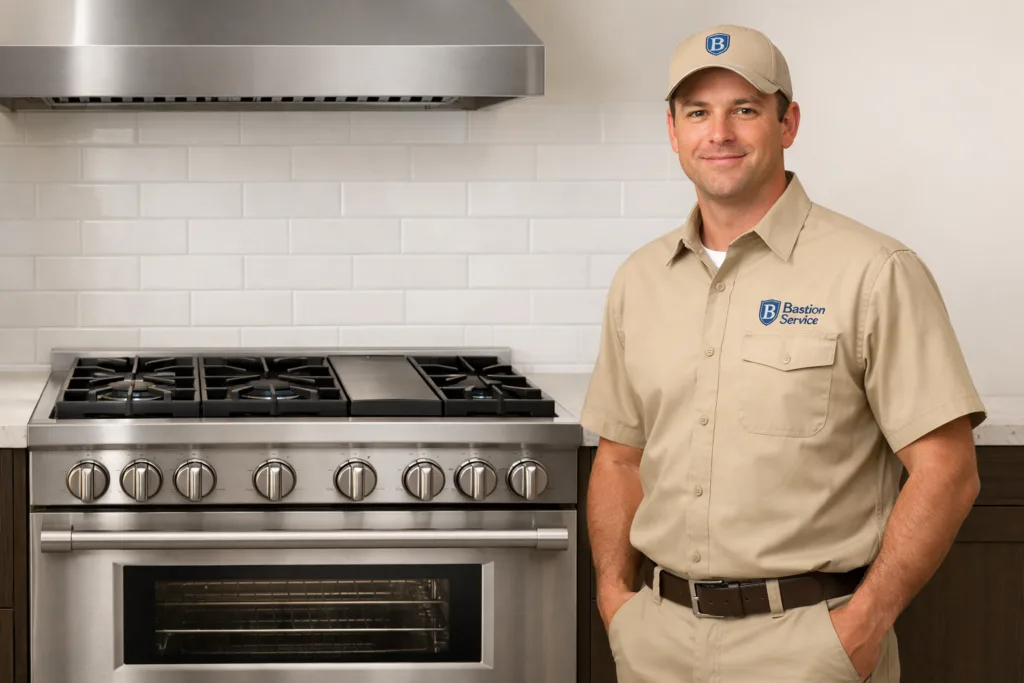
Cooking problems with a Wolf range often start small before they become disruptive. A burner may click longer than usual, the oven may need extra time to preheat, or temperature results may become less consistent from one meal to the next. Because several different components can create similar symptoms, the most useful approach is to match the repair path to the exact way the appliance is failing.
Start with the symptom pattern
On a premium range, the details matter. Does one burner misfire while the others work normally? Does the oven eventually heat, but not hold temperature? Is the issue limited to bake, broil, or both? These differences help separate a simple burner assembly issue from an ignition fault, a sensor problem, or a control-related failure.
In Beverly Hills homes, homeowners often notice performance changes during normal daily cooking rather than a complete shutdown. That is why symptom-based testing is important. It helps determine whether the problem is isolated and repairable, or whether multiple systems are showing wear at the same time.
Common Wolf range problems in everyday use
Burners that click but do not ignite properly
Repeated clicking is one of the most common complaints. In some cases, the cause is minor, such as moisture after cleaning or a burner cap that is not seated correctly. In other cases, the clicking continues because the igniter is not sparking where it should, the burner ports are obstructed, or the ignition system is no longer responding consistently.
If the burner eventually lights but takes several tries, that still points to a problem worth addressing. Delayed ignition is not the same as normal operation, and continued use can put added strain on related components.
Weak, uneven, or unstable flame
A flame that looks irregular, lifts, burns unevenly, or seems weaker than usual can affect everything from simmering to high-heat cooking. This may come from clogged burner ports, burner head wear, or an issue in the gas delivery path within the range. When the flame pattern changes noticeably, cooking performance usually changes with it.
Oven not heating correctly
If the oven is slow to preheat, fails to reach the selected temperature, or cycles in a way that leaves food undercooked, the cause may involve the igniter, temperature sensor, control board, or another heating-related component. The key is identifying whether the oven is misreading temperature, failing to generate enough heat, or not responding correctly to the selected setting.
Oven overheating or cooking unevenly
Overheating can be just as frustrating as weak heat. Food may brown too quickly on top, burn underneath, or come out inconsistent from rack to rack. A drifting temperature sensor, control problem, or uneven heat distribution inside the oven cavity can all create this kind of result. If recipes that once worked reliably now require constant adjustment, that is usually a sign something has changed mechanically or electronically.
Broiler not working as expected
Broil issues often show up as weak upper heat, slow browning, or no response when the broiler setting is selected. This can point to a problem in the broil circuit, ignition system, or control response. Because broil performance is easy to overlook until you need it, many homeowners do not realize there is an issue until cooking results become obviously uneven.
Display, knob, or control problems
When settings do not register properly, the display is blank or dim, or the range behaves intermittently, the problem may be in the interface, main control, or power-related components inside the unit. On a Wolf range, control issues can affect both usability and temperature accuracy, so they should not be dismissed as cosmetic inconvenience.
Signs the problem may be getting worse
Some range issues remain manageable for a while, but others tend to escalate. It is wise to schedule service if you notice:
- Burners that require repeated attempts to light
- Clicking that continues after ignition
- Oven temperatures that are clearly off from the set point
- Preheat times that have become unusually long
- Cooking results that vary without any recipe changes
- Controls that work inconsistently or only some of the time
These symptoms often indicate wear or failure in a component that is unlikely to correct itself. Waiting too long can make diagnosis more complicated if secondary issues begin to appear.
When to stop using the range
There is a difference between an inconvenience and a safety concern. If a burner will not ignite reliably, if ignition is delayed, or if oven behavior changes suddenly and dramatically, it makes sense to stop using that function until the cause is identified.
If you detect a strong or persistent gas smell, stop using the appliance immediately. Leave the area if necessary and contact the gas utility or emergency services before arranging appliance repair. A gas odor should always be treated as a safety issue first.
Repair versus replacement for a Wolf range
Many Wolf range problems are still good repair candidates, especially when the issue is tied to a specific part and the rest of the appliance is in solid condition. A targeted repair often makes sense when the range has been performing well overall and the current problem is limited to ignition, temperature regulation, burner performance, or controls.
Replacement becomes a more serious discussion when the range has multiple major failures, a long history of recurring problems, or repair costs that no longer make sense compared with the appliance’s overall condition. For most homeowners in Beverly Hills, the decision comes down to whether the repair restores dependable day-to-day cooking without leading to repeated follow-up issues.
What a service visit should help you understand
A useful service appointment should do more than identify a bad part. It should show whether the visible symptom matches a single failed component, whether several issues are connected, and whether the repair is likely to restore normal cooking performance. That matters with ranges, because the same complaint can come from very different systems.
For example, an oven that seems inaccurate may have a sensor issue, but it could also be struggling with ignition or control response. A burner that appears weak may have a burner-head problem, but it could also reflect a broader ignition or fuel-delivery concern within the appliance. Sorting that out early helps avoid unnecessary part replacement.
Helpful preparation before service
If you are scheduling service, a few observations can make the visit more productive:
- Note whether the problem affects one burner or several
- Pay attention to whether the issue happens every time or only intermittently
- Record whether the oven is too hot, too cool, or simply slow
- Notice any display behavior, error indications, or control lag
- Think about when the problem started and whether it followed cleaning, power interruption, or heavy use
These details can help narrow the fault faster and lead to a more efficient repair plan.
Focused help for Wolf range problems in Beverly Hills
When a Wolf range is no longer heating, igniting, or responding the way it should, the next step is to identify the failed system rather than guessing based on symptoms alone. Whether the issue involves burner ignition, oven heat, broil performance, or controls, the goal is to determine what is actually wrong and whether repair is the right next move for the appliance in your home.