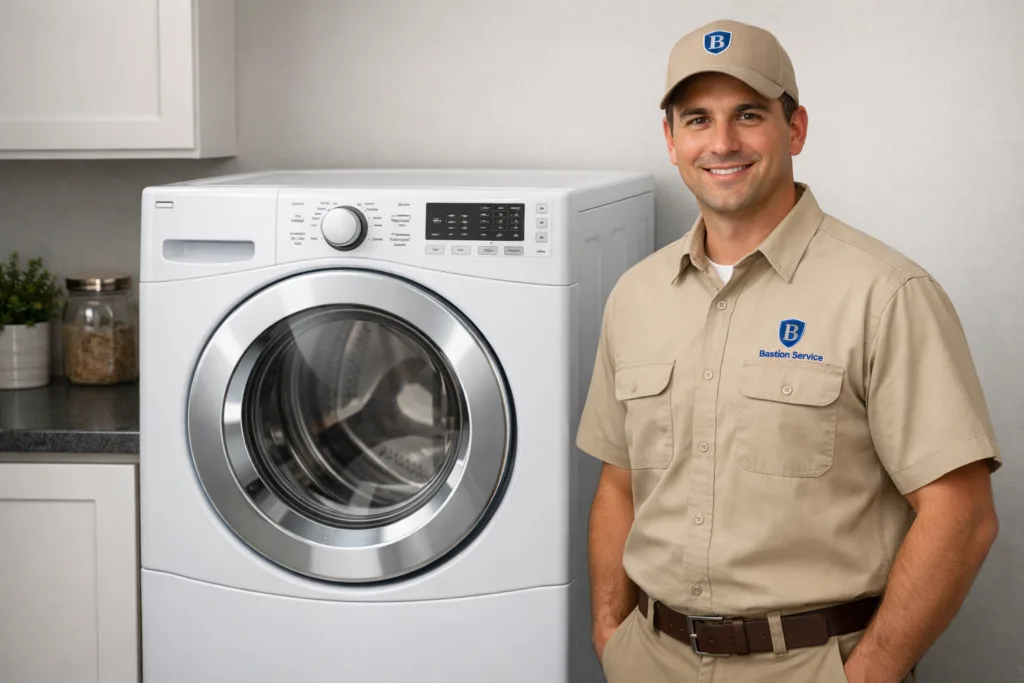
Common Kenmore dryer problems in Beverly Hills homes

Most dryer breakdowns start with a small pattern homeowners notice during regular laundry: clothes are still damp, the machine sounds different, or a normal cycle suddenly takes much longer. With Kenmore dryers, the symptom matters because several different part failures can produce similar results. A dryer that tumbles without heat, for example, may have a heating circuit issue, a tripped safety component, restricted airflow, or a power supply problem.
Paying attention to how the dryer behaves from one load to the next helps narrow down the repair path and can prevent added wear on both the appliance and clothing.
Dryer runs but does not heat
If the drum turns normally but items stay wet, the issue may involve the heating element, thermostat-related parts, thermal protection, wiring, or incoming power. On some electric dryers, the unit can still appear to run even when the heating side is not receiving full power. In other cases, poor airflow causes overheating and leads protective components to fail.
This is one of the most common service calls because the dryer may seem only partially broken at first. Homeowners often notice the problem after two or three loads in a row come out damp.
Dryer gets warm but takes too long
When a Kenmore dryer produces some heat but drying time keeps increasing, restricted airflow is often high on the list. Lint buildup, crushed venting, weak heat output, cycling problems, or moisture sensor issues can all reduce drying performance. The machine may still complete a cycle, but it uses more time and puts more heat exposure on fabrics than necessary.
Long dry times are worth addressing early. Continued operation in that condition can stress heating components and lead to overheating complaints later.
Dryer will not start
A no-start dryer can be caused by a failed door switch, blown thermal fuse, start circuit issue, control fault, timer problem, or power problem at the outlet. Sometimes the machine is completely dead. Other times the panel responds but the drum never begins turning.
Because several safety and control parts can interrupt startup, this symptom usually needs direct testing rather than guesswork.
Dryer makes unusual noise
Squealing, thumping, scraping, rumbling, and rattling often point to wear in the support system inside the cabinet. Rollers, glides, the idler pulley, belt, or motor can all create distinct noises as they wear out. A foreign object caught in the drum seal area can also create metal-on-metal sounds.
Noise problems tend to get worse, not better. A dryer that is only mildly noisy today may become difficult to use if a support part fails completely.
Burning smell or excessive heat
A burning odor should always be taken seriously. Lint accumulation, airflow restriction, overheating, dragging drum parts, or an electrical fault can all create heat where it should not be building up. If the cabinet feels unusually hot or the smell repeats during use, it is best to stop running the dryer until the cause is identified.
Why symptom-based diagnosis matters
Dryer complaints overlap more than many homeowners expect. No heat can come from a failed component, but it can also be the result of restricted venting that caused a protective device to open. A loud noise may involve one worn part, or several worn parts creating extra strain together. Replacing a single part without identifying the full cause can lead to repeat problems.
For a household in Beverly Hills, a useful service visit should answer a few practical questions:
- What failed and why did it fail?
- Is there hidden wear related to the main symptom?
- Is it safe to keep using the dryer before repair?
- Is the repair reasonable based on the condition of the machine?
That kind of evaluation is more helpful than assuming every no-heat or no-start complaint has the same solution.
Signs your Kenmore dryer should be checked soon
Some dryers fail all at once, but many show warning signs first. If you catch the pattern early, repair is often more straightforward than waiting for a complete shutdown.
- Loads need repeated cycles to dry
- The dryer stops mid-cycle or shuts off unexpectedly
- Start-up becomes intermittent
- The drum turns with a new squeal or thump
- The top or sides of the cabinet feel much hotter than usual
- There is a burning, dusty, or overheated smell
- The dryer runs but laundry comes out unusually damp or very hot
These symptoms often indicate a problem that is already affecting airflow, heat regulation, or the drive system.
What can happen if you keep using a struggling dryer
Continuing to run a dryer with an unresolved issue can make the eventual repair more involved. A machine with poor airflow may overheat repeatedly. A dryer with worn rollers or a failing idler pulley can place extra stress on the belt and motor. A no-heat condition that seems manageable at first can hide an electrical or thermal safety problem that should not be ignored.
There is also the everyday inconvenience. Extra cycles mean more time spent on routine laundry, more wear on clothing, and more frustration when loads still are not ready when you need them.
Repair or replace?
Many Kenmore dryer problems are repairable, especially when the issue is limited to a common wear part or a single failed component. Repairs often make sense when the cabinet and drum are in good condition, the appliance has otherwise been reliable, and the current symptom has a defined solution.
Replacement becomes more likely when the dryer has several unrelated failures, extensive internal wear, recurring overheating history, or control problems combined with mechanical deterioration. Age matters, but age alone is not the best guide. The more important question is the overall condition of the appliance and whether the repair addresses the problem in a lasting way.
What homeowners in Beverly Hills can expect from a focused service visit
A productive appointment should do more than confirm that the dryer is not heating or not starting. It should identify the failed part, check for related wear, and look for contributing conditions such as vent restriction, excess lint, or heat stress inside the unit. That is especially important with dryers because one unresolved cause can shorten the life of newly installed parts.
For homeowners, the goal is simple: understand what is wrong, know whether continued use could cause damage, and get a realistic repair recommendation based on the actual machine in the home.
Simple checks before scheduling service
There are a few basic observations that can be helpful before a technician arrives. Make sure the dryer door closes fully, note whether the drum turns, and pay attention to whether the machine is completely dead or still responds at the controls. If clothes are taking too long to dry, check whether lint buildup may be affecting airflow and whether the vent path appears crushed or blocked.
These steps do not replace repair, but they can help describe the symptom accurately and speed up diagnosis once the dryer is inspected.
When the problem points to urgent attention
Some dryer issues should be treated as higher priority. Stop using the dryer if you notice a repeated burning smell, visible sparking, heavy scraping, strong vibration, or overheating that makes the exterior unusually hot to the touch. The same applies if the dryer repeatedly trips protection components or shuts down during operation without explanation.
In those situations, the safer next step is to have the unit evaluated before running additional loads.
Making the next step easier
If your Kenmore dryer is no longer drying normally, will not start, or has developed new noise or heat issues, the best next move is a dependable local service visit that focuses on the exact symptom pattern. That gives you a clearer picture of the fault, the repair path, and whether the appliance is still a good candidate for repair in your Beverly Hills home.