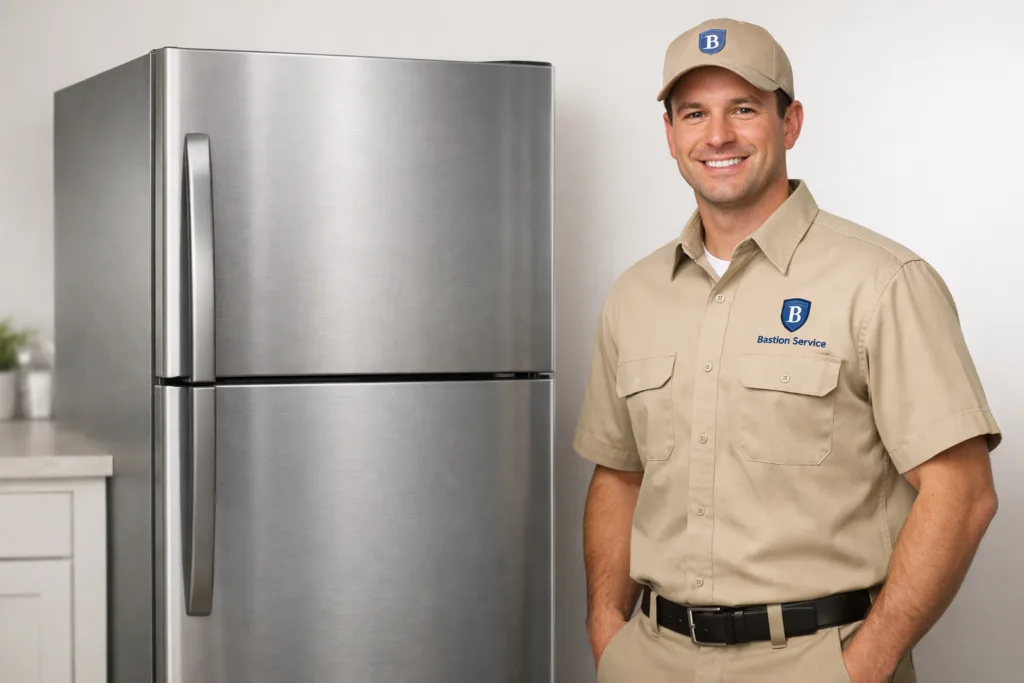
A Kenmore freezer that starts warming, frosting over, or running nonstop can put stored food at risk quickly. Many of these issues look similar at first, but the underlying cause may be very different. A temperature problem might come from blocked airflow, a defrost failure, a worn door gasket, a control issue, or trouble in the cooling system itself.
Common Kenmore freezer symptoms and what they often mean
Freezers usually show one visible symptom while the real fault develops somewhere else in the machine. Looking at the exact pattern helps narrow down whether the problem is likely to involve air movement, moisture intrusion, controls, drainage, or major cooling components.
Not freezing hard enough
If food feels soft, ice cream is no longer firm, or new items take too long to freeze, the freezer may be losing cooling capacity even though it still seems to run. Common causes include weak evaporator fan performance, blocked vents, dirty condenser coils, sensor or thermostat problems, or an issue in the compressor circuit. When temperatures swing instead of staying stable, the problem often gets worse before it gets better.
Heavy frost on shelves or back panels
Frost buildup usually means warm, moist air is getting in or the freezer is failing to clear frost during normal defrost cycles. A torn gasket, a door that does not close evenly, or a defrost heater or defrost control problem can all create the same result: restricted airflow and steadily weaker cooling. If frost returns shortly after being removed, the source is still active.
Constant running or very long run times
A freezer that rarely cycles off is often compensating for heat entering the cabinet or for reduced cooling efficiency. Poor door sealing, dirty coils, frost-covered evaporator sections, or a weak cooling system can all keep the appliance working harder than normal. This symptom is important because prolonged operation can increase wear on other components.
Clicking, buzzing, rattling, or fan noise
Noise matters because the type and location of the sound often point to different failures. A clicking sound near the compressor area can suggest a start problem. Scraping from inside the cabinet may mean a fan blade is hitting ice. Rattling can come from loose panels, tubing vibration, or an out-of-position drain pan. A louder fan than usual may indicate obstruction, wear, or frost interference.
Water under the unit or ice near the base
Leaks are commonly tied to a blocked defrost drain, excess condensation, or melting ice caused by unstable temperatures. In a Del Rey home, this can become more than an appliance issue if moisture reaches flooring or nearby cabinetry. Even a small recurring puddle is worth addressing before it becomes a larger cleanup problem.
Why symptom patterns matter
Two Kenmore freezers can seem to have the same issue while needing very different repairs. For example, a warm freezer with no frost may point toward airflow, control, or compressor-related trouble. A warm freezer with a thick frost blanket behind the interior panel often points more strongly toward a defrost system failure. A unit that cools well at times and then suddenly warms may involve an intermittent control, sensor, fan, or start component.
That is why symptom timing is useful. A freezer that struggles after the door has been closed for hours tells a different story than one that warms mainly after heavy use. The pattern helps separate one-time overload from an actual mechanical fault.
Signs the problem may be getting worse
Some freezer issues remain mild for a short period, but others escalate fast. If food is beginning to soften, frost is spreading, or the unit clicks repeatedly without cooling normally, delaying repair can lead to larger losses. A freezer that keeps running while temperatures rise may be overworking itself without solving the underlying issue.
- Food that partially thaws and then refreezes
- Frost that thickens from week to week
- Door seals that no longer grip evenly
- Fan noise that becomes louder or more irregular
- Water appearing under the appliance more than once
- Controls that seem less responsive than before
These signs do not always mean a major repair, but they do suggest the freezer is no longer operating normally.
Simple checks homeowners can make first
Before scheduling service, a few observations can help identify the likely direction of the repair. These checks are useful because they describe what the freezer is doing without guessing at parts.
- Check whether the door closes fully without resistance from bins, shelves, or ice
- Look for gaps, tears, or hardened spots in the gasket
- Note whether frost is light and spread out or heavy in one concentrated area
- Listen for the interior fan when the door switch is pressed
- See whether the freezer is warm all the time or only at certain periods
- Observe whether leaks appear after heavy frost or during defrosting
These details can make the service visit more efficient and help determine whether the issue points toward defrost components, circulation, drainage, controls, or the sealed system.
Repairable issues versus replacement concerns
Many Kenmore freezer problems are still worth repairing, especially when the cabinet is in good condition and the issue involves a fan motor, thermostat, sensor, gasket, drain blockage, or defrost component. These are often more straightforward than major cooling-system failures.
Replacement becomes a more serious consideration when the freezer has repeated cooling problems, multiple worn components at once, or a sealed-system issue on an older unit. Homeowners in Del Rey often make the decision based on age, reliability history, food-loss risk, and the overall condition of the appliance rather than on one symptom alone.
What to do while waiting for service
If the freezer is still cooling somewhat, avoid frequent door openings and do not overload the interior in an attempt to force colder operation. If heavy frost is preventing the door from sealing, that should not be ignored. Forcing the door shut can worsen air leaks and increase ice buildup.
If food is already softening, it is best to protect anything that may spoil rather than waiting to see if the freezer recovers on its own. A unit that briefly returns to normal after warming can still have an unresolved mechanical or electrical problem.
Kenmore freezer repair focused on the actual fault
When a freezer symptom is matched to the right cause, the repair decision becomes much easier. Whether the issue is weak cooling, recurring frost, leaking water, or unusual operation, the most useful next step is identifying what is failing and whether the repair path makes sense for the appliance’s condition. For Del Rey homeowners, that means less guesswork and a better basis for deciding how to move forward.