
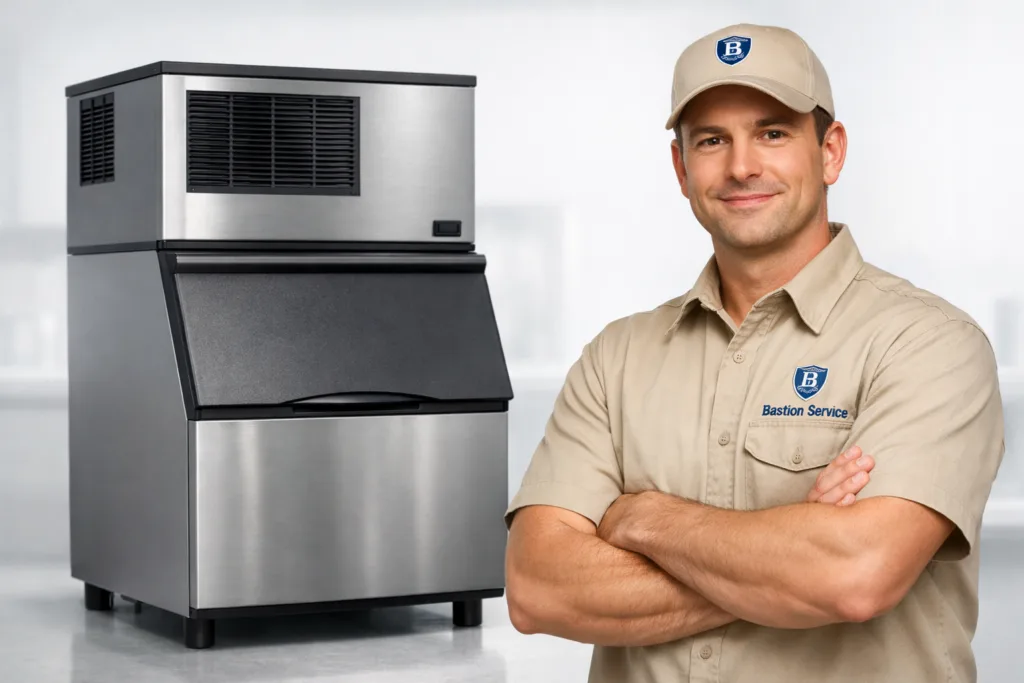





When a Hoshizaki ice machine starts making thin ice, stopping mid-cycle, leaking, or showing sanitation-related problems, the best next step is service based on the actual symptom pattern rather than part-swapping. For businesses in Palos Verdes Estates, ice production problems can slow beverage service, interrupt kitchen workflow, and create avoidable downtime, so repair should focus on what the machine is doing now, what is causing it, and how quickly normal operation can be restored.
Related commercial service paths in Palos Verdes Estates include Hoshizaki Repair in Palos Verdes Estates, Commercial Ice Machine Repair in Palos Verdes Estates, and Hoshizaki Fridge Repair in Palos Verdes Estates.
Bastion Service handles Hoshizaki ice machine repair for businesses in Palos Verdes Estates by tracing problems to the system involved, whether that points to water supply, drainage, harvest performance, controls, scale buildup, or refrigeration-related faults. That service approach helps managers and staff make better repair decisions before a minor output problem turns into a full shutdown.
Common Hoshizaki Ice Machine Problems and What They Can Mean
Low ice production or slow recovery
If the bin is filling more slowly than usual, the issue may not be a simple “low refrigerant” assumption. Reduced water flow, an inlet valve problem, scale on internal components, dirty condenser surfaces, sensor issues, or poor harvest performance can all cut production. A machine that still makes some ice but cannot keep up with demand usually needs inspection before output drops further.
Misshaped cubes, thin ice, or poor ice quality
Cloudy ice, uneven cube formation, thin slabs, or incomplete freeze cycles often point to water distribution problems, mineral buildup, temperature-sensing issues, or operating conditions that interfere with normal freeze and harvest timing. These symptoms matter because ice quality changes are often one of the earliest signs that the machine is no longer cycling correctly.
Leaks, standing water, or overflow
Water around the unit may come from a blocked drain, pump problem, loose connection, overflow during fill, or internal buildup that changes how water moves through the machine. Even when the machine is still running, leaks should be addressed promptly because they can create cleanup issues, sanitation concerns, and added stress on nearby components.
Machine not starting or shutting down during operation
A Hoshizaki unit that will not power on, stops partway through production, or needs repeated resets can be dealing with a control issue, power problem, sensor fault, safety shutdown, or compressor protection event. Intermittent shutdowns are especially important to diagnose correctly because the machine may appear to recover while the underlying cause continues to worsen.
Noise during freeze or harvest
Buzzing, rattling, grinding, or vibration can indicate fan motor wear, pump trouble, scale interference, loose mounting, or strain during harvest. Noise does not always mean immediate failure, but it is often an early warning that a repair need is developing before production is affected more seriously.
Why Hoshizaki-Specific Diagnosis Matters
Hoshizaki machines are built around a defined sequence of fill, freeze, harvest, and drainage functions. When one part of that sequence falls out of range, the visible symptom may look simple while the actual cause sits elsewhere in the cycle. That is why a machine that seems to have a water problem may actually have a harvest issue, or a unit blamed on refrigeration may be struggling with scale, controls, or sensor feedback.
For Palos Verdes Estates businesses, that distinction matters because replacing the wrong part wastes time and extends downtime. A proper repair visit should identify whether the problem is isolated, whether multiple issues are stacking together, and whether the machine is still in sound enough condition to justify repair.
Symptoms That Should Prompt Service Soon
Scheduling service early is usually the better choice when staff notice any of the following:
- The bin is not filling on its normal schedule
- Ice size or shape has changed
- The machine leaks during operation or leaves water nearby
- Cycles seem longer, noisier, or inconsistent
- The unit stops and restarts unpredictably
- Ice quality has declined or clumping is becoming common
- The machine needs resets to keep running
These symptoms often begin as partial-performance issues rather than total failure. That can make them easy to postpone, but continued operation without repair can put more wear on pumps, valves, controls, and refrigeration components.
When Continued Use Can Make the Repair Worse
Some ice machine problems become more expensive when the unit is kept in service. That is especially true when the machine is leaking, short cycling, failing to harvest properly, running with heavy scale buildup, or shutting down on recurring fault conditions. In those cases, pushing the machine to keep producing can expand a narrower problem into a broader repair.
If the unit is making poor-quality ice, leaving excess water, or producing far below normal capacity, it is usually smarter to have it checked before the condition affects sanitation, workflow, or adjacent equipment areas. For businesses in Palos Verdes Estates, early scheduling often helps limit both downtime and repair scope.
Repair vs. Replacement Considerations
Not every Hoshizaki ice machine with a problem should be replaced, and not every older unit should automatically be repaired. The right decision depends on the type of failure, repeat service history, overall machine condition, sanitation status, and whether the equipment still meets daily production needs.
Repair often makes sense when the fault is specific and the rest of the machine remains structurally sound. Replacement becomes a stronger option when there are repeated breakdowns, multiple major system issues, severe wear, or a condition that no longer supports reliable daily use. A service assessment should help clarify whether the machine can be returned to stable operation or whether further repair investment is becoming harder to justify.
How to Prepare for a Service Visit
Before scheduling repair, it helps to note what the machine is doing and when the problem appears. Useful details include whether the unit stopped making ice completely or only slowed down, whether leaks happen constantly or only during certain cycles, whether staff hear unusual sounds during freeze or harvest, and whether the machine has needed resets. That information can speed diagnosis and help narrow the problem sooner.
If possible, businesses should also avoid clearing fault patterns by repeatedly power-cycling the machine before service arrives. A machine that is left in the failed condition can sometimes provide more useful diagnostic information than one that has been reset several times.
Service Focus for Businesses in Palos Verdes Estates
Ice machine repair is not just about getting the unit to run for the moment. The goal is to restore stable production, reduce the chance of repeat shutdowns, and address the condition causing the disruption in the first place. For restaurants, hospitality settings, offices, and other businesses in Palos Verdes Estates, the most useful next step is to schedule repair when output, water flow, harvest performance, or ice quality starts to change so the problem can be diagnosed and handled before a longer outage affects daily operations.


