
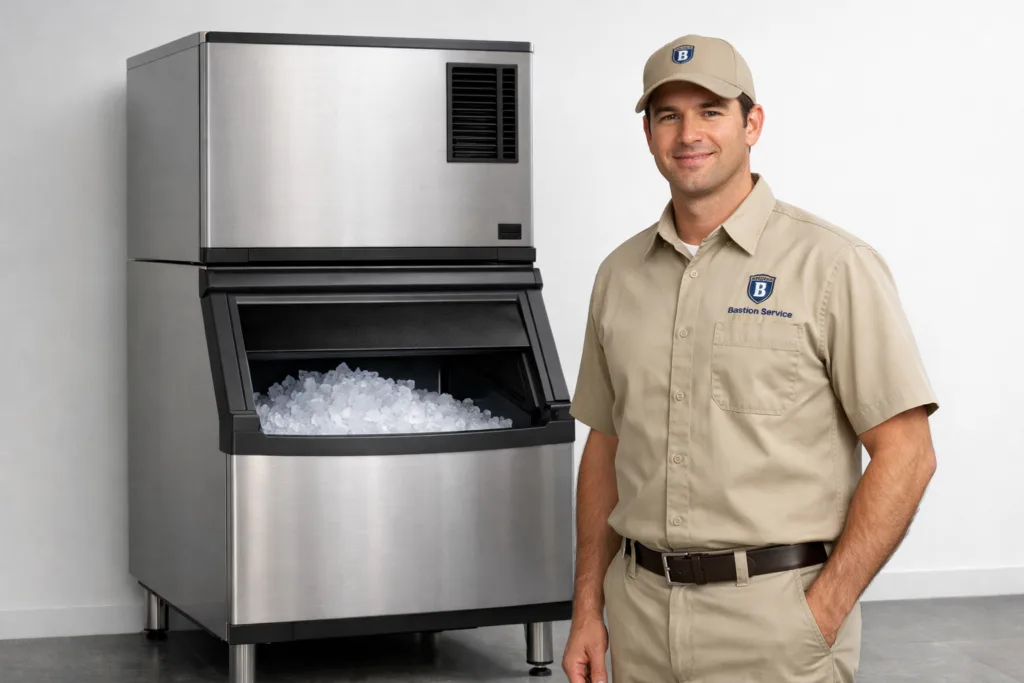




Ice machine problems rarely stay isolated for long. When a Hoshizaki unit starts producing less ice, leaking, cycling erratically, or creating poor-quality cubes, the impact can spread quickly into beverage service, prep routines, storage planning, and sanitation concerns. For businesses in Palos Verdes Estates, the most useful next step is to have the symptom pattern evaluated so the repair can be scheduled around actual operating risk rather than guesswork. Bastion Service handles Hoshizaki ice machine repair with attention to downtime, equipment condition, and what needs to happen next to keep operations moving.
For specific equipment paths in Palos Verdes Estates, review Hoshizaki Fridge Repair in Palos Verdes Estates, Hoshizaki Freezer Repair in Palos Verdes Estates, and Hoshizaki Ice Machine Repair in Palos Verdes Estates.
What Hoshizaki Ice Machine Symptoms Usually Point To
Different failures can create similar surface-level complaints. A machine that is “not making enough ice” may have a water supply restriction, scale buildup, a fill problem, a sensor issue, drainage trouble, or a refrigeration-related fault. A unit that appears to run normally may still be losing output because one part of the cycle is no longer completing correctly.
Common service-triggering symptoms include:
- Low ice production during normal demand
- No ice production at all
- Slow or failed harvest cycles
- Thin, soft, cloudy, or misshapen ice
- Water leaks, overflow, or drain backup
- Mineral scale affecting water flow or sensor response
- Unexpected shutdowns or intermittent operation
When these issues begin affecting daily use, repair usually makes more sense than waiting for the machine to recover on its own. Many repeat failures become more disruptive after a short period of continued operation.
Low Ice Production or No Ice at All
Reduced output is one of the most common reasons businesses schedule Hoshizaki service. Sometimes the machine is still making ice, just not enough to support the day. In other cases, production drops to nearly nothing even though fans, pumps, or other parts of the system still appear to be running.
This symptom can be tied to several categories of failure, including:
- Restricted incoming water flow
- Problems with fill components or water delivery
- Scale interfering with normal operation
- Cycle timing issues
- Sensor or control faults
- Cooling performance problems affecting freeze time
If output is falling off noticeably, it is usually worth scheduling repair before the machine reaches a complete stop. Low production often signals an operating problem that can spread into longer cycle times, unstable harvest, or protective shutdowns.
Why this symptom matters operationally
For businesses in Palos Verdes Estates, low production is not just an inconvenience. It can force workarounds, reduce service speed, and create pressure on storage and replenishment. Early diagnosis helps determine whether the issue is a water-side repair, a control problem, or a larger performance concern.
Harvest Problems and Incomplete Cycle Release
A Hoshizaki machine may freeze ice successfully but still struggle when it is time for the batch to release. Operators often notice longer-than-normal cycles, ice that does not drop cleanly, repeated attempts to harvest, or a machine that seems stuck between stages.
Harvest issues can be connected to scale, water distribution problems, sensor response, temperature imbalance, or other component faults that affect how the machine transitions from freeze to release. What matters from a service standpoint is that a harvest problem usually does not stay limited to one bad cycle. Repeated failures reduce output and increase the chance of a shutdown during busy hours.
If the machine is forming ice but not releasing it consistently, that is a repair issue rather than a minor quirk. Continued use may add wear and make the fault harder to contain.
Scale Buildup and Water Flow Problems
Mineral scale is one of the most common reasons Hoshizaki ice machine equipment becomes inconsistent. Deposits can affect water movement, sensor accuracy, slab formation, and overall cycle reliability. In many cases, what first looks like “weak production” is actually a water-system problem that has progressed enough to interfere with normal operation.
Signs scale may be part of the issue include:
- Gradual decline in output
- Inconsistent ice thickness or shape
- Erratic harvest timing
- Water not distributing evenly
- Recurring service interruptions tied to flow or fill behavior
Once scale begins affecting function, delaying service often leads to more than lower ice volume. It can contribute to overflow, sensor misreads, and repeat shutdowns that interrupt the workday.
Leaks, Overflow, and Drainage Concerns
Water around the machine should be taken seriously. On an ice machine, leaking may come from a blocked or slow drain, an internal overflow condition, a damaged water component, a connection problem, or a fault elsewhere in the production cycle that is sending water where it should not go.
Because leak symptoms can look similar from the outside, the right repair depends on identifying where the water is originating and when it appears. A leak during fill points in a different direction than a leak during harvest or drain.
Prompt service is usually the safer choice when:
- Water is collecting on the floor
- The bin area is getting wet
- The machine overflows during operation
- Drainage backs up repeatedly
- Leaks return after basic cleanup
In business settings, water exposure can create slip risk, cleanup demands, and avoidable disruption beyond the machine itself.
Poor Ice Quality, Appearance, or Consistency
Ice quality changes often signal that the machine is no longer operating within normal conditions. Cloudy cubes, soft texture, irregular shape, or inconsistent thickness can point to water issues, scale, fill problems, control faults, or cycle imbalance.
Quality issues matter because they often show up before a larger failure becomes obvious. A machine may still be producing enough volume for the moment, but the ice itself can reveal that the system is no longer running properly.
If quality changes are happening alongside lower output, leaks, or odd cycle behavior, it usually makes sense to treat the situation as a repair case rather than a cleaning-only concern.
Intermittent Shutdowns and Unreliable Operation
Some of the hardest problems to manage are intermittent ones. The machine works for a while, then stops. It restarts after being left alone, then fails again later. This pattern can be tied to sensors, controls, water protection responses, electrical components, or cooling-related performance issues.
Intermittent faults are especially disruptive because they make planning difficult. Staff may assume the problem has passed, only to have the machine stop during a period of peak use. Waiting for a full breakdown can turn a manageable repair into a more urgent outage.
When a shutdown pattern starts becoming noticeable, scheduling service early usually provides a better chance to isolate the cause before reliability drops further.
When Continued Use Can Increase Repair Scope
Not every symptom requires immediate shutdown, but some do justify faster repair scheduling. Continued use can make the situation worse when the machine is:
- Leaking or overflowing repeatedly
- Failing harvest cycle after cycle
- Producing sharply reduced output under normal demand
- Showing visible scale-related operating problems
- Shutting down unpredictably
- Producing poor-quality ice along with other symptoms
In those situations, pushing the unit through another stretch of operation may increase repair cost, create sanitation concerns, or lead to complete loss of ice production at a less convenient time.
Repair Decisions Versus Replacement Discussions
Many Hoshizaki problems can be addressed without replacing the machine. Water flow issues, drainage faults, sensor problems, scale-related operating trouble, valves, and certain control-related failures are often repairable when the rest of the equipment is in reasonable condition.
Replacement usually becomes part of the conversation when the machine has a pattern of major failures, poor overall condition, or repair needs that no longer align with expected reliability. The practical decision is not only whether the unit can be fixed, but whether the result supports stable operation for the business using it.
Related Hoshizaki Cold-Side Equipment Concerns
Some businesses using Hoshizaki ice machines also rely on Hoshizaki refrigerator or freezer equipment in the same workflow. If more than one piece of cold-side equipment is showing signs of trouble, that should be mentioned when service is scheduled so the most urgent equipment can be prioritized first.
Scheduling Hoshizaki Ice Machine Repair in Palos Verdes Estates
If your Hoshizaki ice machine is producing less ice, leaking, scaling up, failing to harvest, shutting down, or creating inconsistent ice quality, the best next step is to schedule service based on the current symptom pattern and how much risk continued use creates. For businesses in Palos Verdes Estates, timely repair planning helps limit downtime, protect daily workflow, and keep a manageable equipment problem from becoming a broader interruption.


