




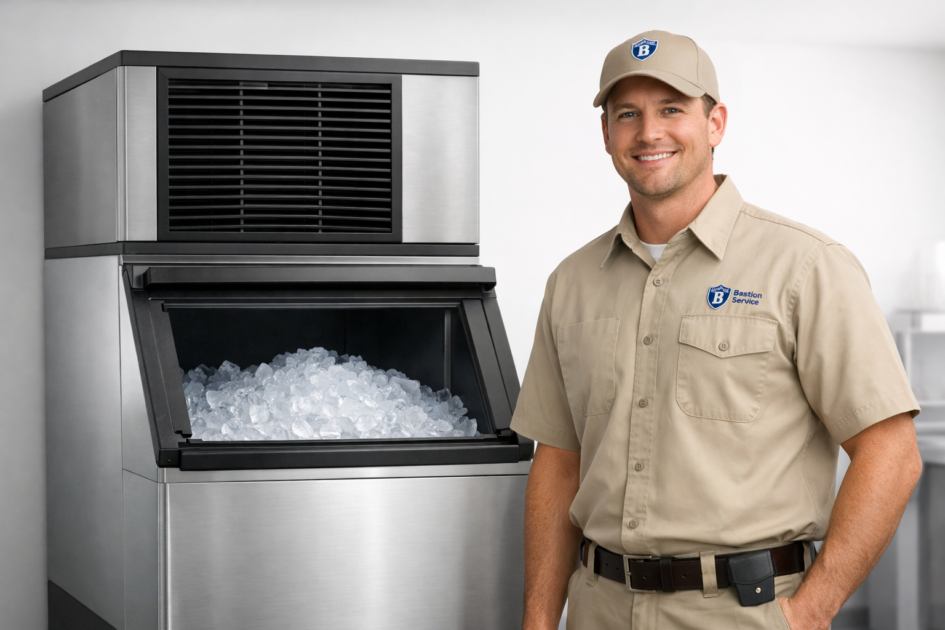
Ice machine problems rarely stay isolated for long. When output drops, cubes turn cloudy, water starts pooling, or the unit begins stopping between cycles, the issue can quickly affect beverage service, prep routines, sanitation tasks, and staff workflow. For businesses in Hermosa Beach, the most useful next step is service that identifies the actual failure, confirms whether the machine should stay in operation, and maps out the repair based on how the equipment is behaving under load.
For specific equipment paths in Hermosa Beach, review Hoshizaki Refrigerator Repair in Hermosa Beach, Hoshizaki Freezer Repair in Hermosa Beach, and Hoshizaki Ice Machine Repair in Hermosa Beach.
Bastion Service helps businesses address Hoshizaki ice machine issues with symptom-based repair scheduling that focuses on uptime, safe operation, and avoiding preventable equipment damage. Whether the problem appears suddenly or has been getting worse over time, a service visit should answer two questions clearly: what is causing the disruption, and what needs to happen next to restore stable ice production.
Common Hoshizaki Ice Machine Symptoms That Point to Repair
Many Hoshizaki units show early warning signs before a complete shutdown. Paying attention to those changes helps businesses avoid longer downtime and more disruptive failures.
Low ice production or no ice at all
If the machine is running but not keeping up, the cause may involve restricted water flow, a failing water inlet valve, scale buildup on internal components, sensor problems, refrigeration-related performance issues, or controls that are no longer timing cycles correctly. Low production is especially important to address when the machine still appears to work, because businesses may continue relying on it while the underlying fault gets worse.
Typical signs include:
- Bins that are not filling on the normal schedule
- Longer freeze times than staff are used to seeing
- Periods of normal output followed by sudden drops
- A machine that runs but produces very little usable ice
Harvest problems and incomplete release
When ice forms but does not release properly, the machine may stall, delay the next cycle, or shut itself down. Harvest issues can be tied to scale, sensor errors, water system faults, freeze pattern problems, or component failure affecting normal transition between cycles. These complaints often begin as occasional interruptions, then turn into repeated production losses.
If staff notice sheets of ice hanging up, partial release, or extended pauses before the next cycle starts, the machine should be inspected before repeated strain leads to larger repair needs.
Leaks, overflow, or standing water
Water around the base of the unit is not a symptom to ignore. Leaks may come from drain restrictions, loose connections, cracked tubing, overflow during abnormal cycles, or reservoir-related problems. In a busy kitchen or service area, even a small leak can create slip hazards, damage nearby surfaces, and hide a more serious operating issue inside the machine.
Service is especially important when water appears during specific parts of the cycle, because that pattern can help identify whether the issue is related to fill, circulation, draining, or harvest.
Cloudy, soft, thin, or misshapen ice
Changes in ice quality often point to more than appearance alone. Poor cube clarity, irregular shape, hollow centers, or soft ice can indicate scale buildup, water quality concerns, uneven fill, unstable freeze conditions, or problems that are preventing the machine from completing its cycle correctly. If the machine is still producing ice but quality has changed, that is often the stage when repair is easier to plan before production drops further.
Random shutdowns or frequent resets
A unit that shuts off mid-cycle or only restarts after someone resets it is already showing unstable operation. The root cause may involve sensors, controls, overheating conditions, water-related faults, or refrigeration performance that is drifting out of range. Intermittent shutdowns are often mistaken for minor electrical glitches, but they usually become more frequent with continued use.
What These Symptoms Often Mean in Daily Operations
Ice machine failures affect more than the machine itself. In a business environment, reduced output can force staff into workarounds, inconsistent ice quality can disrupt service standards, and leaks can create cleanup and safety concerns that pull attention away from customers. That is why symptom timing matters. A machine that struggles during peak demand, fails after a cleaning cycle, or leaks only during harvest is providing clues that help narrow down the repair path.
Rather than treating every issue as a simple cleaning matter or every shutdown as a major failure, service should determine:
- Whether the problem is water-side, control-related, drainage-related, or tied to system performance
- Whether scale buildup is contributing to the fault or masking another issue
- Whether continued use risks worsening damage
- Whether repair is likely to restore dependable output
Why Water Flow and Scale Issues Matter So Much
Hoshizaki ice machines depend on consistent fill, circulation, and drainage to complete normal cycles. When water flow is reduced or mineral buildup begins interfering with operation, the symptoms can spread across the machine quickly. What starts as lighter production may turn into irregular cubes, slow freeze cycles, incomplete harvest, or repeated lockouts.
Scale is particularly important because it can imitate other problems. A machine with buildup may appear to have a sensor issue, a control problem, or poor overall performance when the underlying cause begins with restricted movement of water or reduced heat transfer. That is one reason symptom-based diagnosis matters before parts are replaced.
When a Hoshizaki Ice Machine Should Be Looked At Promptly
Some issues can wait for scheduled service, but others should be addressed as soon as they appear. Prompt attention is usually the right call when the machine shows:
- Water leaking onto the floor
- Repeated shutdowns during the day
- No ice production during normal operating hours
- Visible scale affecting cycle consistency
- Ice that is breaking, melting, or forming unevenly
- Harvest delays that interrupt bin recovery
- Unusual noises that coincide with fill, freeze, or release
These symptoms often mean the unit is no longer operating within normal conditions and may not improve with continued use.
Signs Continued Use May Worsen the Repair
Businesses sometimes keep an unstable machine running because some ice is still being produced. In practice, that can make the final repair more complicated. Repeated resets, ongoing overflow, ignored harvest trouble, or operation with severe scale can increase wear on key components and lead to a broader stoppage at the worst time.
It may be time to limit use or pause operation until service is completed if:
- The machine leaks during every cycle
- Production drops sharply and does not recover
- Ice quality changes suddenly and noticeably
- The unit stops and restarts unpredictably
- Staff need constant attention just to keep it running
What a Repair Visit Should Clarify
For a business in Hermosa Beach, the goal is not just to identify a bad part. A useful repair visit should show how the active symptom connects to the failed component or operating condition, whether secondary issues are present, and whether the machine is a good candidate for repair based on its current reliability. That helps owners and managers make better decisions about timing, downtime planning, and continued investment in the equipment.
In many cases, the most important outcome is knowing whether the machine can operate safely until parts are installed or whether doing so risks further interruption. That guidance matters when ice supply is tied directly to service capacity.
Related Hoshizaki Cold-Side Equipment Concerns
Some businesses using Hoshizaki ice machines also rely on Hoshizaki refrigerators and freezers in the same operation. If cold-side issues are appearing across more than one piece of equipment, it can be helpful to separate what is unique to the ice machine from what may reflect broader maintenance or performance concerns within the kitchen. Even when the repair need is specific to ice production, looking at the symptom pattern in context can support better equipment planning.
Service Planning for Businesses in Hermosa Beach
Repair decisions are easier when they are based on the way the machine is actually failing, not on guesswork or temporary workarounds. If your Hoshizaki unit is leaking, producing less ice, shutting down, struggling through harvest, or making ice that no longer looks or performs as expected, scheduling service is the practical next step. For businesses in Hermosa Beach, timely repair helps protect daily operations, reduce avoidable downtime, and restore a more predictable ice supply before a partial problem turns into a full outage.