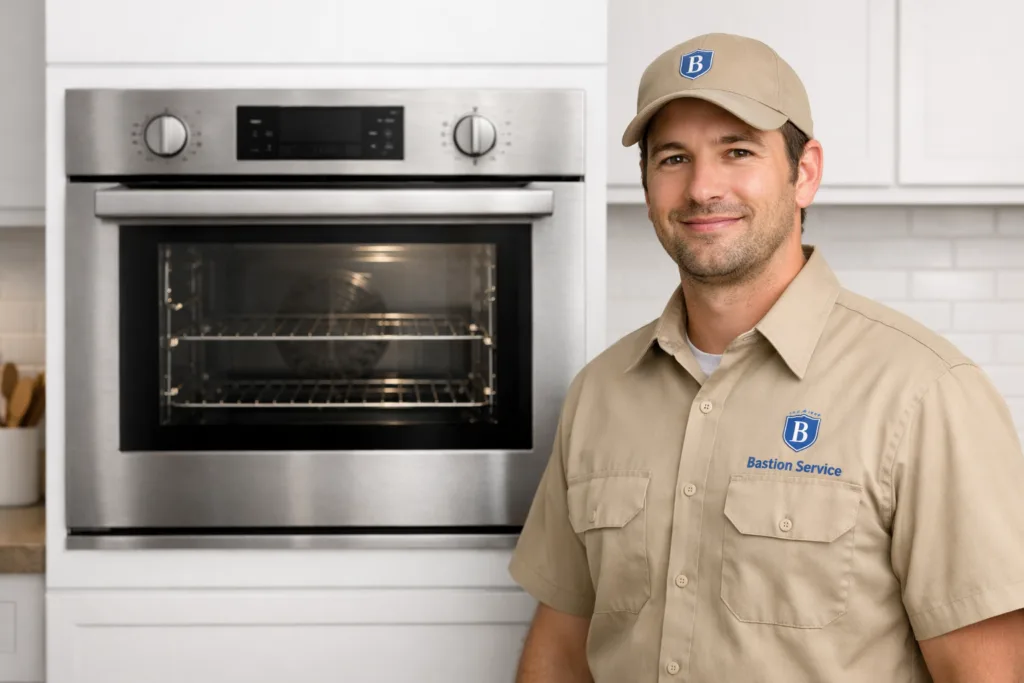
Wall oven problems tend to show up in everyday cooking first: longer preheat times, pans that brown unevenly, a display that behaves strangely, or a cycle that stops before the food is done. With Bosch units, those symptoms can come from heating components, temperature sensing, door-related issues, or the control system, so the best next step is to match the repair approach to the exact pattern you are seeing.
How Bosch wall oven problems usually show up
Some failures are sudden, such as an oven that will not turn on at all. Others build gradually over time. A wall oven may still run but take longer to reach temperature, cook inconsistently from rack to rack, or need repeated attempts to start a cycle. In many Torrance homes, that kind of partial failure is the point where service becomes worthwhile, because the appliance is no longer predictable enough for normal meal prep.
What makes diagnosis important is that several different faults can create similar results. For example, “not heating” does not always mean a single bad element. It can also point to a sensor reading problem, a relay issue, damaged wiring, or a control board fault that prevents the oven from powering the heating circuit correctly.
Common symptoms and what they may indicate
Oven will not heat
If the cavity stays cold or only warms slightly, possible causes include a failed bake or broil element, a temperature sensor that is out of range, a control failure, or a power supply issue inside the unit. In some cases the display and lights still work normally, which can make the problem look smaller than it is. When the interface appears fine but the oven does not produce heat, internal testing is usually needed to determine where the heating circuit is being interrupted.
Slow preheat
An oven that eventually reaches temperature but takes much longer than it used to can be dealing with a weak heating element, inaccurate sensor feedback, heat loss through the door seal, or a control that is not cycling heat correctly. Slow preheat often starts as an annoyance, then turns into poor cooking results because the unit never stabilizes the way it should.
Uneven baking
Cookies that brown more on one side, casseroles that remain underdone in the center, or dishes that need extra time every time can all point to uneven heat distribution. Causes may include a weakening element, a sensor that is drifting, calibration problems, or airflow issues inside the cavity. If performance has changed without any change in recipes or cookware, the oven itself is usually the place to look.
Temperature swings
Some temperature variation during normal cycling is expected, but large swings are different. If the oven seems too hot one day and too cool the next, or if recipes suddenly require major adjustments, the problem may involve the temperature sensor, control board, relay behavior, or a door that is not sealing as tightly as it should. This kind of symptom is especially frustrating because the oven may seem to work, just not reliably.
Error codes or a blank display
Bosch wall ovens can show error codes tied to sensing faults, communication issues, latch problems, or electronic control problems. A blank display, intermittent resets, or buttons that stop responding can also indicate a power or board issue. When the controls are unstable, replacing parts based on guesswork can get expensive quickly, because the visible symptom does not always identify the failed component by itself.
Door, latch, or self-clean problems
A door that does not close fully can let heat escape and lead to longer preheat times or uneven cooking. If the latch sticks or the oven remains locked after self-clean, the unit may not start a normal cooking cycle at all. Door-related issues can affect both performance and safety, especially if the oven cannot maintain proper heat or the lock assembly does not return to the correct position.
Shutting off during use or tripping power
If the oven loses power mid-cycle, trips the breaker, or shuts down under high heat, stop using it until the cause is identified. Electrical symptoms can involve wiring, terminal connections, a heating component drawing incorrectly, or an internal short. Continued use in that condition can worsen damage and may affect other components in the appliance.
When a repair call makes sense
Service is usually worth scheduling when the same symptom repeats across multiple cooking cycles, when the oven can no longer maintain dependable temperature, or when the controls start acting unpredictably. Even if the unit still works part of the time, recurring issues often signal a component that is failing under load rather than a one-time glitch.
It also makes sense to act before a full breakdown if cooking results have become noticeably less consistent. Early symptoms often give homeowners a chance to address a single fault before heat stress, repeated failed preheats, or electrical interruption affects additional parts.
Signs you should stop using the oven
- It trips the breaker or loses power while heating.
- There is a burning smell, visible sparking, or signs of melted wiring.
- The door will not close properly or the latch does not release correctly.
- The oven overheats, scorches food unusually fast, or ignores temperature settings.
- The control panel resets repeatedly or behaves erratically during a cycle.
These symptoms suggest more than a simple performance issue. Stopping use until the unit is checked can help avoid a larger repair and reduce safety concerns in the kitchen.
Repair or replace?
Many Bosch wall oven problems are still reasonable to repair when the appliance is otherwise in good condition and the fault is limited to a specific part or system. Sensor issues, some heating failures, latch problems, and certain control-related faults can be good repair candidates if the rest of the oven is holding up well.
Replacement becomes more likely when the oven has multiple major failures at once, ongoing electronic problems, substantial internal wear, or repair costs that no longer fit the age and condition of the appliance. For homeowners in Torrance, the most useful decision usually comes after the failure has been narrowed down, not before.
What helps homeowners make the right choice
Most people do not need a technical deep dive. They need to know why the oven is misbehaving, whether the issue is isolated or widespread, and whether the fix is sensible for the appliance they have. That is especially true with built-in wall ovens, where access, fit, and replacement planning can be more complicated than with a freestanding range.
For Bosch wall oven repair in Torrance, the most helpful path is to look at the actual symptom pattern, confirm the failed system, and decide from there whether repair is the better move or whether replacement deserves stronger consideration.