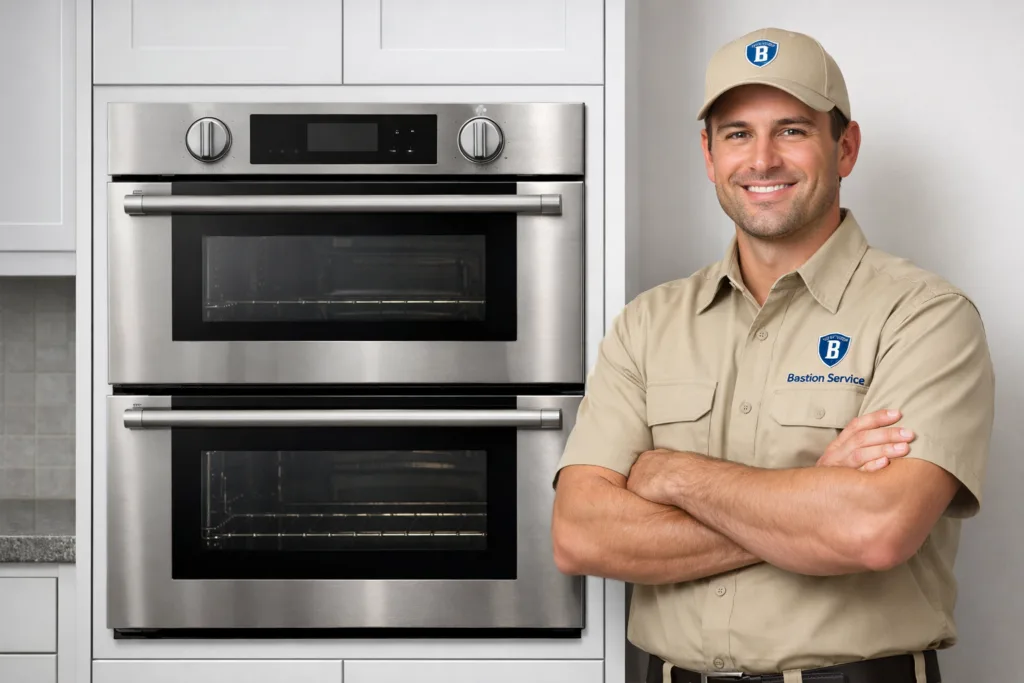
Wall oven problems often start with small warning signs: longer preheat times, baking that suddenly turns uneven, a control panel that only responds sometimes, or a door that no longer closes with the same seal. On a Dacor unit, those symptoms can point to different underlying faults, so the best next step is to match the repair plan to the exact behavior of the oven.
Common Dacor Wall Oven Problems in Torrance Homes
Dacor wall ovens are designed for consistent temperature control, so even a modest performance change can affect everyday cooking. Some issues appear all at once, while others build gradually over weeks or months.
Not heating, slow preheat, or failure to reach set temperature
If the oven powers on but does not heat correctly, the cause may involve a bake element, broil element, temperature sensor, relay, control board, or wiring problem. In some cases, the oven appears to preheat normally but never stabilizes at the selected temperature, which leads to undercooked meals and inconsistent results.
Slow preheat is especially easy to overlook because the oven may still seem usable. A weak heating circuit, inaccurate sensor reading, or partial element failure can stretch preheat time without causing a full shutdown.
Uneven baking and temperature swings
Cookies that brown unevenly, casseroles that finish on the edges first, or roasts that cook unpredictably are often signs of temperature instability. Common causes include sensor drift, convection fan issues, poor airflow, or a door seal that allows heat to escape.
When temperatures swing too far above or below the setting, the oven may seem random from one use to the next. That pattern usually means the appliance is not regulating heat the way it should, even if it still turns on and completes a cycle.
Control panel, display, or keypad problems
If the display goes blank, buttons stop responding, settings reset on their own, or the oven will not start a cycle, the issue may be tied to the interface panel, main control, wiring connection, or incoming power. Electronic faults can also appear intermittently, which makes them frustrating for households that cannot predict when the oven will work correctly.
Error codes are worth noting because they can help narrow the fault, but they do not always identify the failed part by themselves. The same code can sometimes be triggered by a related component elsewhere in the system.
Door, hinge, and lock issues
A wall oven door that does not close firmly can create more than a minor annoyance. Heat loss affects temperature accuracy, lengthens cooking times, and can make the surrounding cabinet area warmer than expected. Worn hinges, damaged gaskets, latch problems, and lock motor failures are common reasons for poor door operation.
If the problem happens during self-clean mode, the lock system may also need attention. A door that will not lock, unlock, or align correctly can interrupt cycles and leave the oven unusable until the fault is corrected.
Noises, odors, and mid-cycle shutdowns
Repeated clicking, abnormal buzzing, rattling fans, or an oven that shuts off while cooking should not be ignored. These symptoms can point to cooling fan trouble, electrical faults, overheating protection, or failing control components.
A brief odor during first use after cleaning can be normal, but a persistent burning smell is different. If there is a strong gas odor from a gas wall oven, stop using the appliance and address safety before planning service.
Why Similar Symptoms Can Have Different Causes
One of the more confusing parts of wall oven repair is that different failures can produce nearly identical symptoms. A homeowner may assume the oven needs a new element because it is heating poorly, but the real cause could be a sensor reading issue, relay failure, damaged wiring, or a door seal problem.
The reverse is also true. A control complaint may not begin with the control board at all. Voltage problems, heat-related wiring damage, and failed support components can all create control-like symptoms. That is why part replacement based only on guesswork often leads to extra cost and repeat problems.
Signs the Oven Should Not Keep Being Used
Some performance issues are inconvenient but manageable for a short time. Others should move to the top of the list right away. Stop using the oven and schedule service if you notice any of the following:
- The breaker trips during preheat or cooking
- The oven overheats or burns food unexpectedly
- The display cuts out and comes back on randomly
- The door will not close, lock, or unlock properly
- There is visible sparking, a burning smell, or signs of heat damage
- The appliance shuts off mid-cycle repeatedly
Continued use under those conditions can turn a single failed component into a larger repair involving wiring, controls, or surrounding parts affected by excess heat.
What to Check Before Scheduling Service
There are a few simple observations that can help clarify the problem before an appointment:
- Whether the oven fails in bake, broil, convection, or every mode
- If preheat completes normally or takes much longer than before
- Whether the display shows an error code
- If the issue happens every time or only during longer cooking cycles
- Whether the door feels loose, misaligned, or does not seal tightly
- If the problem began after self-clean use or a power interruption
These details make it easier to separate a heating problem from a control problem and a door issue from a temperature regulation issue.
Repair or Replace a Dacor Wall Oven?
Many Dacor wall oven issues are repairable when the rest of the appliance is in solid condition and the failure is limited to a specific electrical, heating, sensor, fan, or door-related component. Repair usually makes the most sense when performance was otherwise good before the symptom appeared.
Replacement becomes more likely when the oven has several major problems at once, recurring electronic failures, significant internal wear, or repair costs that no longer match the condition of the appliance. Age alone does not decide the answer. The real question is whether the repair will restore reliable daily use without leading quickly into another major issue.
What Torrance Homeowners Usually Want to Know First
Most households in Torrance are not looking for a long technical explanation. They want to know three things: what is actually failing, whether the oven is safe to keep using, and whether the repair is worth doing. Those answers depend on the symptom pattern, the condition of the unit, and whether the fault is isolated or part of a broader control or heating problem.
When the issue is identified accurately, the next step becomes much easier. Instead of guessing between a sensor, element, control, fan, or latch problem, the repair path can stay focused on the part of the oven that is truly causing the failure.
Focused Residential Service for Dacor Wall Ovens
For Dacor Wall Oven Repair in Torrance, the most helpful approach is one that looks closely at how the oven is failing in real household use. Whether the complaint is poor heating, uneven baking, unstable temperatures, control trouble, or a door that no longer works properly, a careful diagnosis helps determine whether repair is the right move and what it should involve.