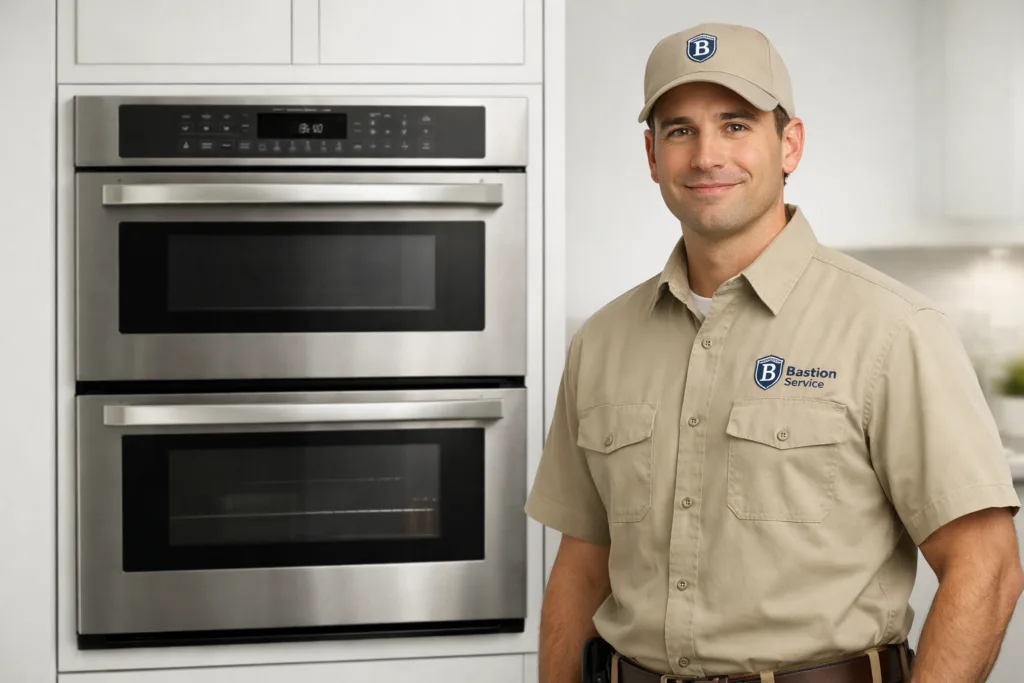
Built-in ovens tend to fail in ways that look similar from the outside, even when the actual cause is different. A unit that runs cool, takes forever to preheat, or stops mid-cycle may point to a heating problem, a sensor issue, a control fault, or a door-lock system problem. In Beverly Hills homes, the best repair decisions usually come from matching the symptom pattern to the system that is actually failing.
Common GE wall oven symptoms and what they often mean
GE wall ovens rely on several parts working together at the same time: heating elements, temperature sensing, electronic controls, relays, and door-related safety systems. When one of those systems starts to slip, cooking results usually change before the oven fully stops working.
Oven not heating at all
If the display comes on but the cavity stays cold, the problem may involve a failed bake element, a broil element that is not cycling properly, a temperature sensor that is reading incorrectly, or a control board that is not sending power where it should. Some homeowners notice the interior light and clock working normally and assume the oven has power, but that does not confirm that the heating circuit is operating correctly.
This symptom is especially important to address quickly when the oven recently completed a self-clean cycle or shut down unexpectedly during cooking. Heat stress can expose weak electrical connections and control components that were already close to failure.
Slow preheat or weak heating
When a GE wall oven eventually gets hot but takes much longer than usual, one heating component may be weak rather than fully dead. That can create the impression that the appliance still works, even though it can no longer maintain the correct heating balance. Meals may need extra time, baked goods may rise poorly, and recipes that used to be predictable may suddenly become inconsistent.
Slow preheat can also come from sensor drift, relay trouble, or a control issue that is not allowing the element to stay energized long enough. Because several faults can produce the same complaint, testing matters more than guessing.
Uneven baking or temperature swings
If cookies burn on one side, casseroles remain underdone in the center, or one rack cooks much faster than another, the issue is not always simple calibration. Uneven baking can point to a failing element cycle, inaccurate temperature sensing, convection fan problems on equipped models, or heat loss around the door seal.
Homeowners sometimes adapt by rotating pans more often or raising the set temperature, but those workarounds usually hide a developing fault instead of solving it. Once temperature regulation becomes unstable, results often get worse over time.
Display works, but the oven will not start
A lit control panel can make the oven seem healthier than it is. If commands register but the cooking cycle never begins, the problem may involve the control board, door switch, lock assembly, relay failure, or wiring damage. This is a common pattern when the appliance appears responsive but does not actually energize the heating system.
In some cases, the oven may start only in certain modes or may cancel the cycle moments after it begins. That behavior can help narrow the fault to a specific circuit or control function.
Error codes, locked door, or self-clean issues
Self-clean places heavy stress on oven components, so problems that appear around that cycle often involve the lock motor, door latch, temperature sensing, or electronic control. If the door stays locked, the clean cycle will not start, or an error code appears and returns after a reset, the oven usually needs more than a simple power cycle.
Forcing the door, repeatedly shutting the breaker off, or trying to override the lock can turn a repairable problem into a more expensive one. It is better to identify which system triggered the fault before using the oven again.
Signs you should stop using the oven
Some symptoms are inconvenient. Others are a sign the appliance should stay off until inspected. Stop using the oven if you notice:
- Burning smells from the control area or wiring area
- Visible sparking or smoke
- Breaker trips during preheat or baking
- Extreme overheating or temperature runaway
- The oven shutting off unexpectedly during normal cooking
- Heat damage around the door, trim, or control panel
Even if the oven still partly works, partial operation can mean one component is overloading the rest of the system. Continuing to use it may increase damage to wiring, relays, or the control board.
Why built-in wall oven problems need a careful approach
Wall ovens are different from freestanding ranges because they are installed into cabinetry and have less room around them for airflow, access, and visual inspection. That built-in setup can make a small electrical or heat-management problem more significant if it goes unnoticed. It also means replacement is not always the easiest answer, especially when fit and cabinet compatibility matter.
For that reason, homeowners often benefit from service that identifies not just the failed part, but whether there are related issues such as wiring stress, poor heating balance, or repeated control errors that could affect long-term reliability.
Repair or replace: how the decision usually gets made
Many GE wall oven problems are worth repairing when the issue is limited to a specific part or system, such as a bake element, broil element, sensor, latch component, fan motor, or an isolated control-related failure. A targeted repair can make sense when the rest of the appliance is in solid condition and the cavity, door, and main structure remain sound.
Replacement becomes more likely when there are several major failures at once, when critical parts are no longer practical to source, or when the oven has recurring electronic problems that continue after prior repairs. Severe interior damage, door problems that affect safe operation, or repeated overheating issues can also shift the balance toward replacement.
Because wall ovens are part of the kitchen layout, the decision is rarely only about the price of one part. It is also about expected reliability, installation complexity, and whether the repair path is likely to restore normal daily use without ongoing problems.
What homeowners can note before service
A few details can make diagnosis faster and more accurate. Before scheduling GE wall oven repair in Beverly Hills, it helps to note:
- Whether the oven fails in bake, broil, convection, or all modes
- How long preheat now takes compared with normal
- Whether the issue started after self-clean
- If the display shows an error code
- Whether the door locks, unlocks, and closes normally
- If the breaker has tripped or the unit has shut off mid-cycle
These observations do not replace testing, but they can help separate a heating fault from a control problem or a door-lock issue.
What a service visit should help determine
A useful visit should answer a few practical questions: which system failed, whether the oven is safe to use as-is, whether the problem is isolated or part of a larger electrical issue, and whether repair is a reasonable long-term choice. That kind of clear diagnosis helps homeowners avoid replacing parts based only on symptoms and gives them a practical repair plan based on the actual condition of the oven.
When the cause is identified correctly, it becomes much easier to decide whether to proceed with repair now, hold off on use, or consider replacement based on the age and overall condition of the appliance.