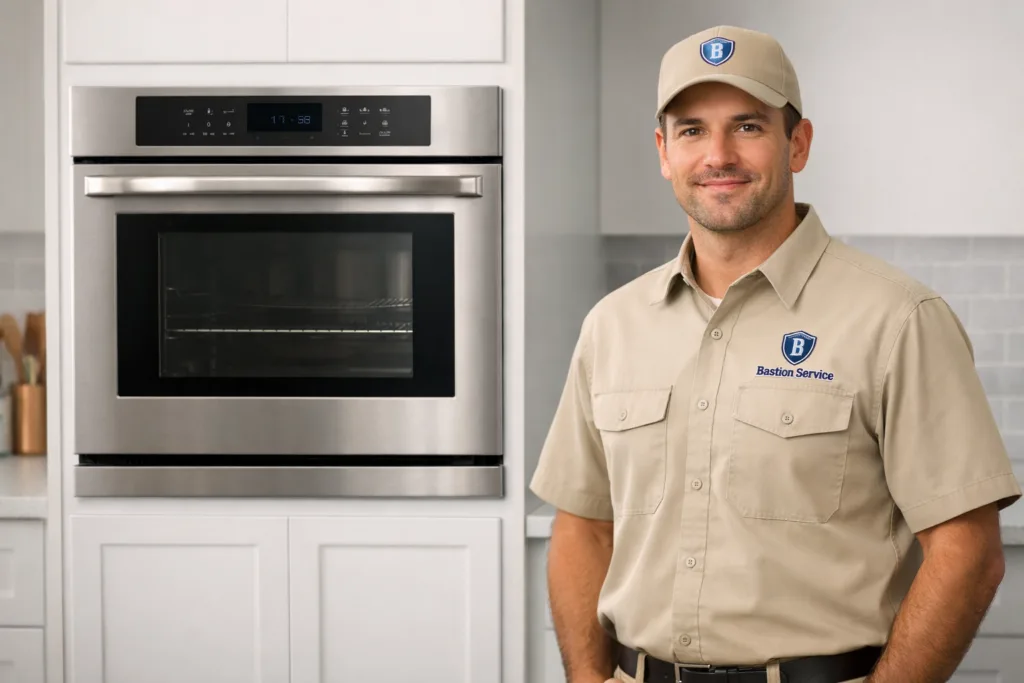
Cooking problems usually become obvious before a complete breakdown. A GE oven may start preheating slowly, bake unevenly, overshoot the selected temperature, or cancel a cycle without warning. Those patterns matter because they often point to different failed parts and different repair paths, especially when comparing electric and gas models used in Beverly Hills homes.
Start with the symptom, not the assumption
Many homeowners understandably assume the control board is bad whenever the oven behaves unpredictably. In reality, the cause may be much simpler. A weak igniter, a failing bake element, a drifting temperature sensor, a worn door gasket, or a power supply issue can all create similar cooking complaints. The most useful service approach is to match testing to the exact symptom pattern rather than replacing parts by guesswork.
That matters with GE ovens because one fault can trigger several noticeable problems at once. For example, a weak igniter may cause long preheat times, poor browning, and intermittent heating even though the display appears normal. A door that does not seal tightly can make an otherwise functional oven seem inaccurate or underpowered.
Common GE oven problems and what they often mean
Oven will not heat
If the cavity stays cold or barely warms, the likely cause depends on the oven type. On electric models, a failed bake element is common, though broil element, wiring, relay, or control issues are also possible. On gas models, the igniter is often the first suspect when the oven does not light or takes too long to start heating.
Homeowners sometimes notice the broiler still works while baking does not, or that the oven eventually reaches temperature but only after an unusually long wait. Those clues help narrow the fault more quickly.
Slow preheat
Slow preheat is one of the most common complaints because the oven technically still works, just poorly. A weak igniter on a gas GE oven may glow but fail to draw enough current to open the gas valve promptly. On electric units, a partially failed element or control relay may allow some heat but not enough for normal performance.
Slow preheat can also be tied to heat loss. If the door gasket is worn or the door is slightly misaligned, the oven may struggle to build and hold temperature, making weeknight cooking frustrating and unpredictable.
Uneven baking
When food browns more on one side, the center stays underdone, or different racks cook at noticeably different speeds, the issue may involve element performance, sensor accuracy, convection airflow, or heat escaping around the door. In everyday use, this shows up as cookies baking unevenly, pizzas needing extra time, or roasted foods coming out inconsistent from front to back.
Uneven results do not always mean the oven is dramatically broken. Sometimes the heating system is cycling poorly enough to affect quality without causing a total loss of heat, which is why performance testing matters.
Temperature swings or overheating
All ovens cycle above and below the set temperature to maintain an average, but large swings are a different issue. If food burns on the outside before the inside is done, or if recipes suddenly require major adjustments, the temperature sensor may be out of range or the control may not be regulating heat correctly.
Overheating should not be ignored. Excessive heat can damage racks, discolor nearby surfaces, and place extra strain on internal components over time.
Control panel or keypad problems
GE ovens can also develop display and control issues that interrupt normal use even when heating parts are still functional. Unresponsive buttons, flashing codes, failed timers, or a cycle that will not start may involve the keypad, user interface, wiring, or the main electronic control.
Error codes are especially helpful because they can point service in a more accurate direction. Even so, a code should be confirmed with testing rather than treated as automatic proof that one specific part has failed.
Door not closing properly
A loose or misaligned door may seem minor, but it can affect cooking results more than many people expect. Worn hinges, springs, gasket material, or latch components can let heat escape during preheat and baking. That heat loss can lead to longer cook times, unstable temperatures, and poor browning.
Signs the problem may be getting worse
Some ovens deteriorate gradually. If you have noticed one or more of the following, the issue is often progressing rather than staying stable:
- Preheat keeps getting slower over time
- Recipes that used to work now come out undercooked or scorched
- The oven shuts off in the middle of a cycle
- The display resets, flickers, or becomes unresponsive
- The unit trips a breaker or shows signs of electrical stress
- The door leaks obvious heat or no longer closes securely
When these symptoms continue, using the oven repeatedly can lead to additional part failures or make the final repair more extensive than it would have been earlier.
When to stop using the oven
It is usually best to stop using the appliance if the oven overheats, trips the breaker, gives off a burning smell, shuts down unpredictably, or shows visible damage to elements or wiring. Continued operation in those cases can create safety concerns and increase the cost of repair.
For gas GE ovens, ignition problems need extra caution. If there is a strong or persistent gas odor, do not continue testing the oven yourself. If there is delayed ignition without a gas smell, the appliance should still be checked before normal cooking resumes.
Repair or replacement depends on the actual failure
Whether repair makes sense usually comes down to the failed component, the oven’s age, overall condition, and current parts availability. Straightforward issues such as an igniter, sensor, heating element, gasket, hinge, or certain control-related faults are often repairable. The equation changes when an older oven has multiple worn systems, repeated electronic problems, or repair costs that approach the value of replacement.
Two ovens with the same complaint can lead to very different recommendations. One may need a single targeted repair, while another may have layered issues that make replacement the better long-term choice for the household.
What homeowners in Beverly Hills often want to know
Most service calls are not really about the appliance “turning on.” They are about getting back reliable cooking performance. Homeowners usually want to know why the oven changed behavior, whether it is safe to keep using, and whether the repair is likely to restore normal results rather than offer only a short-term fix.
For GE oven repair in Beverly Hills, the most useful outcome is a repair plan based on how the oven actually heats, responds, and holds temperature in daily use. When the symptom is matched to the real cause, it becomes much easier to decide the next step with confidence.