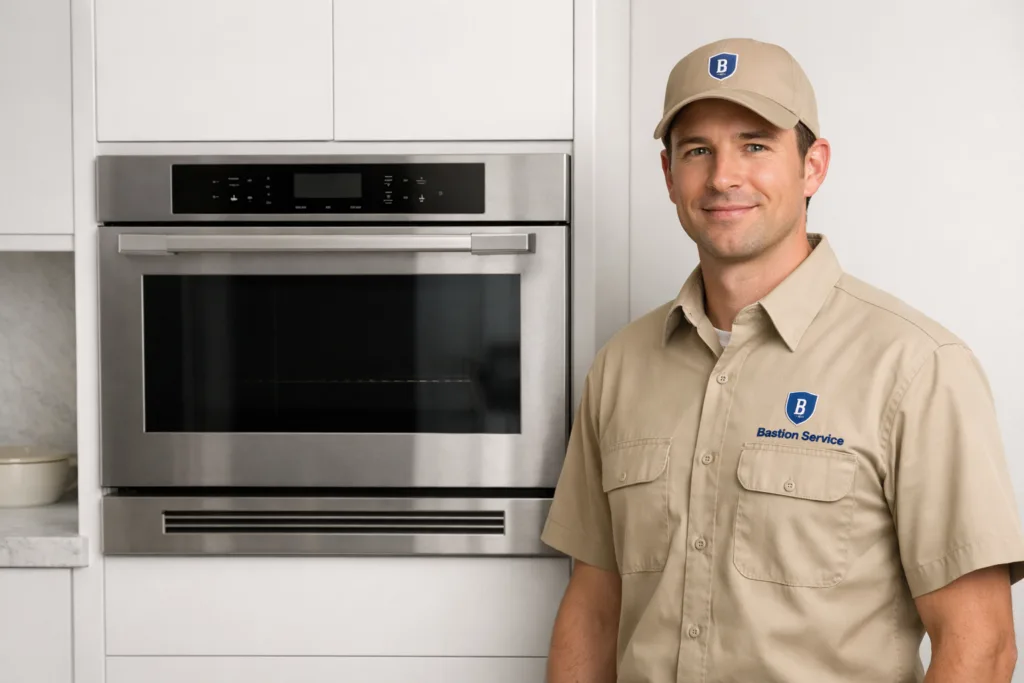
Wall oven problems rarely stay limited to one inconvenience. A unit that preheats slowly can start baking unevenly, an intermittent error can become a full shutdown, and a door or latch issue can affect both cooking performance and safe operation. With JennAir wall ovens, the most efficient repair path usually starts by matching the symptom pattern to the system most likely at fault.
How JennAir Wall Oven Problems Usually Show Up
Many homeowners first notice a change in cooking results rather than a complete failure. Cookies brown unevenly, casseroles need extra time, or the oven seems to run hotter or cooler than the set temperature. In other cases, the problem is more obvious, such as a blank display, repeated beeping, or an oven that stops in the middle of a cycle.
Because these ovens rely on heating elements, sensors, electronic controls, door switches, and safety components working together, one symptom can have several possible causes. That is why replacing a part based only on a guess often does not solve the issue for long.
Common Symptoms and What They May Mean
Not heating at all
If the display responds but the oven never begins to heat, likely causes can include a failed bake element, broil element problem, sensor issue, relay failure, wiring fault, or control board malfunction. On some units, the oven may appear to start normally but produce little or no actual heat inside the cavity.
This type of problem matters quickly in a busy household because repeated attempts to start the oven can mask whether the issue is electrical, mechanical, or control-related.
Slow preheating
Slow preheat is often blamed on normal aging, but it can also point to a weakened heating element, inaccurate temperature feedback, or a control problem that is not energizing components correctly. If preheat times have noticeably increased, it is worth looking into before the oven begins missing temperatures altogether.
Uneven baking or roasting
When one side cooks faster than the other, or recipes that used to be predictable no longer come out right, the issue may involve temperature sensor drift, partial element failure, airflow disruption, or inconsistent cycling from the control system. Uneven performance is especially frustrating because the oven still works enough to be used, but not well enough to trust.
Temperature swings
Some variation is normal during operation, but large swings can lead to undercooked centers, scorched tops, or inconsistent baking times. If the oven overshoots, drops too low, or seems impossible to dial in, the fault may be tied to sensing, calibration, relays, or the electronic control.
Error codes and repeated beeping
Error codes are helpful clues, but they do not always identify a single failed part. They often point to a circuit or function that needs testing, such as temperature sensing, door lock operation, or communication between control components. Clearing the code without finding the cause usually means the problem returns.
Display or touch controls not responding
A wall oven that will not accept commands, shows a partial display, or acts intermittently may have a user interface issue, moisture-related control trouble, a failing board, or a power supply problem. These symptoms can start out occasional and become more frequent over time.
Door not closing properly
If the door does not shut evenly or the seal is not holding heat, cooking results can suffer and preheat times can increase. A worn hinge, damaged gasket, alignment issue, or latch problem can all affect how the oven performs.
Problems after a self-clean cycle
Self-clean places heavy thermal stress on internal components. It is not unusual for an oven to develop control, latch, sensor, or display issues afterward. If the unit starts showing errors, stops heating, or will not unlock after self-clean, that usually points to a specific fault rather than a random glitch.
Why Symptom-Based Diagnosis Matters
Two ovens can show the same complaint and need completely different repairs. For example, “not reaching temperature” might be caused by a weak element on one unit and an inaccurate sensor or control issue on another. “Won’t start” could mean a failed interface, a door-related safety fault, or an incoming power problem.
That is why a useful diagnosis does more than name a symptom. It identifies which system is failing, whether other components may have been affected, and whether continued use could make the repair more expensive.
Signs You Should Stop Using the Oven Until It Is Checked
- The oven shuts off unexpectedly during cooking.
- The display flashes errors repeatedly or behaves erratically.
- The unit overheats or seems much hotter than the setting.
- The door will not close securely.
- There is a burning smell unrelated to food residue.
- The circuit trips when the oven is started.
In these situations, continued use can increase the chance of added component damage and make the final repair more involved.
Repair or Replace: What Beverly Hills Homeowners Should Consider
For a built-in JennAir wall oven, replacement is not always the simple choice it might be with a freestanding appliance. Fit, trim, cabinet opening dimensions, and installation details all matter. That often makes repair the better option when the problem is isolated and the rest of the oven is still in solid condition.
Repair is often worthwhile when:
- The issue appears limited to one main system.
- The oven has been reliable aside from the current symptom.
- The appliance still matches the kitchen layout and cabinetry well.
- The repair cost is reasonable compared with replacement complexity.
Replacement may make more sense when:
- There are multiple failing systems at once.
- Electronic control problems keep returning.
- The oven has a history of repeated service needs.
- The overall condition suggests additional failures are likely soon.
What a Service Visit Should Help Clarify
For homeowners in Beverly Hills, a wall oven service appointment should answer a few practical questions clearly:
- What is actually causing the symptom?
- Is the oven safe to use before repair is completed?
- Is the fault isolated, or does it suggest wider wear inside the appliance?
- Is repair the sensible next step, or is replacement worth considering?
That kind of practical repair guidance is especially helpful with built-in appliances, where the decision is not just about the part that failed but also about long-term usability, kitchen fit, and the condition of the unit as a whole.
Residential JennAir Wall Oven Service in Beverly Hills
Bastion Service helps homeowners in Beverly Hills troubleshoot JennAir wall oven issues such as no heat, uneven baking, slow preheat, temperature instability, control failures, and door or latch problems. Whether the oven is showing a specific error or simply not cooking the way it used to, the goal is to pinpoint the fault and help you decide on the most sensible next step for your household.