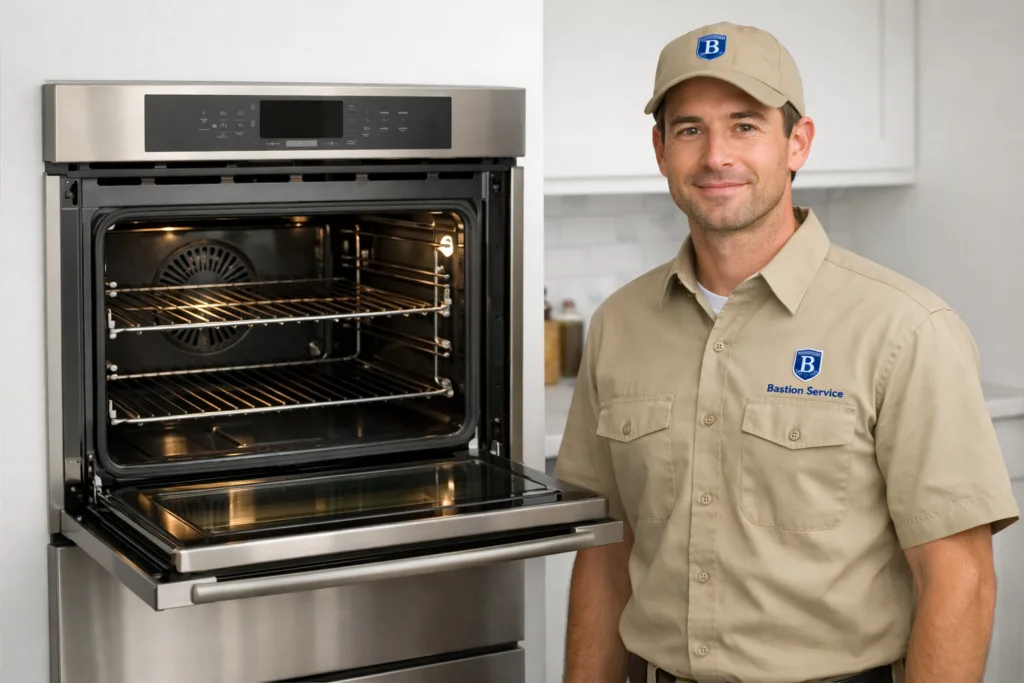
Built-in ovens tend to show trouble in patterns. One day preheat takes a little longer, then baked dishes start finishing unevenly, and eventually the oven may stop reaching temperature at all. With Whirlpool wall ovens, those changes often point to a heating, sensing, control, or door-related issue rather than a single universal failure.
For homeowners in Beverly Hills, the most useful approach is to match the repair plan to the exact symptom. A unit that will not heat at all is diagnosed differently than one that overheats, loses temperature midway through a cycle, or only acts up after self-cleaning.
Common Whirlpool wall oven symptoms and what they often mean
Oven powers on but does not heat
If the display, lights, or controls appear normal but the cavity stays cold, the problem may involve a failed bake element, broil element, igniter on gas configurations, thermal protection component, wiring fault, or electronic control issue. In some cases, the oven starts a cycle but never sends consistent power to the heating circuit.
This symptom is especially important to check promptly because repeated attempts to run the oven can place added stress on relays, connectors, and other electrical parts.
Uneven baking and roasting
Food that browns too quickly on one side, cooks differently from rack to rack, or comes out underdone in the center can signal temperature regulation trouble. Common causes include a drifting temperature sensor, a weak element, poor heat circulation, or a door seal that is no longer holding heat as it should.
When the oven seems usable but results are inconsistent, homeowners often assume calibration is the only issue. Sometimes calibration helps, but persistent uneven cooking usually means a component needs testing.
Slow preheating
A Whirlpool wall oven that takes much longer than usual to preheat may still be heating, but not at full output. A partially failing element, weak igniter, inaccurate sensor reading, or control that is not cycling properly can all cause slow preheat times.
If preheat has gradually worsened, that trend matters. Progressive slowdown often shows that a part is declining rather than failing all at once.
Temperature swings during cooking
Some fluctuation is normal in any oven, but large swings are not. If the oven overshoots temperature, drops too low, or burns food unexpectedly after seeming fine at first, the sensor, control board, relay, or airflow pattern may be at fault.
This is one of the more frustrating symptoms because the oven may still appear to work, yet meal results become unreliable.
Error codes, beeping, or unresponsive controls
Fault codes and control problems can come from keypad failure, communication errors between components, sensor faults, loose connections, or board issues. Resetting power may temporarily clear the display, but recurring errors usually mean the problem has not actually been solved.
If buttons work intermittently or the oven starts and stops on its own, it is best to stop relying on it for regular cooking until the cause is confirmed.
Door lock problems and self-clean failures
Whirlpool wall ovens that stop working after a self-clean cycle may have heat-stressed door lock parts, fuses, sensors, or control components. A door that will not unlock, will not latch, or triggers an error can keep the oven from operating normally even if the heating system itself is still intact.
Forcing the latch or repeatedly restarting the cycle can make the repair more involved, especially on built-in models.
Why the same symptom can have different causes
Wall ovens combine high heat, electronic controls, sensors, insulation, and a built-in installation that is less forgiving than a freestanding range. Because of that, one symptom can point to several different faults. An oven running cool may have a bad sensor, but it can also have a weak heating element or a control relay that is failing under load.
That is why symptom-based diagnosis matters. The timing of the issue, whether it happens in bake or broil, whether preheat completes, and whether the problem appears every cycle or only sometimes all help narrow down the real cause.
Signs the problem should not be ignored
- The oven cannot reach the set temperature.
- Preheat takes much longer than it used to.
- Food quality has become noticeably inconsistent.
- The unit shuts off during cooking.
- Error codes return after being cleared.
- The breaker trips when the oven starts heating.
- The door stays locked or will not lock properly.
Intermittent problems are easy to postpone because the oven may work normally once or twice between failures. In practice, those stop-and-start symptoms often become more frequent over time.
When continued use can make the repair worse
Trying to push through an oven problem can turn a smaller repair into a larger one. A weak element can place extra strain on controls. A loose electrical connection can overheat. A door that does not seal correctly can increase cycling stress as the appliance works harder to maintain temperature.
Repeated self-clean attempts after a recent malfunction are also risky. High-heat cleaning cycles can aggravate existing problems in controls, latch components, and thermal safety parts.
Safety concerns that call for immediate attention
Stop using the wall oven if you notice a burning smell that does not quickly fade, visible sparking, repeated breaker trips, overheating, or the appliance shutting down unpredictably during operation. These signs can point to electrical faults that should be checked before the oven is used again.
If a gas wall oven has a persistent gas odor, stop using it and follow appropriate gas safety steps first. Appliance repair should come after the immediate safety issue has been addressed.
Repair or replace?
Many Whirlpool wall ovens are worth repairing when the problem is limited to a serviceable part such as an element, igniter, sensor, latch assembly, or control-related component. Built-in installation also affects the decision, since replacement can involve cabinet fit, trim alignment, and delivery timing in addition to the appliance cost itself.
Replacement may make more sense when the oven has multiple major issues, severe electronic problems, or a repair total that no longer fits the unit’s age and overall condition. The best decision usually comes down to four things: the exact failed part, the condition of the rest of the oven, parts availability, and how dependable the unit is likely to be after repair.
What a service visit should focus on
A productive visit should start with the symptom you actually see at home, not with assumptions. No heat, slow preheat, uneven baking, repeated fault codes, and lock problems each point to a different testing path. Once the failure is isolated, it becomes easier to decide whether repair is practical and what result to expect afterward.
For Beverly Hills households that rely on a built-in Whirlpool oven for daily cooking, that kind of targeted evaluation helps avoid unnecessary part swapping and gives a clearer answer on the next step.