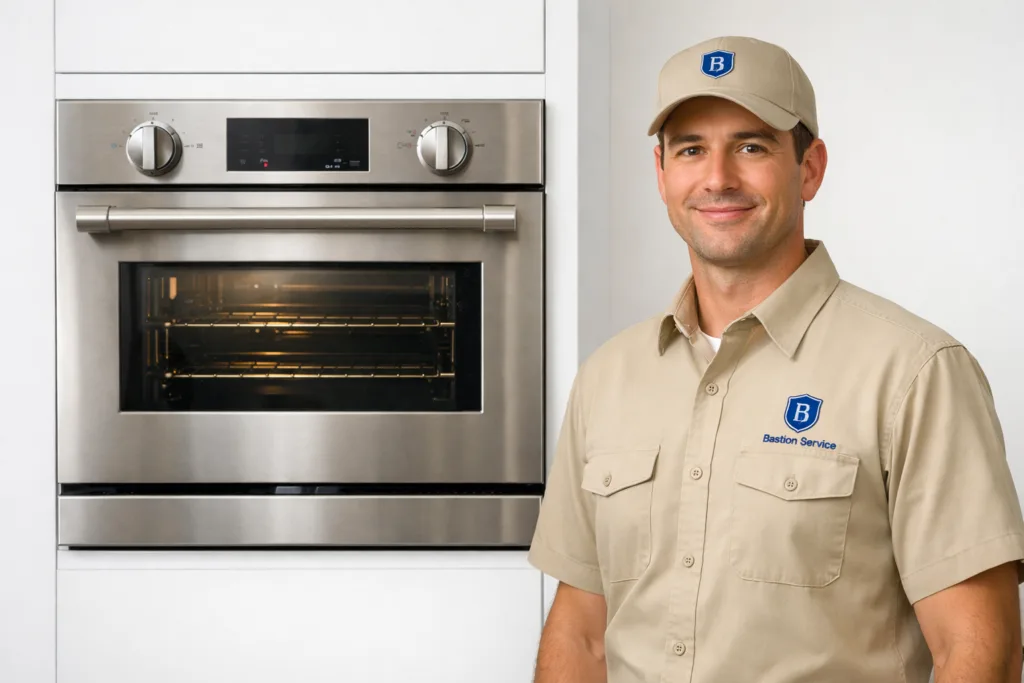
Cooking problems usually show up before a Wolf oven fails completely. A roast that takes much longer than expected, cookies that brown unevenly, or a cavity that never seems to reach the set temperature often point to a component beginning to drift out of spec. Catching those changes early can keep a smaller problem from turning into a no-heat call right before a busy weeknight meal.
Common Wolf oven symptoms in Torrance homes
Most residential oven issues fall into a few recognizable patterns. The symptom matters because it helps narrow down whether the trouble is related to heat production, temperature sensing, electronic control, airflow, or door sealing.
Oven will not heat
If the oven turns on but stays cold, the cause may be different depending on the model and fuel type. Gas units often point toward an igniter or ignition-related fault, while electric models may have a failed bake element, broil element, wiring issue, or control problem. In some cases, the display appears normal even though the heating circuit is not working correctly.
When there is no heat at all, it is usually best to stop repeated restart attempts. Continuing to cycle the oven without confirming the fault can make diagnosis harder and may place more stress on related components.
Slow preheat
A long preheat is one of the most common complaints because the oven still seems usable, just much less efficient. Slow preheat can be caused by a weak igniter, a partially failing heating element, sensor drift, or a relay issue on the control side. Homeowners often notice that the oven eventually gets warm but takes far longer than it used to.
This symptom matters because an oven that struggles to preheat often also struggles to hold temperature once food is inside. The result is longer cook times, inconsistent browning, and unreliable baking performance.
Uneven baking and hot spots
When one tray cooks faster than another or one side of a dish browns much more quickly, the issue is not always the recipe or rack position. Uneven results can point to weak heat cycling, a sensor that is reading inaccurately, airflow problems, or heat loss around the door. In a household kitchen, that usually shows up as wasted ingredients and meals that require constant checking.
Temperature swings
All ovens cycle to maintain heat, but wide swings are different from normal operation. If the cavity overshoots, drops too far, or produces inconsistent results from one use to the next, the problem may involve the temperature sensor, control board, relays, or calibration. Homeowners may describe this as an oven that “runs hot,” “runs cool,” or “never cooks the same way twice.”
Control and display issues
Unresponsive buttons, flashing errors, resets, or a display that behaves erratically can interrupt cooking even if the heating parts are still functional. Electronic faults may prevent normal bake operation, interfere with temperature selection, or cause the oven to shut off unexpectedly during use. If the controls are inconsistent, the repair path usually depends on whether the issue is isolated to the interface, a communication fault, or a larger control failure.
Door, hinge, and gasket problems
A door that will not close tightly can affect more than kitchen comfort. Escaping heat can lengthen cook times, throw off temperature stability, and force the oven to work harder to maintain the set point. Torn gaskets, misaligned hinges, and latch problems are worth addressing because they directly affect cooking performance.
What these symptoms can mean
One reason oven problems can be frustrating is that similar symptoms can come from very different causes. An oven that will not reach temperature may have a heating issue, but it may also be reading temperature incorrectly. An oven that shuts off mid-cycle may have a control problem, but it could also be reacting to an electrical fault or overheating condition. Good troubleshooting separates what the oven is doing from why it is doing it.
- No heat: possible ignition, element, power, wiring, or control failure
- Slow preheat: possible weak igniter, weak element, sensor drift, or relay trouble
- Uneven cooking: possible temperature regulation, airflow, or sealing issue
- Intermittent shutdown: possible control, electrical, or overheating-related fault
- Inaccurate temperature: possible sensor, calibration, or control issue
That is why replacing parts based on guesswork often leads to repeat problems. On premium appliances, several components work together during preheat and temperature cycling, so the correct fix depends on identifying the real point of failure.
Signs the problem is getting worse
Some oven issues stay relatively steady for a while, but others progress quickly. It is wise to arrange service if you notice any of the following:
- Preheat times getting longer from month to month
- Food cooking differently even with familiar settings
- The oven failing only occasionally, then more often
- Visible sparking, burning smells, or unusual clicking
- Error messages or display resets during operation
- A door that no longer seals or closes correctly
Intermittent problems deserve special attention. A Wolf oven that works one day and fails the next can be more disruptive than a unit that is fully down, because it becomes hard to plan meals around it. Those stop-and-start symptoms often point to electrical or control components that are nearing complete failure.
When repair makes sense
Repair is often a reasonable option when the oven is otherwise in solid condition and the failure is limited to a serviceable part or control-related issue. That is especially true when the appliance still fits the kitchen well, performs properly aside from the current fault, and has not developed a long pattern of repeated breakdowns.
Replacement becomes a stronger consideration when multiple major systems are failing at once, the unit has a history of recurring issues, or the repair scope no longer lines up with the appliance’s overall condition. For many Torrance households, the important question is whether the repair is likely to restore normal daily cooking without ongoing uncertainty.
What homeowners can notice before scheduling service
You do not need to diagnose the appliance yourself, but a few observations can make the problem easier to describe:
- Does the oven fail during preheat, during baking, or from the moment it is turned on?
- Is the issue constant, or does it come and go?
- Does the display show an error or reset unexpectedly?
- Are both bake and broil affected, or only one function?
- Has the door started closing differently or leaking heat?
Even simple notes about when the issue happens can help separate a heating fault from a sensor or control issue. That usually leads to a more direct repair path and fewer assumptions.
Residential Wolf oven repair focused on real cooking use
In a home kitchen, oven problems are not abstract mechanical issues. They affect family meals, holiday planning, batch cooking, and the ability to rely on a familiar appliance day after day. The most useful service approach is one that matches the repair to the way the symptom appears in everyday use, whether that means no heat, poor temperature control, inconsistent baking, or electronic control trouble.
For homeowners in Torrance, that means evaluating how the oven performs under normal cooking conditions and whether the fault points to a repair that restores stable, predictable operation. When the problem is identified accurately, the next decision becomes much simpler.