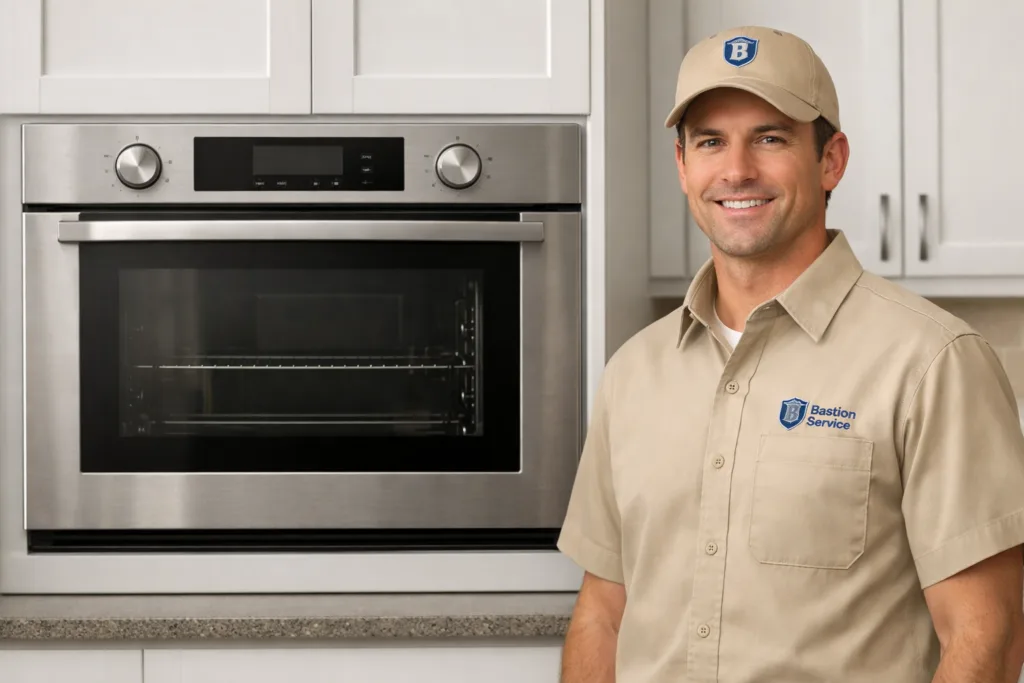
Common Blomberg oven symptoms in Torrance homes

Oven problems rarely affect just one meal. A unit that heats too slowly, bakes unevenly, or shuts off mid-cycle can disrupt normal cooking for days. With Blomberg ovens, the most useful starting point is to match the symptom to the most likely failure path before deciding on parts or next steps.
Some issues are obvious, such as an oven that stays cold. Others are more subtle, like cookies browning too quickly on one side or a roast taking much longer than usual. Those smaller changes often point to a developing component problem rather than normal variation in recipes or cookware.
Not heating at all
If the oven powers on but never produces heat, the cause may be a failed bake element, broil element, igniter, sensor, wiring problem, relay fault, or control issue. Electric and gas models fail differently, which is one reason the same symptom should not be treated as the same repair on every unit.
In some cases, homeowners notice the display and lights working normally, which can make the oven seem partially functional even though the heating circuit is not operating. That difference matters because it helps narrow the fault to ignition, element output, or control response instead of a complete power loss.
Slow preheat
A Blomberg oven that eventually heats but takes much longer than usual may have a weak igniter, an underperforming element, a sensor issue, or a control problem that is not driving heat correctly. Slow preheat often gets overlooked at first because the oven still “works,” but it usually indicates that one part of the heating system is no longer performing properly.
This symptom can also show up as longer cook times across multiple dishes. If meals that used to be predictable now take extra time even after full preheat, the oven may not be reaching or maintaining the selected temperature.
Uneven baking
When one rack bakes faster than another, or the rear of the oven cooks differently than the front, several causes are possible. Temperature sensor drift, a weak element, poor convection performance, or a door that is not sealing well can all lead to uneven heat distribution.
Because this symptom develops gradually, it is often blamed on pans, rack position, or recipe changes. If the pattern keeps repeating with different foods, the appliance itself is a more likely cause.
Temperature swings and overheating
Short cycling, overheating, or wide temperature swings can cause food to burn outside while remaining undercooked inside. This may point to a faulty sensor, calibration issue, relay problem, or control board fault. In some ovens, the problem appears only after the cavity has been hot for a while, which makes intermittent testing especially important.
Homeowners may first notice this as baking inconsistency rather than a clear malfunction. For example, casseroles may finish too quickly one day and too slowly the next even though the settings are the same.
Control and display problems
If buttons do not respond, the display flickers, settings change on their own, or the oven will not start after a command is entered, the issue may involve the user interface, touch controls, wiring harness, or electronic control assembly. These faults can affect heating, timer operation, and even door-lock behavior depending on the model.
When control problems come and go, they are easy to dismiss as a temporary glitch. Repeated freezing, random beeping, or lost settings usually means the problem needs service rather than a simple reset.
Door and latch issues
A door that will not close tightly can reduce temperature stability and extend cooking times. Heat escaping around the seal can make the oven seem weak even when the heating system is functioning. On models with lock or latch features, a failed latch assembly can also interfere with normal operation.
If the door feels misaligned, does not shut evenly, or opens too easily during cooking, it is worth having the hinges, gasket, and latch checked before the problem affects additional components.
Why the same symptom can have different causes
An oven that is not heating, heating slowly, or overheating may seem like one category of problem, but those symptoms often come from very different failures. Replacing a sensor when the real issue is a control relay, or swapping an igniter when the problem is wiring-related, does not solve the root cause and can add unnecessary cost.
That is especially true with intermittent complaints. A Blomberg oven may work for a quick bake cycle but fail during a longer roast, after reaching full temperature, or only when specific functions are selected. Those patterns help separate one fault path from another.
A strong service visit should confirm power supply, heating response, sensor readings, control behavior, and any visible signs of wear or heat damage before a repair recommendation is made.
Signs the problem is getting worse
Some oven issues stay relatively stable for a short time, while others tend to progress quickly. If preheat keeps getting slower, temperatures become less accurate each week, or the control panel becomes more erratic, the failure is often advancing rather than resolving on its own.
- Food is regularly undercooked or overcooked despite familiar settings
- The oven needs repeated restarts to complete a cycle
- Error codes appear more often or clear only temporarily
- The breaker trips during preheat or active cooking
- The oven loses heat after initially reaching temperature
Once these patterns start, continued use can sometimes place extra stress on related parts. A minor heating problem can turn into a larger control or wiring repair if the appliance keeps cycling under fault conditions.
When to stop using the oven
Some symptoms are inconvenient but manageable until service is scheduled. Others suggest a possible safety issue and should be treated more seriously. If you notice sparking, a burning smell from inside the cabinet area, repeated breaker trips, or the unit shutting down unpredictably while hot, stop using the oven until it has been checked.
For gas models, any persistent gas odor should also be taken seriously. If the smell is strong or does not clear quickly, discontinue use and follow appropriate household gas safety steps before arranging repair.
Repair or replace: what usually matters most
For many Torrance homeowners, the bigger question is not just what failed, but whether the repair still makes sense. The answer usually depends on the age of the oven, the condition of major components, the cost of the specific repair, and whether the appliance has had multiple recent service issues.
Repair is often worthwhile when the problem is limited to a serviceable part such as an igniter, element, temperature sensor, latch, fan-related component, or a defined control failure on an otherwise solid unit. Replacement becomes a more serious consideration when there are repeated electronic issues, significant internal wear, or a repair cost that approaches the value of a new oven.
Households that cook frequently tend to notice performance decline sooner, so reliability matters just as much as whether the oven can technically still turn on. A unit that works inconsistently is often more disruptive than one that has failed in an obvious, straightforward way.
What homeowners can note before service
A few details can make diagnosis faster and more accurate. It helps to note whether the oven fails during preheat, after reaching temperature, only on bake or broil, or only on certain settings. If there is an error code, write it down exactly as shown.
- Whether the oven is electric or gas
- If the problem affects bake, broil, convection, or all functions
- How long preheat currently takes compared with normal
- Whether the display, light, and timer still work correctly
- Any recent power interruption, self-clean cycle, or unusual odor
These details often help separate a heating issue from a sensor, control, door, or electrical problem and support a more efficient diagnosis.
Focused Blomberg oven repair in Torrance
Blomberg oven issues are easiest to solve when the symptom pattern is matched to the actual failed component instead of a guess. Whether the problem involves no heat, uneven baking, slow preheat, temperature instability, or control behavior, the goal is to identify what is failing, explain the repair path, and help you decide whether the appliance is worth fixing for continued everyday use in your home.