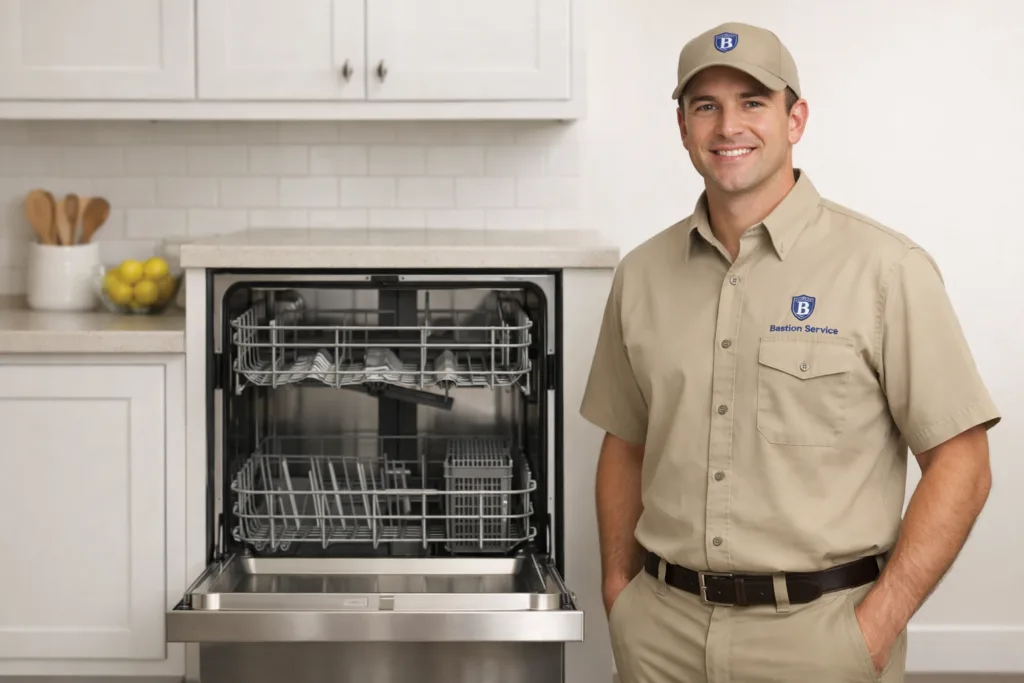
Common GE dishwasher symptoms and what they usually point to

GE dishwashers can fail in ways that look similar on the surface, but the underlying cause is often different from one home to the next. A machine that leaves food behind may have a wash circulation problem, while another with the same complaint may be under-filling or not heating properly. Looking at the exact symptom pattern helps narrow down the repair path faster.
Standing water after the cycle
Water left in the tub usually means the dishwasher is not moving water out the way it should. Possible causes include a clogged drain path, a failing drain pump, a kinked hose, or a control problem that interrupts the drain portion of the cycle. If the unit hums, tries to drain, or quits before finishing, it is better to stop using it until the cause is identified.
- Water remains at the bottom after every cycle
- The dishwasher stops and will not advance
- There is a buzzing or humming sound during drain
- Odors start building from trapped water
Dirty dishes, film, or poor wash coverage
When dishes come out gritty, cloudy, or still coated with food, the issue may involve low spray pressure, blocked spray arms, a weak circulation pump, dispenser trouble, or poor water heating. GE dishwasher wash complaints often overlap with fill and heat issues, which is why the same symptom should not automatically be treated as a detergent or loading problem.
If performance has gradually declined, mineral buildup and restricted water flow may also be part of the picture. If the change happened suddenly, a part failure is more likely.
Leaks from the door or underneath
A leak can start with something as simple as a worn gasket, but it can also come from a cracked sump area, loose hose connection, overfill condition, or spray arm that is forcing water where it should not go. Even a small leak should be taken seriously in a kitchen, especially when water is reaching flooring, toe kicks, or adjacent cabinetry.
Unit will not start or stops mid-cycle
If the dishwasher has power but will not begin washing, common suspects include the door latch, user interface, control board, float system, or wiring issue. When it starts and then shuts down partway through, the machine may be reacting to a drain fault, heating problem, or control interruption. Flashing lights can be helpful, but they do not always identify the failed part by themselves.
Wet dishes or low rinse temperature
Some moisture at the end of a cycle can be normal, but a GE dishwasher that consistently leaves dishes much wetter than usual may have a heating circuit problem, vent issue, sensor fault, or cycle control problem. If plastics are soaked and glassware feels cool at the end of the cycle, the drying complaint may actually begin with poor heating earlier in the wash.
Why the same symptom can come from different failures
Dishwasher problems are often misleading because one failed part can trigger several visible symptoms. A drain issue can cause a cycle interruption. A heating problem can show up as poor cleaning. A fill problem can look like weak washing or bad detergent performance. That is why part-swapping based on a guess often leads to repeat problems and added cost.
For homeowners in Marina del Rey, the most useful service approach is one that separates maintenance issues from actual component failure and then checks whether the repair is sensible for the condition of the appliance.
Signs you should stop using the dishwasher and schedule service
Some dishwasher problems are more than just inconvenient. Continued use can increase repair cost or create avoidable water damage.
- Water is leaking onto the floor
- The dishwasher will not drain fully
- There is a burning smell or repeated buzzing
- The unit trips power or shuts off unexpectedly
- The cycle repeatedly stalls at the same point
- Wash results have dropped off sharply from normal performance
If the dishwasher still runs but is clearly not washing, heating, or draining correctly, early service can prevent a smaller problem from turning into pump damage, standing water, or a complete no-start condition.
Repair or replacement: what usually makes sense
Many GE dishwasher problems are repairable when the issue is limited to a pump, latch, drain component, dispenser, gasket, sensor, or control-related fault. Replacement becomes more likely when the unit has multiple major failures, heavy interior deterioration, recurring leak history, or overall wear that makes another repair hard to justify.
The age of the dishwasher matters, but so does the condition of the racks, tub, door seal area, and core wash system. A repair can still make sense on an older machine if the failure is isolated and the rest of the dishwasher is in solid shape. On the other hand, a newer unit with repeated major issues may not be the best long-term candidate for more investment.
What to check before assuming the dishwasher needs a part
Not every GE dishwasher problem starts with a failed component. A few basic conditions can affect performance and should be considered before concluding that a major repair is needed.
- Make sure the filter area is not blocked by debris
- Check that spray arms can turn freely
- Confirm dishes are not preventing the detergent dispenser from opening
- Look for obvious kinks in the drain hose
- Use the correct cycle and detergent for the load type
- Note whether the problem happens on every cycle or only certain settings
If those basics do not change the behavior, the next step is usually to test the systems involved rather than continue experimenting with detergents, repeated cycles, or reset attempts.
What homeowners in Marina del Rey usually want from a service visit
Most households want a straightforward answer: what is failing, whether the dishwasher is worth repairing, and whether continued use risks a bigger problem. That is especially true when the machine is leaking, leaving standing water, or interrupting the kitchen routine several times a week.
For GE dishwasher repair in Marina del Rey, symptom-based service is usually the fastest way to a workable answer. It helps sort out whether the issue is related to draining, circulation, heating, controls, or water containment so the next decision is based on the actual condition of the appliance instead of guesswork.