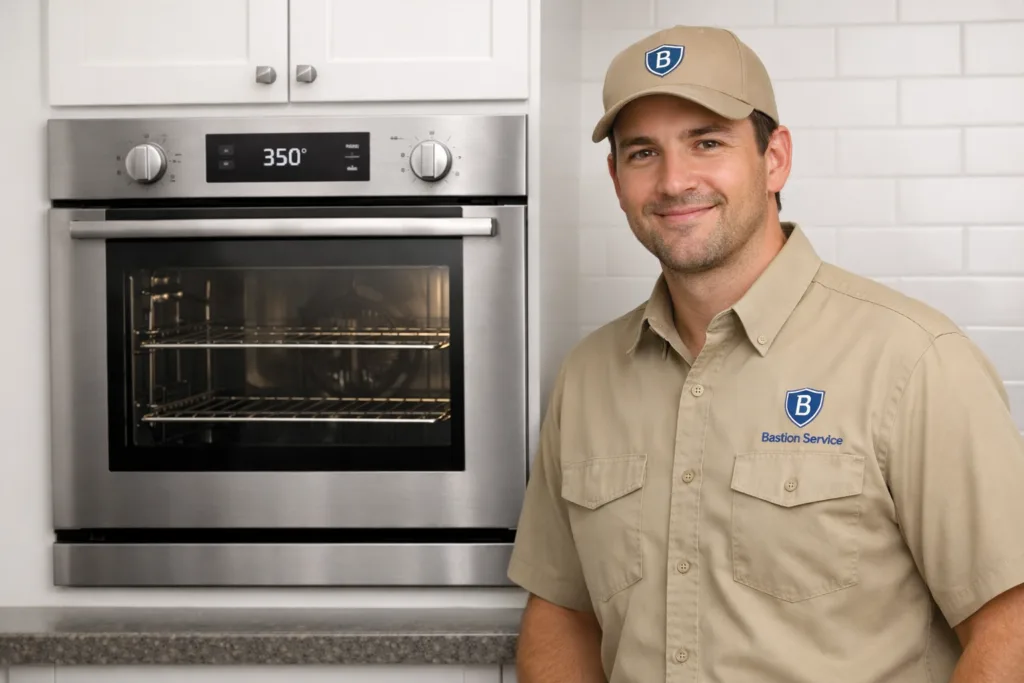
Cooking problems usually show up before a complete failure. An LG oven may still power on, but longer preheat times, inconsistent browning, or repeated temperature drift are early signs that something inside the heating, sensing, or control system is no longer working as it should. For households in Beverly Hills, catching those patterns early can help limit food waste, prevent added strain on other components, and make the repair decision easier.
Common LG oven problems and what they often mean
Oven not heating
If the oven starts a cycle but never gets hot, the fault may be tied to the bake element, broil element, igniter on gas models, temperature sensor, relay, or electronic control. In some cases, the display and lights appear normal while the heating circuit is not actually engaging. That is why a “turns on but does not heat” complaint needs more than a visual check.
Slow preheat
Slow preheating is easy to overlook because the oven still works, just not the way it used to. On LG ovens, this can point to a weak heating component, sensor inaccuracy, a control issue, or a convection-related problem that affects how heat is distributed. If recipes that once worked now need extra time, the appliance is usually telling you something has changed.
Uneven baking
Cookies that brown on one side, casseroles that stay cool in the middle, or meals that cook differently from rack to rack often suggest trouble with heat circulation or temperature regulation. Possible causes include a failing sensor, a partially working element, convection fan issues, or a door seal problem that lets heat escape during the cycle.
Temperature swings
Some variation is normal in any oven, but noticeable spikes and drops are not. If food burns unexpectedly, finishes too early, or needs constant monitoring, the oven may be cycling incorrectly. That can happen when the sensor sends inaccurate readings, the control board mismanages heating intervals, or a component begins failing under load after the oven has been on for a while.
Control panel or display problems
Unresponsive buttons, flashing displays, random beeping, or a cycle that cancels itself can all stem from user interface faults, control board problems, wiring issues, or heat stress inside the console area. A display that works intermittently should not be ignored, especially if the oven also struggles to hold temperature or start reliably.
Door and self-clean problems
If the door will not close fully, will not unlock, or started acting up after self-clean, the issue may involve the latch assembly, hinges, alignment, lock motor, or heat-related stress on nearby controls. A poor seal can also affect baking results by allowing heat to escape throughout the cycle.
Symptoms that should not be brushed off
Some problems are more than just an inconvenience. It is smart to stop normal use and arrange service if you notice any of the following:
- The oven trips the breaker
- There is a burning or electrical smell
- The unit shuts off during preheat or mid-cycle
- Error codes return repeatedly after resetting power
- The door stays locked unexpectedly
- The oven overheats or scorches food despite normal settings
For gas models, a persistent gas odor should be treated as a safety issue first, not as a routine performance complaint.
Why the same symptom can have different causes
Two ovens can show the exact same complaint and need very different repairs. For example, “not heating” might be caused by a failed element, a weak igniter, a bad sensor, a relay problem, damaged wiring, or an electronic control fault. “Uneven baking” might come from temperature misreading, poor air movement, or heat loss around the door. That is why replacing parts based on guesswork often leads to wasted time and money.
A symptom-based approach is more useful: look at when the problem happens, whether it affects every cycle or only some, whether the display behaves normally, and whether the issue changes as the oven gets hotter. Those details help narrow the failure path much faster than swapping parts at random.
Repair or replace: how homeowners usually decide
In many cases, repair makes sense when the problem is isolated and the rest of the oven is in solid condition. That often includes issues involving sensors, igniters, elements, fan motors, door hardware, or a confirmed control-related fault. If the oven has been reliable overall and the repair addresses a single failed component, keeping the unit in service is often the better value.
Replacement becomes more worth considering when several problems are developing at once, the oven has a history of repeated breakdowns, or the needed repair is expensive relative to the age and condition of the appliance. Visible wear, poor door fit, repeated electronic issues, and declining cooking performance across multiple functions can all push the decision toward replacement.
Questions that help clarify the choice
- Is the problem limited to one component or affecting several functions?
- Has performance been declining gradually over time?
- Has the oven needed multiple repairs already?
- Does the appliance still meet the household’s daily cooking needs once repaired?
What to note before service
A few observations can make the visit more productive. Try to note whether the oven fails on bake, broil, convection, or all modes; whether it reaches temperature at all; whether the issue started after self-clean; and whether any error code appears on the display. If one rack cooks differently from another, or if preheat seems normal one day and slow the next, that pattern matters too.
It also helps to notice whether the door closes firmly, whether the interior light and controls act normally, and whether the unit resets after power is interrupted. These details often point toward the right repair path sooner.
What focused oven service should accomplish
The goal is not simply to get the oven to power on again. Good service should identify the failed part or circuit, check whether surrounding components were affected, and determine whether the fix is likely to restore stable day-to-day cooking performance. That matters in Beverly Hills homes where the oven is used for regular family meals, entertaining, and everyday kitchen routines.
When the symptom pattern is tested properly, it becomes much easier to decide what comes next: complete the repair, pause use until a specific issue is corrected, or move on from the appliance if the repair no longer makes practical sense.