
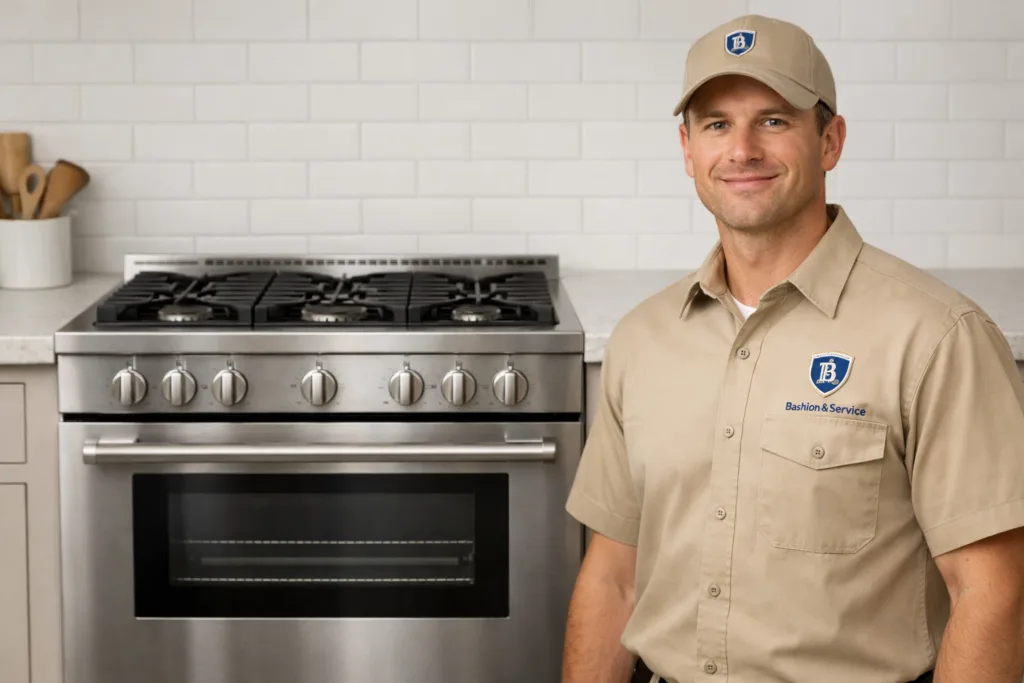




Common Fisher & Paykel Range Problems in Sawtelle Homes

Range problems usually show up as patterns rather than one isolated event. A burner that only lights on the second or third try, an oven that seems hotter than the display suggests, or controls that work one day and fail the next often point to different underlying faults. Looking at the symptom pattern first helps narrow down whether the problem involves ignition, temperature regulation, electrical supply, or the control system.
Burners that click repeatedly or do not light reliably
Continuous clicking is one of the most common complaints with gas ranges. In some cases, the issue is simple, such as a burner cap that is out of position or moisture around the igniter after cleaning. In other cases, the spark ignition switch, igniter, wiring, or related components may be failing.
If the burner lights inconsistently, takes several tries, or clicks even after the flame is on, the problem should be checked before regular use continues. If you notice a persistent gas odor or the burner does not light while gas is present, stop using the appliance and treat it as a safety issue.
Oven not heating, heating slowly, or baking unevenly
When an oven is not reaching temperature, takes far too long to preheat, or cooks unevenly from side to side, the cause is not always obvious from the symptom alone. Depending on the model and fuel type, the issue may involve the igniter, temperature sensor, bake or broil element, relay, wiring, or main control board.
Homeowners often describe this as an oven that “sort of works” but no longer cooks predictably. That can mean cookies brown unevenly, casseroles take much longer than usual, or food comes out overcooked on top and undercooked in the center. Those symptoms usually indicate a component that is weakening rather than completely failed.
Oven overheating or temperature drifting
An oven that overshoots the set temperature can be just as frustrating as one that never gets hot enough. If meals start burning unexpectedly, if the interior feels much hotter than normal, or if the appliance cycles erratically, the temperature sensor or control may be misreading or mismanaging heat. Repeated overheating should not be ignored because it can affect food quality, strain components, and create safety concerns.
Controls, display, or touch panel not responding
A blank display, unresponsive buttons, random beeping, or settings that change on their own can point to power supply issues, a failing user interface, loose connections, or a defective control board. Intermittent control failures are especially important to address because they often get worse over time. A range that resets or loses functions during cooking is not just inconvenient; it can make routine use unpredictable.
Door, hinge, and heat-retention problems
Not every repair call starts with a complete breakdown. Sometimes the problem is a door that will not close properly, worn hinges, a loose gasket, or oven racks that no longer move smoothly. These issues can affect cooking performance by letting heat escape, changing preheat times, and forcing heating components to work harder than they should.
Why Model-Specific Diagnosis Matters
Fisher & Paykel ranges are not well served by guesswork. The same complaint can come from multiple causes, and replacing parts based only on the most obvious symptom can lead to extra cost without solving the real problem. A burner ignition issue may be localized to one assembly, while an oven heating complaint may involve sensing, control, or power regulation rather than the heating source itself.
This is especially important when the appliance still works part of the time. A range with one good burner and one unreliable burner, or an oven that reaches temperature only occasionally, can make the problem look smaller than it is. In reality, intermittent operation is often a sign that a component is failing under load or that an electrical issue is developing behind the scenes.
Signs the Range Should Be Serviced Soon
It is usually time to schedule service when the problem repeats, changes cooking results, or forces you to work around the appliance instead of using it normally. A single odd cycle may not always mean a major failure, but recurring symptoms usually do.
- Burners spark constantly or only ignite after several attempts
- The oven will not maintain a steady temperature
- Preheat times are much longer than normal
- The display goes blank or the controls respond inconsistently
- The range shuts off mid-cycle or trips power
- The oven overheats, smokes, or produces unusual odors during normal cooking
When these symptoms are ignored, what starts as an isolated repair can spread into damage affecting additional parts.
When to Stop Using the Appliance
Some problems are more urgent than others. Continued use is not a good idea if there is a strong gas smell, repeated failure to ignite with gas present, visible sparking where it should not occur, overheating that seems severe, or electrical behavior such as flickering displays combined with tripped breakers. In those situations, the safest decision is to stop using the range until it has been evaluated.
Repair or Replace?
Many Fisher & Paykel range problems are worth repairing when the issue is limited to a specific component and the rest of the appliance is still in solid condition. Burner ignition failures, temperature sensor faults, element failures, and certain control-related issues often fall into that category.
Replacement becomes more reasonable when the range has multiple unrelated failures at the same time, when major components have failed together, or when the total repair path approaches the value of keeping the appliance in reliable household use. Age, overall condition, and parts availability also matter. For many Sawtelle homeowners, the most helpful answer is not a blanket recommendation but a repair plan based on the exact failure and the condition of the range as a whole.
What to Expect From a Useful Service Evaluation
A productive visit should answer a few basic questions clearly: what is failing, whether the range is safe to use in the meantime, and whether the repair is likely to restore normal daily cooking without chasing multiple unknown issues. That kind of practical repair guidance is usually what helps homeowners decide with confidence.
For households in Sawtelle, the goal is simple: get back to a range that lights properly, heats consistently, and responds the way it should when you are cooking day to day.


