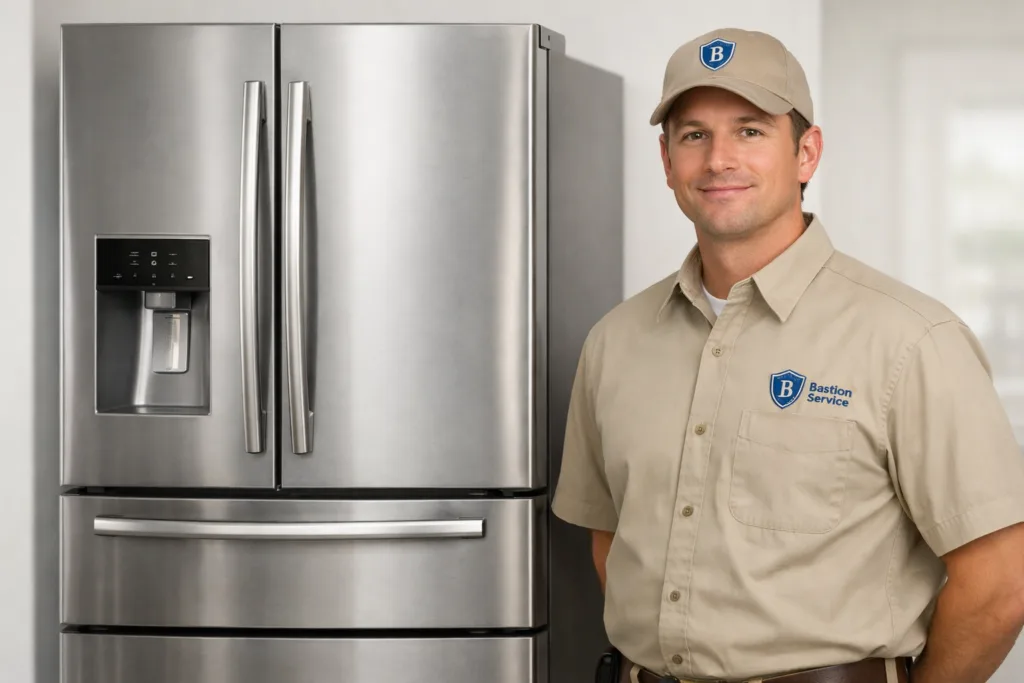
Temperature problems in an Electrolux refrigerator rarely have just one obvious cause. A refrigerator that feels warm one day and overly cold the next may be dealing with restricted airflow, a failing fan, sensor or control trouble, frost interfering with circulation, or a drain and moisture issue that has started affecting normal operation. Looking at the full symptom pattern usually tells more than one isolated complaint.
Common Electrolux refrigerator symptoms and what they may indicate
Homeowners in Venice often notice the problem first through food quality. Milk spoils too soon, produce wilts faster than usual, leftovers do not stay consistently chilled, or frozen items begin to soften. Those signs matter because they usually point to unstable cabinet temperatures rather than a simple setting issue.
Fresh food section is warm but the freezer still seems cold
This is one of the most common refrigerator complaints. Many people assume the appliance is still mostly working because the freezer appears to hold temperature, but that can be misleading. The refrigerator side depends on proper air movement from the cooling system, and even a partially blocked or failing airflow path can leave the fresh food section too warm.
- Evaporator fan problems that reduce circulation
- Frost buildup behind interior panels
- Air damper issues affecting how cold air is distributed
- Dirty condenser conditions causing poor cooling efficiency
- Sensor or control faults that interfere with normal cycling
When this happens, loading patterns can sometimes make the problem look worse, but repeated warming usually means the unit needs more than a thermostat adjustment.
Food freezing in the refrigerator compartment
Food freezing in the fresh food area can be just as frustrating as poor cooling. Items placed directly in front of vents may freeze first, but if shelves throughout the compartment are affected, the refrigerator may be overcooling or misreading internal temperatures.
Possible causes include:
- Incorrect sensor readings
- Damper control problems
- Control board issues affecting cycle timing
- Uneven airflow caused by frost or fan trouble
- Door sealing issues that disrupt normal temperature regulation
If freezing starts happening in different areas of the refrigerator, the pattern usually suggests a mechanical or electrical issue rather than simple food placement alone.
Water, frost, and moisture problems
Leaks and condensation are more than a nuisance. Moisture inside or under an Electrolux refrigerator can lead to odor, ice accumulation, floor damage, and reduced cooling performance if ignored for too long.
Water under the refrigerator or inside drawers
A puddle on the floor does not always mean the same thing from one home to another. In many cases, the problem traces back to a blocked defrost drain that causes water to back up and spill where it should not. In other cases, a water supply line, inlet valve, or ice maker fill issue may be involved.
Common sources include:
- Clogged or frozen defrost drain lines
- Loose or damaged water connections
- Ice maker fill problems
- Excess condensation from warm air entering through weak door seals
- Drain pan or drainage path issues
Frost buildup on panels or around stored food
Frost is a strong clue that the refrigerator is not managing moisture and defrost cycles correctly. Light frost can quickly turn into a larger airflow problem, especially if it forms around vents or behind back panels. Once airflow is restricted, temperatures may swing across both compartments.
Frost-related problems often involve:
- Defrost heater or defrost control issues
- Door gaskets not sealing tightly
- Warm air entering from doors left slightly open
- Fan issues that allow cold pockets and ice formation
Noises that should not be ignored
Refrigerators make normal operating sounds, but changes in sound are worth paying attention to. A new rattle, repeated clicking, loud buzzing, or a scraping noise often points to a part under strain or a component that is no longer operating smoothly.
Clicking, buzzing, or repeated restart sounds
These symptoms can suggest compressor start trouble, relay issues, electrical faults, or a system that is struggling to begin a normal cooling cycle. If the refrigerator repeatedly tries to start and fails, continued operation can increase wear.
Rattling, humming, or fan-like noise
Some sounds come from vibration against surrounding surfaces, but others indicate fan blade interference, ice contacting a moving fan, or mounting problems. If the noise changes when doors open or close, that can help narrow the issue toward internal fan operation.
Signs the problem is becoming more urgent
Some refrigerator issues can wait a short time for scheduled service, but others should be addressed quickly because they can lead to food loss or additional component damage.
- Cabinet temperatures are no longer stable
- Food spoils noticeably faster than normal
- Frost keeps returning after being cleared
- Water is collecting on the floor
- The refrigerator runs almost constantly
- The compressor area feels unusually hot
- The unit clicks repeatedly without cooling properly
If the refrigerator stops cooling altogether or starts tripping power, it is usually best to protect food, stop forcing operation, and have the appliance evaluated before further use.
What homeowners can observe before service
A few simple observations can make the repair path easier to understand. Without disassembling anything, it helps to note whether the freezer is still holding temperature, whether frost is visible on interior panels, whether water appears only during certain times of day, and whether the noise is constant or tied to cooling cycles.
It is also useful to check for:
- Gaps or wear along door gaskets
- Food packages blocking vents
- Unusual heat near the compressor area
- Interior lights working while cooling performance drops
- Changes after a recent power outage or heavy grocery load
These observations do not replace testing, but they often help separate a loading or airflow issue from a deeper component failure.
Repair or replacement: how the decision is usually made
Not every Electrolux refrigerator problem in Venice leads to replacement. Many issues are repairable when the failure is limited to a fan motor, drain blockage, gasket problem, sensor-related fault, control component, or another defined part failure. In those cases, repairing the refrigerator often makes sense if the rest of the appliance is in solid condition.
Replacement becomes more likely when the refrigerator has multiple major problems at once, a more serious sealed-system concern, or a repair cost that no longer fits the age and overall condition of the appliance. The important part is understanding which category the problem falls into before making a decision based on frustration alone.
What a service visit should clarify
For a household in Venice, a useful appointment should answer more than whether the refrigerator is “working” or “not working.” It should identify whether the main fault involves airflow, defrost, water delivery, controls, door sealing, fan operation, compressor starting, or a larger cooling-system issue. That gives the homeowner a realistic picture of the repair path, expected urgency, and whether continued use risks more damage or food loss.
When an Electrolux refrigerator starts showing repeat symptoms, early attention usually gives the best chance of a simpler fix and fewer disruptions in the kitchen.