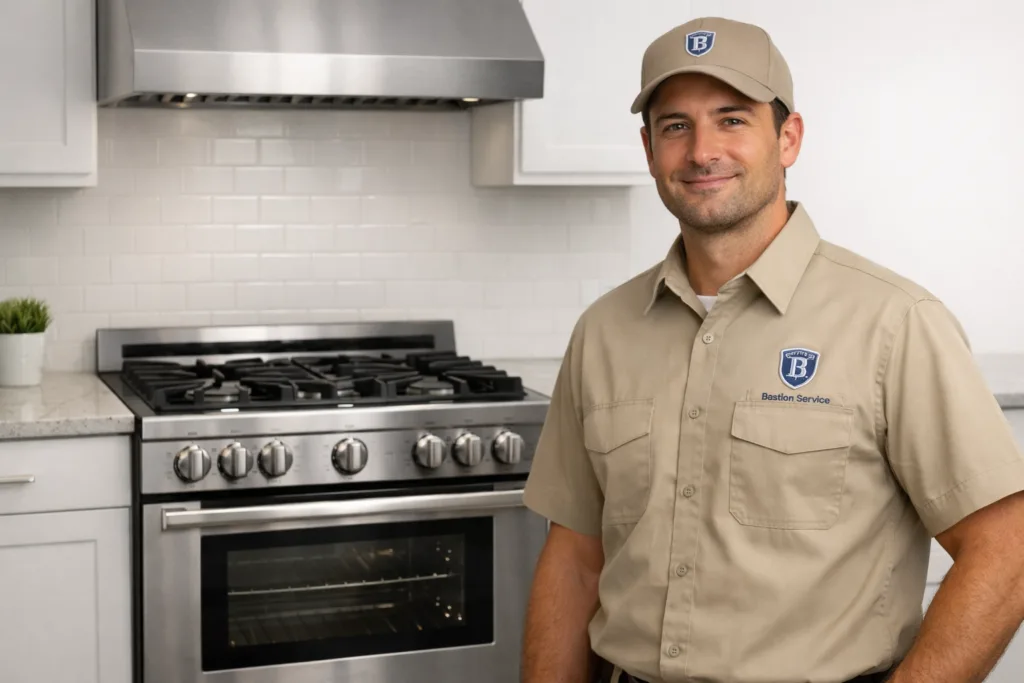
Range problems rarely stay contained to one small inconvenience. A burner that clicks without lighting can delay dinner, but it can also point to moisture, ignition trouble, or a spark-system fault. An oven that seems only a little slow to preheat may actually be struggling to reach or hold temperature, which affects baking results long before the failure becomes obvious.
What different Electrolux range symptoms usually mean
Because a range combines cooktop components, oven heating parts, sensors, wiring, and electronic controls, the same household complaint can come from different failures. Looking at the exact pattern matters: whether the issue happens every time, only after cleaning, only on one burner, or only once the oven has been running for a while.
Burner clicks but does not light
On gas models, repeated clicking without ignition often points to a problem around the burner head or spark system. Common causes include a misaligned burner cap, debris in the ignition area, moisture after cleaning, a worn igniter, or a fault in the switch sending the spark signal. If one burner fails while others work normally, that usually narrows the issue to a more localized component.
If clicking continues after the flame is established, the range may still need service even if the burner technically works. Persistent clicking can indicate moisture, a stuck switch, or ignition parts that are no longer operating normally.
Oven will not heat or takes too long to preheat
When the oven stays cold, warms only slightly, or takes far longer than normal, the problem may involve the bake element, igniter, temperature sensor, control relay, or wiring. In some cases the oven appears to preheat, but actual cooking performance tells a different story. Food may need extra time, the bottom may stay pale, or dishes may come out uneven from front to back.
That kind of pattern often means the oven is not cycling heat correctly. It may reach a target temperature briefly, then struggle to maintain it through the rest of the cooking cycle.
Uneven baking or temperature swings
Homeowners in Venice often first notice this problem through results rather than through a clear failure. Cookies brown unevenly, casseroles finish inconsistently, or recipes that used to be reliable suddenly need constant adjustment. Temperature instability can come from a weak heating component, a sensor drifting out of range, door-seal heat loss, or a control issue affecting how the oven cycles on and off.
Surface element gets too hot or will not adjust
On electric ranges, a burner that runs at high heat no matter the setting commonly suggests a failing infinite switch or an element problem. If the element cycles erratically or does not respond to the knob as expected, continued use can become frustrating and, in some cases, unsafe for routine cooking.
On electronically controlled models, the issue may also involve the user interface or control board rather than the heating element itself.
Display errors or controls not responding
Error codes, partial display failures, and buttons that work intermittently usually point toward the control system, communication faults, or wiring problems. These issues can affect the oven, cooktop, or both. If the range resets on its own, loses power intermittently, or behaves differently after a recent outage, that detail can be important during diagnosis.
Signs the problem is getting worse
Some range issues remain stable for a while, but many become more expensive if ignored. Warning signs include ignition taking longer over time, preheat performance steadily dropping, a burner that overheats more often, or controls that only work after repeated attempts. Those changes usually mean the failure is progressing rather than staying isolated.
It is also worth paying attention to when the symptom appears. A problem that starts only during longer oven cycles may involve heat-sensitive components. A fault that shows up after spillover or heavy cleaning may be related to moisture or contamination around switches and igniters.
When to stop using the range and arrange service
Service is the better next step when the range shows recurring ignition trouble, unreliable oven heating, overheating surface elements, tripped breakers, or repeated control errors. These are not just performance issues; they can interfere with safe and predictable operation.
- Gas burner clicking without lighting consistently
- Strong or persistent gas odor
- Burner that will not lower from high heat
- Oven that does not heat accurately enough for normal cooking
- Control panel failures that affect multiple functions
- Power loss, sparking behavior, or breaker trips during use
If there is a strong gas smell, discontinue use and address safety immediately before thinking about repair timing.
Repair or replace: what usually makes sense
Many Electrolux range problems are worth repairing when the appliance is otherwise in solid condition and the failure is limited to one main system, such as ignition, baking heat, or a control component. A repair decision becomes less favorable when there are several major issues at once, the appliance has a longer history of recurring faults, or the diagnosis shows broader electrical or control-system wear.
For most households, the smartest decision comes from the actual symptom pattern rather than from age alone. A newer range with an isolated failed part may be an easy repair. An older unit with unstable controls, heating inconsistency, and repeated burner issues may deserve a harder look before more money goes into it.
How to prepare for a more efficient diagnosis
A few observations can make service more focused and help separate a single failed part from a wider problem. Before the visit, it helps to note:
- Whether the issue affects the cooktop, the oven, or both
- Whether the symptom happens every time or only occasionally
- Which burner or cooking mode is affected
- Whether the problem started after cleaning, spillover, or a power interruption
- Any display message or error code shown
- Whether performance changes as the range heats up
These details help narrow the cause faster and reduce guesswork, especially on models where multiple components can produce similar symptoms.
Electrolux range service for homeowners in Venice
When a range is no longer heating, igniting, or responding the way it should, the best next move is to match the repair plan to the exact failure rather than to the broad symptom alone. For homeowners in Venice, that means looking closely at how the appliance behaves in real use, whether the issue is isolated or spreading, and whether a targeted repair can restore reliable everyday cooking.