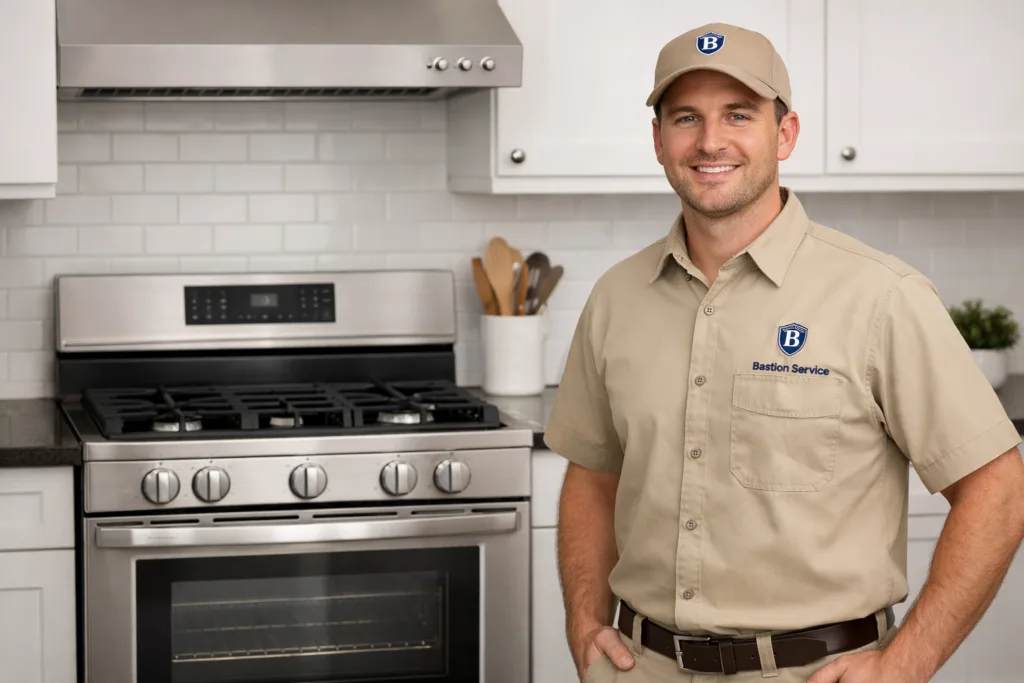
Small changes in cooking performance are often the first sign that an Electrolux range needs attention. A burner that hesitates before lighting, an oven that suddenly takes much longer to preheat, or temperature swings that ruin familiar recipes can all point to a component that is starting to fail. In Mar Vista homes, addressing those symptoms early can help prevent a more disruptive breakdown during everyday cooking.
Start with the symptom, not the part
Range problems are easy to misread because different faults can create similar results. An oven that is not heating properly may involve an igniter, bake element, sensor, relay, or control issue. A burner that clicks continuously may be affected by moisture, a misaligned cap, a dirty ignition path, or a failing spark component. Good troubleshooting begins with how the appliance is behaving in normal use, then works backward to the cause.
That matters because replacing the wrong part can leave the original problem unresolved. Symptom-based testing is usually the fastest way to tell whether the issue is isolated or part of a larger wear pattern inside the range.
Common Electrolux burner and cooktop problems
Surface cooking issues tend to show up in obvious ways. The burner may fail to ignite, produce a weak flame, heat unevenly, or keep sparking after it lights. On electric configurations, an element may stay too cool, heat only partway, or stop responding at certain settings.
Clicking but not lighting
Repeated clicking usually means the ignition system is trying to light the burner but not completing the process correctly. Possible causes include debris around the burner head, a cap that is not seated properly, excess moisture after cleaning, or a spark system fault. If the clicking continues after ignition, the issue may be related to the switch or ignition circuit rather than the burner itself.
Weak heat or uneven flame
If the flame looks irregular or cookware takes longer than usual to heat, the burner may not be distributing gas correctly. Ports can become blocked, components can shift out of position, or wear can affect how steadily the burner operates. Even if the burner still works, poor flame quality usually means performance will continue to decline.
Electric element not heating correctly
When an element stays cool, overheats, or works only occasionally, the problem may involve the element, the receptacle connection, the control switch, or wiring beneath the top. Intermittent heating is especially important to check because it can worsen under load.
Oven issues that affect everyday cooking
Oven problems are often noticed through food results before the appliance fully stops working. Cookies bake unevenly, casseroles need extra time, or dishes that used to be reliable begin coming out overdone on one side and undercooked on the other. Those patterns can reveal problems with temperature regulation, heat production, or air movement.
Slow preheating
If preheat times are getting longer, the oven may be struggling to generate enough heat at the start of the cycle. On gas models, a weak igniter is a common reason. On electric models, a bake or broil element may not be operating as it should. The oven can appear functional while still failing to reach temperature efficiently.
Temperature drift during baking
An oven that runs too hot or too cool may have a sensor problem, calibration issue, or control fault. Some temperature cycling is normal, but wide swings that affect results are not. If recipes suddenly need major adjustments, the appliance may no longer be regulating heat accurately.
Uneven baking and roasting
When one rack browns faster than another or the rear of the oven cooks differently from the front, the issue may involve heat distribution, element performance, fan operation, or door sealing. A worn gasket or door alignment problem can allow heat to escape and reduce consistency across the cavity.
Oven will not start or stops mid-cycle
When the display responds but the oven does not begin heating, the fault may be in the ignition or heating circuit, the control, or a related safety component. If the oven shuts off during cooking, that can point to a control issue, overheating condition, or electrical interruption that should be checked before continued use.
Control and display problems on Electrolux ranges
Not every range problem starts with heat. Sometimes the first clue is a keypad that does not respond normally, a display that shows an error code, or settings that change unexpectedly. Because modern ranges rely on electronic controls to manage ignition, temperature, and timing, interface issues can affect multiple functions at once.
If the oven starts inconsistently, buttons lag, or modes do not engage properly, the problem may be more than cosmetic. A control fault can interrupt cooking cycles or prevent the range from regulating heat as designed.
When to stop using the range and schedule service
Some issues are inconvenient but manageable for a short time. Others should move to the top of the list. If the appliance is tripping power, shutting off during use, failing to ignite reliably, or clearly overheating, it is better to pause use and have it inspected. Continued operation can stress nearby components and expand the repair.
- Burners spark repeatedly or fail to light consistently
- The oven cannot maintain the selected temperature
- Preheat times have become unusually long
- Controls or display functions are erratic
- Error codes return after resetting the range
- The appliance loses power or stops during cooking
If you notice a strong or persistent gas smell, stop using the range immediately and follow gas safety steps before arranging appliance service.
How homeowners in Mar Vista often decide between repair and replacement
Repair is usually the better option when the problem is limited to one system and the range is otherwise in good condition. Igniter failures, burner issues, sensors, heating elements, door gasket problems, and some control-related faults can often be addressed without replacing the appliance.
Replacement becomes more likely when several major functions have failed, the unit has a history of repeated breakdowns, or the cost of restoring full performance is too close to the value of the range. The right decision depends on the appliance’s condition, how broadly the failure has spread, and whether the repair is likely to solve the problem without leading to more work soon after.
What a service visit should help you understand
A useful service call should clarify more than whether the range turns on. It should identify which system is failing, whether the appliance can be used safely in the meantime, and whether the repair is likely to restore normal performance. That is especially important with intermittent symptoms, since ranges can behave normally one day and fail the next.
For Mar Vista households, the goal is to get from uncertain behavior to a sensible next step. Whether the issue is a clicking burner, an oven that cannot hold temperature, or controls that no longer respond properly, the most helpful path is one based on the actual symptom pattern and the condition of the range as a whole.