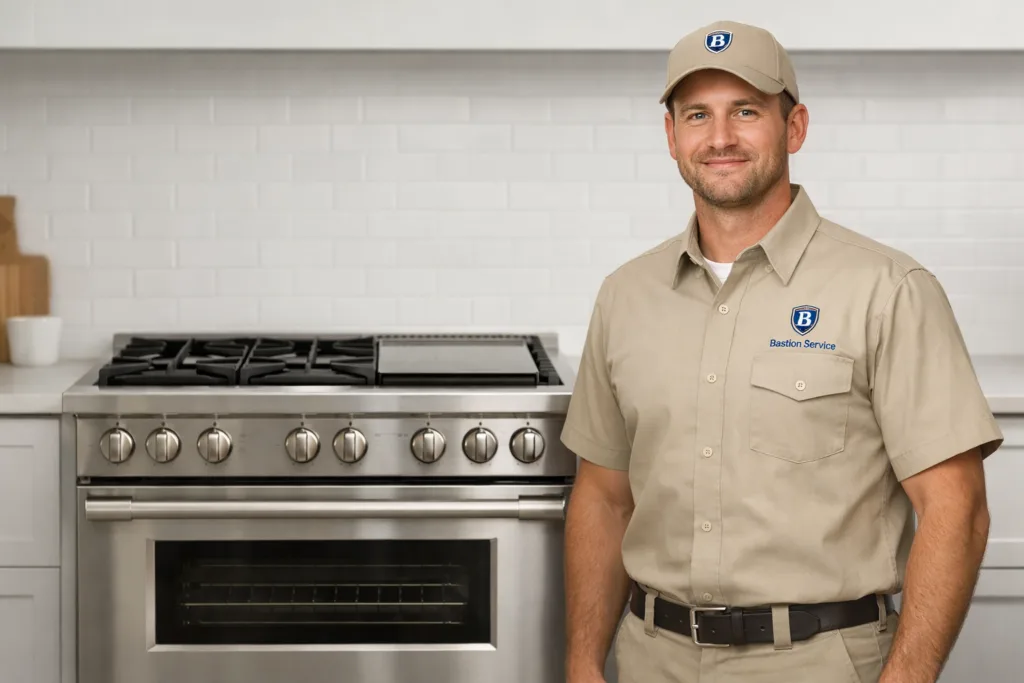
Premium ranges tend to develop problems in patterns, and those patterns matter. A burner that clicks every time but only lights on the second try points to a different issue than a burner that does nothing at all. An oven that reaches temperature slowly is not the same problem as one that preheats normally and then drifts during baking. Paying attention to those differences helps narrow down whether the problem is tied to ignition, temperature sensing, heating output, controls, or wear in a specific component.
Start with what the range is actually doing
When a Wolf range begins misbehaving, the most useful clues usually come from repeatable symptoms. If only one burner is affected, the problem may be isolated to that burner assembly or its ignition path. If multiple burners behave the same way, the issue may involve the spark system, power, or another shared component. If the cooktop works but the oven does not, that shifts attention away from surface ignition and toward oven heating, sensing, or control functions.
In Mar Vista homes, homeowners often first notice trouble during ordinary cooking: water taking too long to boil, a burner flame sounding rough, baked dishes finishing unevenly, or the oven needing repeated temperature adjustments. Those signs are worth checking before the range becomes unreliable at every meal.
Common burner ignition symptoms
Surface burner problems usually show up in a few familiar ways:
- Clicking continues after the burner lights
- The igniter clicks but the burner lights slowly
- One burner will not ignite while others work normally
- The burner lights only if it is adjusted a certain way
- The flame appears uneven, weak, or inconsistent around the ring
These symptoms can be caused by burner cap misalignment, residue in the ports, moisture after cleaning, worn ignition components, or a fault in the spark system. On a Wolf range, similar surface symptoms can come from different causes, which is why guess-based part replacement often wastes time.
When clicking is more than an annoyance
Persistent clicking is one of the most common complaints because it can seem minor at first. Sometimes it is triggered by moisture or debris around the igniter. In other cases, it points to a switch problem or an ignition issue that will keep worsening until the burner stops lighting reliably. If the clicking is frequent, the burner lights late, or ignition is inconsistent, it is best not to treat it as normal wear.
If there is a strong gas odor or delayed ignition with a noticeable whoosh when the burner finally lights, stop using the range and address the safety concern before continuing regular cooking.
Oven heating problems that deserve attention
Oven complaints are often less obvious than burner issues because the range may still appear to work. The display may respond, the oven may begin preheating, and the cavity may feel hot, yet actual cooking results tell a different story. If recipes that were once dependable start coming out underdone, overbrowned, or uneven from one side to the other, the range is already giving useful diagnostic information.
Signs the oven may not be heating correctly
- Preheat takes much longer than usual
- The oven temperature seems lower than the setting
- Food browns too quickly on top or bottom
- The cavity overheats and scorches dishes
- Cooking times keep getting longer for the same recipes
- The oven cycles erratically or shuts off unexpectedly
These issues may involve the igniter, temperature sensor, bake or broil heating function, control board behavior, or calibration drift. Because multiple parts can create nearly identical baking results, a symptom-based diagnosis is usually the fastest way to determine whether the problem is limited or part of a broader control issue.
Temperature drift versus total heating failure
Not every oven problem is a complete failure. Some Wolf ranges still heat, but they do not heat accurately. That distinction matters. A total no-heat condition often points to a more direct fault, while temperature drift can involve sensors, control responses, cycling behavior, or partial heating performance. If the oven still works “sometimes,” that does not mean the problem is minor. Intermittent heat can be harder to live with because it creates inconsistent results without warning.
Control and display issues on Wolf ranges
Modern ranges rely on more than burners and heating elements. They also depend on controls that coordinate ignition, timing, temperature regulation, and operating modes. When those controls become unreliable, the symptom may look mechanical even though the underlying fault is electronic.
Common examples include:
- Fault codes appearing during preheat or cooking
- Buttons or knobs not responding consistently
- The oven starting only intermittently
- The display functioning while heating does not
- Settings changing unexpectedly or failing to hold
Intermittent control problems can be especially frustrating in a household kitchen because the range may behave normally for a day and then fail during dinner. That kind of pattern usually calls for testing rather than assumptions, especially when symptoms overlap across sensors, relays, switches, and control components.
When to stop using the range
Some problems can wait a short time for service, but others should move higher on the priority list. It is wise to stop using the appliance if you notice repeated delayed ignition, a persistent gas smell, overheating, breaker trips, visible sparking where it should not occur, or oven temperatures that are clearly unsafe for normal cooking. Continued use under those conditions can worsen the original fault and may create additional damage.
Even non-emergency issues can become more expensive if they are ignored. A burner that is slow to ignite today may eventually stop lighting altogether. An oven that runs slightly cool can lead to heavier strain on heating-related components as the problem progresses.
Repair or replace?
For many households in Mar Vista, repair remains a worthwhile option because Wolf ranges are built as long-term appliances and many failures are isolated to serviceable parts. The decision becomes more complicated when the range has several major problems at once, has a history of repeated control-related breakdowns, or shows wear that goes beyond a single repair path.
A fair evaluation usually comes down to a few questions:
- Is the issue limited to one function or affecting the whole range?
- Is the failure tied to a common service part or a larger electronic problem?
- Has performance declined gradually, or did one specific symptom appear suddenly?
- Does the overall condition of the appliance support repair?
One ignition issue does not automatically mean replacement makes sense. Likewise, one oven temperature complaint does not always signal a major rebuild. The real decision should be based on the actual failure pattern and the condition of the unit as a whole.
What homeowners can note before scheduling service
A few details can make the visit more productive. Try to note whether the problem affects the cooktop, the oven, or both. If it is a burner issue, identify which burner and whether it clicks, lights late, or produces an unusual flame. If it is an oven issue, notice whether the problem appears during preheat, during long baking cycles, or only with certain temperatures.
It also helps to mention whether the symptom began after cleaning, after a power interruption, or after a gradual decline in performance. Those details can point the diagnosis in the right direction and reduce unnecessary part swapping.
Why symptom-based repair matters on a premium range
Wolf appliances are built differently than many standard household ranges, which is exactly why symptom-specific service matters. Similar complaints can come from very different causes, and premium equipment often rewards accurate testing more than quick assumptions. The goal is to restore reliable daily cooking with the right repair path, not to chase the problem through trial and error.
When the range starts showing a consistent pattern, early attention usually gives homeowners the best chance of resolving the issue before it turns into a broader interruption in the kitchen.