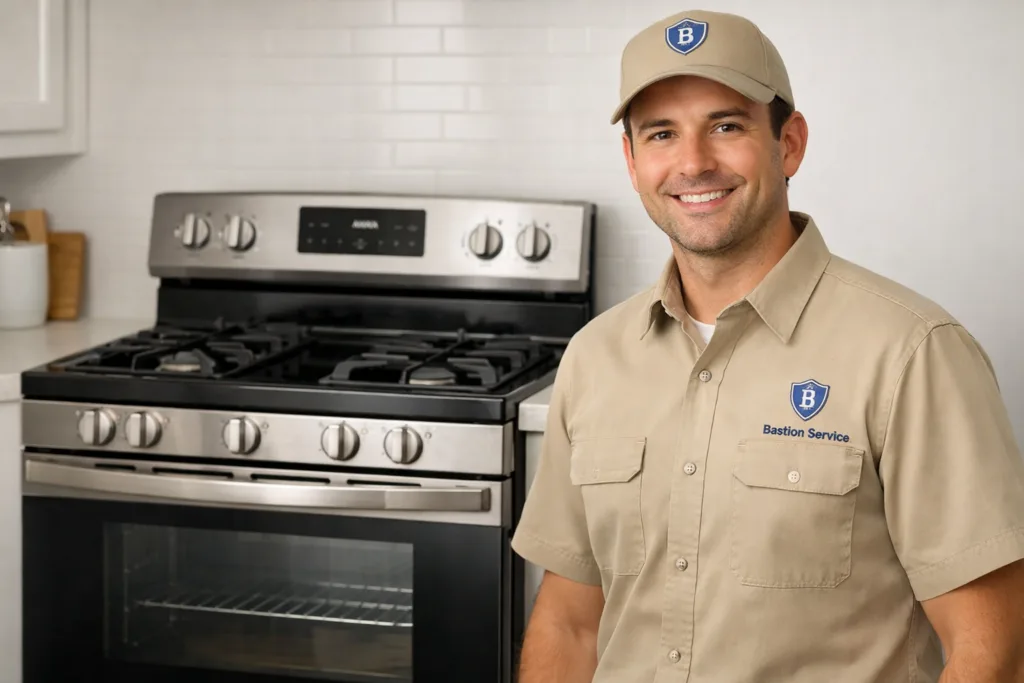
Range problems tend to show up in everyday cooking first: a burner that clicks but will not light, an oven that runs cool, or preheat times that suddenly stretch far longer than usual. With Amana ranges, those symptoms can come from ignition parts, heating components, temperature sensing, controls, or supply-related issues, so it helps to match the repair path to the exact behavior instead of guessing at parts.
How Amana range problems usually show up at home
Some failures are obvious right away, while others build gradually. A surface burner may stop lighting consistently, the oven may bake unevenly, or the control panel may start responding only part of the time. In many Mar Vista homes, the first sign is simply that cooking becomes less predictable than it used to be.
Paying attention to when the problem happens can help narrow things down. For example, it matters whether the issue affects only one burner, only bake mode, only broil mode, or the entire range. It also matters whether the symptom is constant or intermittent. Those details often point toward very different repairs.
Common symptoms and what they may indicate
Burner clicks but does not ignite
This is one of the most common surface burner complaints. In many cases, the cause is something relatively focused, such as burner cap misalignment, debris in the burner ports, moisture around the igniter area, or a worn ignition component. If the clicking continues after the burner should have lit, the ignition system may not be sensing flame correctly.
What homeowners often notice:
- Repeated clicking with no flame
- Flame starts only after several tries
- One burner misbehaves while others work normally
- Clicking continues even after lighting
If there is a strong gas odor or gas smell that does not clear quickly, stop using the appliance and treat that as a safety issue before any further troubleshooting.
Oven will not heat
When the oven stays cold, the cause depends on whether the range is gas or electric and whether the problem affects bake, broil, or both. On gas models, a weak or failed igniter is a frequent cause. On electric models, a failed bake element, wiring issue, or control problem may be involved. If both bake and broil are affected, diagnosis may shift toward power supply or control-related faults.
Signs this issue is more than a minor inconvenience include:
- No heat after selecting bake
- Food remains undercooked even after extra time
- Broil works but bake does not, or the reverse
- The range appears on, but the oven never reaches temperature
Slow preheat or weak oven performance
An oven that eventually heats but takes too long often points to a component that is still functioning, but no longer working at full strength. That can include a weakening igniter, a heating element that is not cycling correctly, or a sensor that is feeding inaccurate temperature information to the control. Slow preheat is easy to ignore at first, but it usually gets worse rather than better.
Homeowners often notice this symptom through baking results rather than through the display. Cookies may come out pale, casseroles may need extra time, and recipes that used to be routine start producing inconsistent results.
Uneven baking or temperature swings
If the oven seems too hot one day and too cool the next, or if one side cooks faster than the other, the issue may involve temperature sensing, calibration, heating balance, door sealing, or control response. Uneven heat can be especially frustrating because the oven still appears to work, just not reliably.
Typical clues include:
- Food browns too quickly on top or bottom
- Recipes require constant adjustments
- The same dish turns out differently from one use to the next
- An oven thermometer shows a noticeable gap from the set temperature
Control panel or display problems
Modern Amana ranges may develop issues with the keypad, display, selector functions, or electronic control. A panel that flashes, resets, ignores commands, or shows error codes can affect everything from timer use to oven operation. In some cases the problem is isolated to the interface; in others it may trace back to wiring, power supply, or the main control board.
Because control faults can affect temperature settings and mode selection, they are worth addressing before the range becomes fully unusable.
Burner works only sometimes
Intermittent burner operation often points to a switch, connection, igniter, or burner assembly problem. These issues tend to become more frequent over time. What starts as an occasional failure to light can turn into a burner that only works under very specific conditions or stops responding altogether.
What to check before scheduling repair
Not every range issue means a major repair is needed. A few basic checks can rule out simple causes:
- Make sure burner caps are seated correctly
- Clean visible food buildup from burner ports and around the igniter area
- Confirm the range has power and that no breaker issue is involved
- Check whether the oven door is closing fully
- Note any error codes or unusual sounds
These steps can be helpful, but repeated ignition trouble, poor heating, or control problems that keep returning usually need a closer look. Replacing parts based on guesswork is where many homeowners lose time and money.
When the problem should not wait
Some symptoms deserve faster attention because they can affect safety or lead to added damage with continued use. It is wise to stop and schedule service when you notice:
- A persistent gas smell
- Clicking that will not stop
- Oven temperature far above or below the setting
- Error codes that interrupt normal use
- Controls that behave unpredictably
- Sparking, inconsistent heating, or signs of electrical trouble
Even when the range still works part of the time, unstable ignition or heating can put extra strain on related components and make daily cooking less safe and less reliable.
Repair or replace?
Many Amana range issues are worth repairing, especially when the problem is limited to a single ignition, heating, or control component and the rest of the appliance is in good shape. A range is often still a sensible repair candidate if it has been dependable overall and the current fault is specific rather than widespread.
Replacement becomes a more realistic conversation when the appliance has multiple major issues at once, has a history of recurring breakdowns, or would need extensive work relative to its age and condition. The most useful answer comes from identifying the failed part and understanding whether the repair restores normal cooking performance without chasing additional problems.
What homeowners usually want from range service
Most households are not looking for a technical deep dive. They want to know why the oven is not heating, why the burner keeps clicking, whether the repair is worth doing, and how soon the range can get back to normal use. Good service is really about restoring predictable cooking, not just swapping parts.
For homeowners in Mar Vista, that means an approach centered on the actual symptom pattern, the condition of the appliance, and whether the recommended repair makes sense for everyday household use. When the fault is identified correctly, it becomes much easier to decide on the next step with confidence.