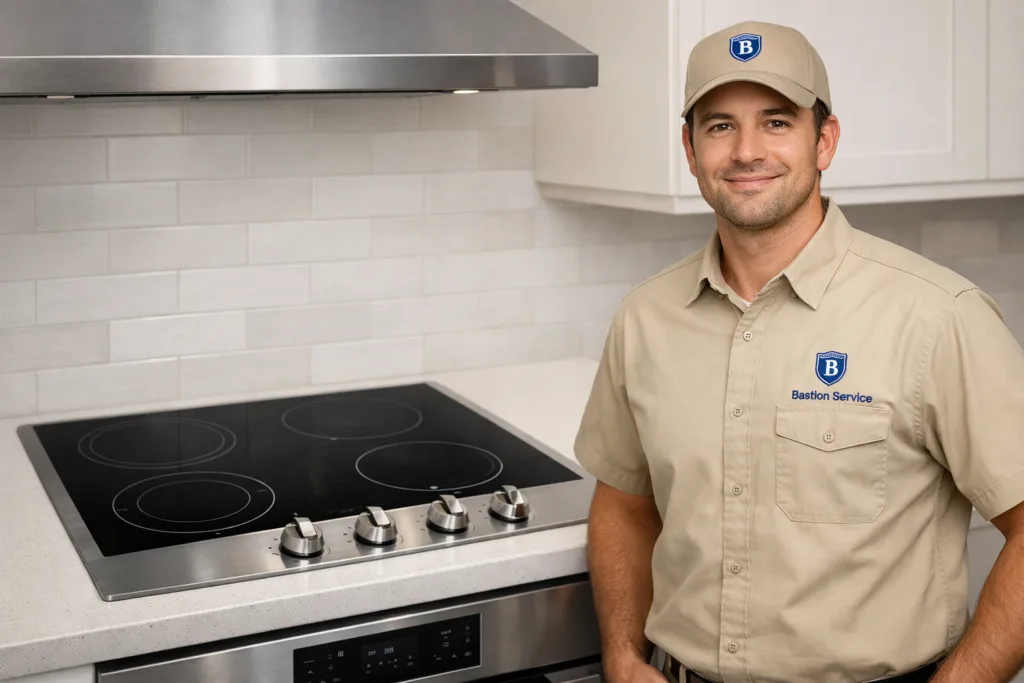
Cooktop failures rarely stay isolated for long. A burner that starts with occasional clicking, a heating zone that runs too hot, or controls that respond inconsistently can quickly disrupt everyday cooking and make normal use frustrating. In Beverly Hills homes, the most efficient repair path starts with matching the symptom to the likely failed component instead of assuming every burner issue has the same cause.
Start with what the cooktop is actually doing
Electrolux cooktops can develop very different faults that look similar at first. One burner not working is a different situation from all burners acting up. A burner that sparks but does not light points to a different repair path than a burner that lights and then clicks continuously. On electric models, a surface element that never heats is diagnosed differently from one that overheats or cycles unevenly.
These details matter because cooktop problems usually trace back to a specific part of the system: the ignition components, burner assembly, heating element, infinite switch, touch interface, sensor, wiring, or internal control. A symptom-based inspection helps determine whether the repair is simple and contained or whether the issue involves multiple components.
Common Electrolux cooktop problems in Beverly Hills homes
Burner clicks but will not ignite
On gas models, this often means the igniter is sparking but the burner is not lighting properly. Sometimes the cause is basic, such as a burner cap sitting out of position or clogged ports affecting gas flow. In other cases, the fault may involve the spark ignition switch, spark module, or wiring. If the clicking repeats without a stable flame, the burner should be checked before regular cooking continues.
Burner ignites but keeps clicking
Continuous clicking after flame appears is a common complaint. Moisture around the ignition area, residue buildup, a sticking switch, or a spark system fault can all cause the igniter to keep firing when it should stop. Even if the burner still heats, ongoing clicking usually means the problem has not resolved on its own.
Electric burner not heating or heating unevenly
If an electric cooking zone stays cold, warms slowly, or fails to hold a steady temperature, the issue may involve the radiant element, a damaged connection, or the control that regulates that burner. Uneven heat is especially noticeable when pans take longer to boil, food browns inconsistently, or simmer settings no longer behave normally.
Weak flame or uneven flame pattern
A gas burner should produce a stable, consistent flame. If the flame looks patchy, weak, or irregular, the burner head may be obstructed, the cap may be misaligned, or the burner may not be receiving proper ignition and gas distribution. When only one burner shows the problem, diagnosis usually stays focused on that assembly. When several burners perform poorly, the repair may need to look beyond a single part.
Controls not responding normally
Touch controls that fail to register, knobs that do not produce the expected heat level, or a cooktop that powers on but does not respond correctly can point to interface or control issues. These faults often require testing because the visible symptom does not always identify the failed part by itself.
Cracked glass or visible surface damage
On smooth-top models, cracked glass is more than a cosmetic problem. Damage to the surface can affect safe operation and may expose the cooktop to additional stress during heating and cooling. If the glass is cracked, chipped around a burner area, or shows impact damage, continued use should be evaluated carefully before the appliance is turned back on.
Symptoms that should not be ignored
Some cooktop issues are inconvenient but manageable for a short time. Others should stop normal use until the unit is inspected. A gas smell, delayed ignition, repeated flame failure, sparking that does not stop, overheating elements, or signs of scorching near controls are all signs that the cooktop should not be treated like a minor nuisance.
- Stop using a gas burner if ignition is delayed or inconsistent.
- Do not keep testing a burner that clicks repeatedly without lighting.
- Avoid using an electric burner that overheats or will not regulate temperature.
- If the cooktop trips power or shuts off unexpectedly, service should be scheduled before more use.
- Visible cracks, burning smells, or damaged controls should be evaluated promptly.
Gas and electric cooktops fail differently
Gas Electrolux cooktops usually show problems through ignition, flame quality, burner performance, or clicking behavior. Cleaning can sometimes help if residue or moisture is involved, but persistent symptoms often mean the ignition system or burner components need repair.
Electric models usually reveal faults through poor heat output, erratic cycling, unresponsive controls, or a burner that gets too hot or not hot enough. Because electric heating problems can come from the element, switch, sensor, or control board, replacing parts without testing can easily miss the real cause.
When repair usually makes sense
Repair is often worthwhile when the problem is limited to a specific burner, igniter, element, switch, or control-related part and the rest of the cooktop is in good condition. This is especially true when the appliance has been performing well overall and the issue is clearly tied to one system.
Many homeowners in Beverly Hills choose repair when the cooktop still fits the kitchen properly, matches surrounding appliances, and has not shown repeated major failures. In those situations, restoring normal burner operation is often more practical than replacing the entire unit.
When replacement may be the better choice
Replacement becomes more reasonable when the cooktop has multiple unrelated problems, significant surface damage, major control failures, or a repair estimate that approaches the value of the appliance. The same is true when the unit has a history of repeated breakdowns and the current issue is only the latest in a series of repairs.
The key is looking at the full condition of the cooktop, not just the newest symptom. A burner problem by itself may be simple. A burner problem combined with cracked glass, failing controls, and uneven performance across multiple zones may point to a different decision.
What to note before scheduling service
A few observations can make diagnosis faster and more accurate. Try to note whether the problem affects one burner or several, whether it happens every time or only intermittently, and whether the issue appears at ignition, during heating, or after the burner is already on.
- Which burner or zone is affected
- Whether the symptom is constant or intermittent
- If the burner clicks, lights, then fails, or never ignites at all
- Whether heat is too low, too high, or inconsistent
- If the problem began suddenly or gradually got worse
That kind of information often helps narrow the likely fault faster and supports a more practical repair plan based on the actual condition of the appliance.
Why symptom-based service matters
Cooktop problems are easy to misread from the outside. A burner that seems dead may actually have a control issue. Clicking that seems like a bad igniter can come from a switch problem. Uneven electric heating can be caused by the element itself or by the part regulating it. That is why symptom-based Electrolux cooktop repair in Beverly Hills is the best way to avoid unnecessary parts replacement and repeat service.
When the issue is identified correctly, homeowners can make a better decision about repair timing, expected scope, and whether restoring the cooktop is the sensible next step for the household.