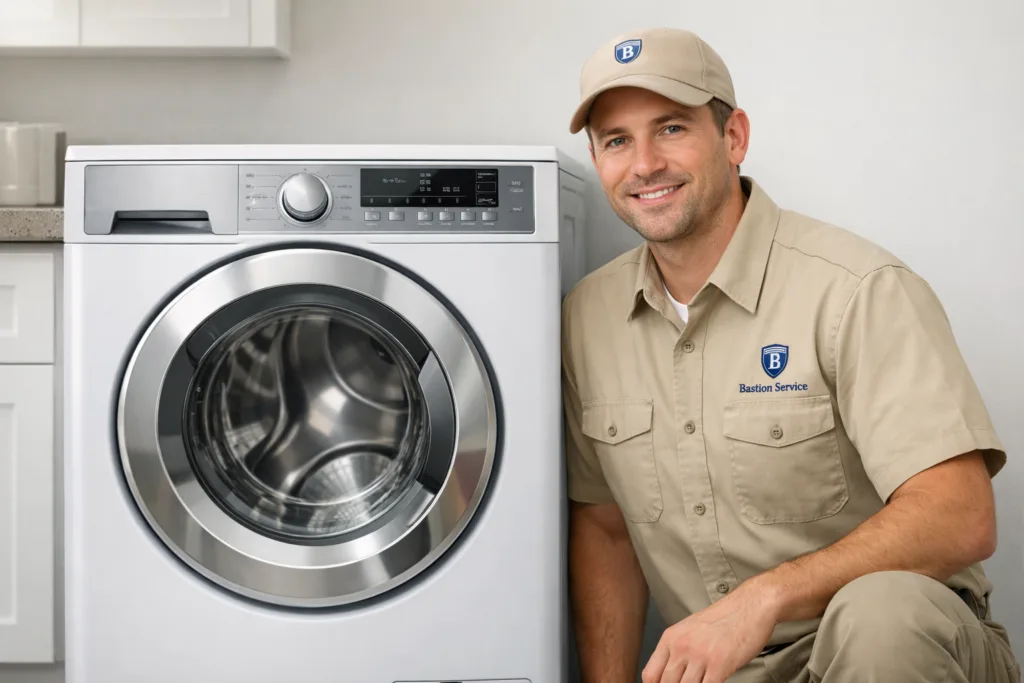
Electrolux washers tend to show a pattern before they fail completely. Clothes may come out wetter than usual, cycles may take longer, or the machine may stop at the same point every time. Paying attention to that pattern helps narrow down whether the issue is related to draining, spinning, filling, heating, the door lock, or the control system.
For homeowners in Beverly Hills, early attention can also help prevent secondary damage. A small leak can affect flooring, a drain problem can lead to odor and residue buildup, and repeated high-speed vibration can increase wear on internal parts and nearby connections.
How to read the symptom before assuming the repair
The same washer can show very different behavior depending on the failed part. That is why symptom-based troubleshooting is more useful than guessing from one visible issue.
- Washer will not start: often linked to power supply issues, door lock faults, user interface problems, or a control failure.
- Fills but does not wash properly: may point to motor, drive, control, or sensor problems.
- Leaves water in the drum: usually suggests a drain restriction, pump issue, or drain cycle fault.
- Clothes stay soaked after the cycle: often means the machine is not reaching full spin speed, even if it appears to drain.
- Leaks during operation: can come from hoses, the door boot, overfilling, dispenser issues, or drain-related faults.
- Stops mid-cycle: may involve the door latch, control board, pressure sensing, overheating, or electrical interruptions.
Common Electrolux washer problems and what they usually indicate
Not draining or draining slowly
If water remains in the tub at the end of the cycle, the problem is often somewhere in the drain path. A blocked filter area, pump obstruction, damaged drain pump, kinked hose, or control issue can all produce similar results. Some owners notice a humming sound without water removal, while others see the cycle stall before spin begins.
Leaving standing water in the machine usually makes the next load worse. It can cause odor, soap residue, and repeated cycle errors, so a no-drain condition is worth addressing quickly.
Poor wash results or residue on clothing
When clothing comes out dull, soapy, or not fully cleaned, the issue is not always detergent-related. Poor water flow, incomplete tumbling, low heating performance on certain cycles, dispenser problems, or restricted draining can all affect wash quality. If the machine is technically running but results keep declining, that usually points to a functional problem rather than normal wear in the laundry routine.
Leaks from the front, rear, or underneath
Leak location matters. Water at the front of the machine may suggest a door boot issue, a door sealing problem, or oversudsing. Water near the rear can indicate hose or connection trouble. Leaks that appear only during drain or spin often involve the pump system, internal hoses, or movement-related stress on components.
If the leak only happens during certain loads or certain points in the cycle, that timing can be helpful during diagnosis. It often reveals whether the machine is leaking while filling, agitating, draining, or spinning.
Fill problems or overfilling
An Electrolux washer that fills too slowly, does not fill enough, or continues filling too long may be dealing with an inlet valve issue, pressure sensing fault, water supply restriction, or control problem. In daily use, this can show up as long cycle times, poor rinse performance, detergent left behind, or water levels that do not match the selected cycle.
Overfilling should not be ignored. In addition to leak risk, it can disrupt proper agitation and create draining or balance problems later in the cycle.
Heating issues on selected cycles
Some wash programs depend on the machine reaching and maintaining a certain water temperature. If heating performance is off, loads may come out less clean, cycles may run unusually long, or the washer may stop with an error. Heating-related faults can involve the heater, temperature sensing, wiring, or electronic control.
Because heating issues are less obvious than a leak or a no-spin condition, they often go unnoticed until wash quality drops for several loads in a row.
Cycle failures and stopping mid-program
When a washer starts normally but fails at the same point every time, that often means one stage of the cycle is not completing. The machine may be waiting for the door to lock, for water to drain, for the drum to reach speed, or for a sensor reading to confirm safe operation. Repeated resets may temporarily restart the cycle, but they rarely correct the underlying fault.
Noise, shaking, and out-of-balance behavior
Not every loud washer has a serious mechanical problem, but repeated banging, scraping, grinding, or violent movement should not be dismissed. A simple load imbalance can cause one rough cycle, but ongoing vibration during normal loads may indicate suspension wear, drum support trouble, bearing problems, or an item trapped where it should not be.
In Beverly Hills homes with finished laundry areas, excessive vibration can also affect surrounding cabinetry, walls, and utility connections. If the machine has become progressively louder or more unstable, it is usually better to stop pushing it through extra cycles.
When continued use can make the problem worse
Some washer issues are inconvenient. Others can lead to added damage if the machine keeps running in that condition. It is usually smart to stop using the washer and arrange service when you notice:
- water leaking onto the floor
- burning smells or breaker trips
- grinding, scraping, or repeated banging in spin
- standing water left in the drum
- a door that will not lock or unlock correctly
- repeat error codes or cycles that fail in the same place
Intermittent issues also deserve attention. A washer that works on some loads and fails on others often has an electrical, sensor, latch, or control-related problem that may become more frequent over time.
Repair or replacement: what usually matters most
A repair decision is usually based on more than the current symptom alone. Age, overall condition, service history, and the number of affected systems all matter. If the problem is isolated to a pump, hose, latch, valve, or similar component, repair is often straightforward. If the machine has multiple major issues at once, repeated electronic faults, or significant mechanical wear, replacement may make more sense.
The most practical approach is to identify the exact failed part and look at the full condition of the machine around it. That gives homeowners a realistic way to decide whether to move forward with service or stop investing in a washer that is nearing the end of its useful life.
What to expect from a useful service visit
A worthwhile appointment should do more than restore operation for one load. It should identify the root cause, check for related damage, and explain whether normal use before repair could worsen the issue. That is especially important with leaks, spin failures, and recurring drain complaints.
For Electrolux washer repair in Beverly Hills, the most helpful outcome is specific guidance tied to the machine’s actual behavior: what failed, what needs attention now, and whether the repair path is sensible for the household. That keeps the process clear and helps avoid spending money on the wrong fix.