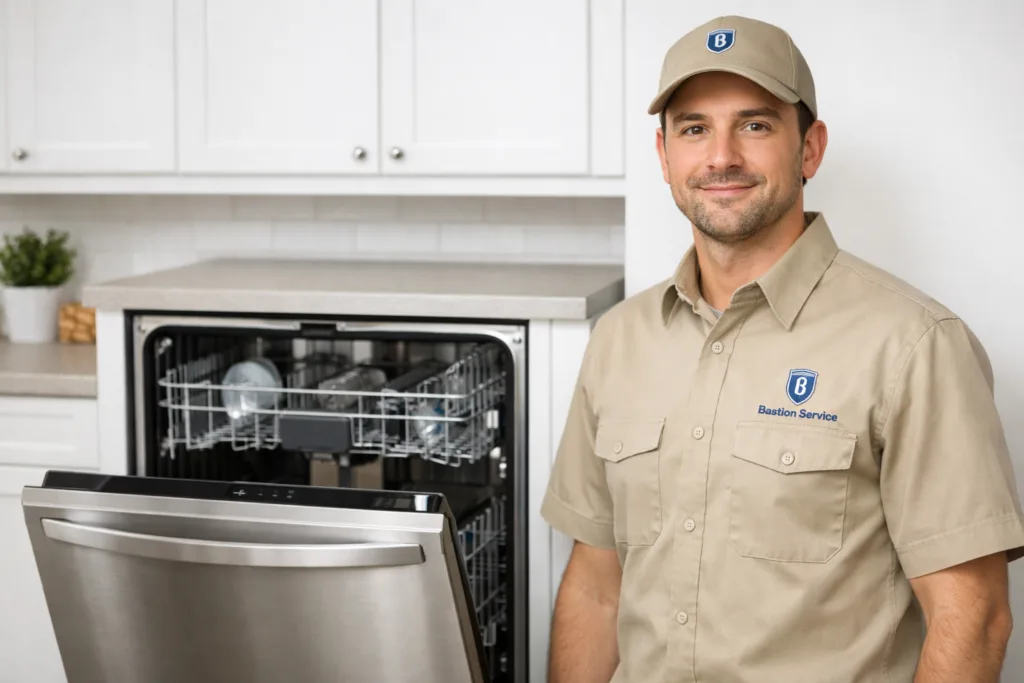
Dishwasher failures tend to show up as a handful of familiar symptoms, but the part that has actually failed is not always obvious from the outside. On Electrolux models, poor cleaning, standing water, leaks, or a cycle that stops halfway can be tied to very different causes, from filtration and pump problems to fill issues, door sealing faults, or electronic control trouble. For homeowners in Beverly Hills, the most useful approach is to look at the exact symptom pattern rather than assume every similar complaint has the same fix.
Common Electrolux dishwasher problems and what they often mean
Standing water after the cycle
If water is left in the tub at the end of a wash, the dishwasher may not be draining fully. Common causes include a restricted filter area, a blocked drain path, a struggling drain pump, a kinked hose, or a control problem that prevents the unit from finishing the drain sequence. When this keeps happening, dirty water can linger in the machine and lead to odor, cloudy rinse results, or overflow concerns.
Dishes come out dirty, gritty, or filmed
When plates and glasses are still dirty after a full cycle, the problem is not always the detergent. An Electrolux dishwasher may be dealing with weak spray pressure, clogged spray arms, low water fill, circulation pump trouble, dispenser issues, or sensor-related wash interruptions. If residue appears more like a white film than food soil, the dishwasher may also be struggling with rinse performance rather than the main wash itself.
Leaks on the floor or moisture around the door
Leaks can come from more than one place. A worn gasket, lower door seal issue, poor leveling, cracked sump part, loose internal connection, or overfill condition can all allow water to escape. Some leaks only appear during the wash portion of the cycle, while others show up after draining. That timing matters because it helps narrow down whether the source is at the door, underneath the unit, or in the drain system.
Dishwasher will not start
If the display responds but the cycle will not begin, the issue may involve the door latch, user interface, control board, float system, or a fill-related failure that stops the machine before washing begins. If the dishwasher appears completely unresponsive, power supply concerns, wiring faults, or control failure may be involved.
Cycle stops midway or runs abnormally long
A dishwasher that pauses, shuts down, or seems stuck can point to heating problems, wash motor strain, sensor faults, drainage interruptions, or board-related issues. Long cycle complaints are especially important on modern dishwashers because the machine may be repeatedly trying to complete a step it cannot finish correctly.
Grinding, humming, or other unusual noise
Noise should be judged by when it happens. A hum during drain may suggest pump strain, while a grinding sound during wash can point to debris in the pump area or a failing circulation component. Rattling may be as simple as spray arm contact, but repeated mechanical noise often means a part is wearing down and should be checked before it fails completely.
Why symptom timing matters
Two dishwashers can show the same visible problem and still need entirely different repairs. For example, a unit that leaves dishes dirty might have a wash motor problem, while another has low incoming water or blocked spray delivery. A leak at the beginning of the cycle may suggest a different fault than a leak that appears only during drain.
Paying attention to when the problem happens helps narrow the repair path. Useful details include whether the machine fills with water, whether spray sounds begin, whether heat is present near the end of the cycle, and whether the dishwasher drains fully every time or only intermittently. These small observations often tell more than the symptom alone.
Signs the dishwasher should not keep running
Some issues are more than an inconvenience and should be addressed before the next load. It is usually best to stop using the dishwasher when:
- Water is leaking onto the floor or into nearby cabinetry
- The unit trips the breaker or loses power during operation
- A burning smell or overheating is noticeable
- The drain cycle leaves repeated standing water in the tub
- The dishwasher fills but never begins proper washing
- Noise becomes sudden, harsh, or much louder than normal
- The door does not seem to latch or seal correctly
Continuing to run the machine under these conditions can turn a single failed part into a larger repair. Water exposure is especially worth addressing quickly in a Beverly Hills home where flooring, toe kicks, and cabinet finishes can be affected by even a small recurring leak.
Repair or replace?
Whether repair makes sense depends on the dishwasher’s age, the failed component, the condition of the rest of the machine, and whether there is a pattern of recent problems. Many Electrolux dishwasher issues are still practical to repair when the fault is isolated, such as a drain pump problem, gasket leak, latch issue, dispenser failure, or water inlet concern.
Replacement becomes a more serious consideration when the dishwasher has multiple major issues at once, significant internal wear, recurring leak history, or a combination of motor and control problems. The key is not to judge the machine by one symptom alone. A dishwasher that seems completely unreliable may need one targeted repair, while another with minor but repeated complaints may no longer be the better long-term option.
What to notice before service
Homeowners can make diagnosis more efficient by noting a few details before scheduling service. Helpful observations include:
- Whether the tub is empty, partially full, or full of water at the end
- Whether the problem happens every cycle or only sometimes
- Whether the unit fills, washes, drains, and dries in order
- Whether the leak appears at the front, side, or underneath
- Whether unusual noise happens during fill, wash, or drain
- Whether any error code or flashing light pattern appears
These details can help separate a drainage problem from a wash-system problem, or a door-seal issue from an overfill condition. They are especially useful when the dishwasher still runs but clearly is not performing the way it should.
Focused Electrolux dishwasher repair for Beverly Hills homes
Electrolux dishwashers rely on model-specific parts and control behavior, so accurate troubleshooting matters. A good repair plan starts by confirming whether the issue is mechanical, electrical, water-related, or tied to normal wear inside the wash and drain systems. From there, homeowners can decide whether the machine is a good candidate for repair or whether replacement is the smarter next step.
When an Electrolux dishwasher in Beverly Hills is leaving water behind, washing poorly, leaking, running cold, or stopping mid-cycle, the goal is not to guess at parts. It is to identify the failure correctly and choose the repair path that fits the actual condition of the appliance.