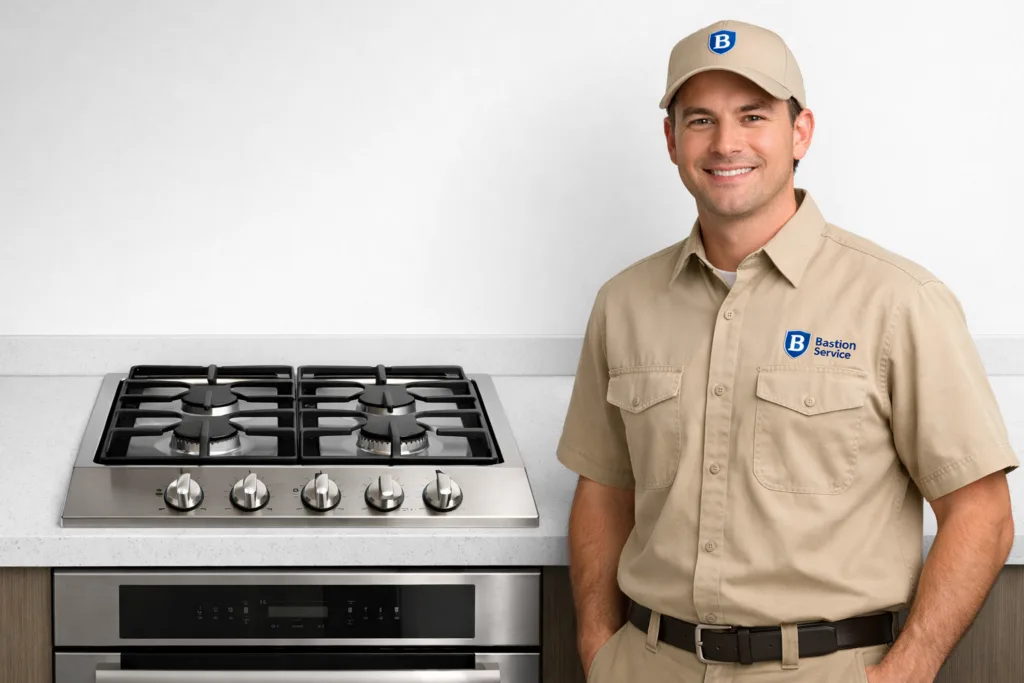
Common Summit cooktop problems seen in Beverly Hills homes

Cooktop problems tend to fall into a few recognizable patterns, but the same symptom can still come from different underlying faults. Looking closely at how the problem appears helps narrow down whether the issue is with the burner assembly, ignition parts, controls, wiring, or another internal component.
Burner clicks but will not light
On a gas Summit cooktop, a burner that clicks without lighting may have a misaligned cap, blocked burner ports, moisture around the igniter, or a worn ignition component. If only one burner is affected, the problem is often localized to that burner area. If several burners act the same way, the fault may be tied to the ignition system or another shared part.
Clicking continues after the burner is lit or after cleaning
Constant clicking is often reported after a spill or deep cleaning. In some cases, moisture dries out and the symptom goes away. If it keeps returning, a switch or ignition component may be sticking or failing. Ongoing clicking should not be ignored, especially when ignition is delayed or unreliable.
Flame looks weak, uneven, or patchy
A normal gas flame should be consistent and respond to setting changes. When the flame is too low, uneven around the ring, or inconsistent from one use to the next, the cause may be clogged ports, cap placement problems, regulator issues, or restricted gas flow within the appliance. These symptoms usually show up first as poor heating performance while cooking.
Electric element does not heat correctly
On electric Summit cooktops, a burner that stays cold, heats only sometimes, overheats, or cycles erratically may point to a failed element, switch, sensor, or wiring fault. If the heat level does not match the setting, the problem is often deeper than surface wear and should be checked before regular use continues.
Knobs or controls are not responding normally
Loose-feeling knobs, settings that do not change burner output, or controls that seem inconsistent can be caused by damaged switches, internal electrical problems, or spill-related issues in the control area. These problems may start gradually and become more noticeable over time.
How symptom patterns help identify the likely repair
One of the most important parts of Summit cooktop repair in Beverly Hills is separating similar symptoms that come from very different causes. A burner that will not light is not always a bad igniter. An electric burner that appears dead is not always a failed element. Symptom details matter.
- One burner affected: more likely a localized burner, igniter, switch, or connection issue
- Multiple burners affected: more likely a shared control, power, or ignition problem
- Problem began after cleaning: moisture, cap alignment, or residue may be involved
- Problem happens intermittently: wiring, switch wear, or heat-related failure may be developing
- Heat output no longer matches settings: control regulation may be failing
That kind of symptom-based review helps avoid replacing the wrong part and gives homeowners a better idea of whether the issue is minor, recurring, or likely to worsen.
When the cooktop should not keep being used
Some cooktop issues are inconvenient. Others create enough safety or reliability concern that it makes sense to stop using the appliance until it is checked. A burner that behaves unpredictably can affect cooking results, damage nearby parts, or create a more serious fault if it is used repeatedly.
It is usually time to schedule service when:
- A burner repeatedly fails to ignite
- Clicking continues long after normal ignition
- Flame height does not match the selected setting
- An electric burner overheats or does not cycle down
- The same symptom keeps returning after temporary improvement
- Controls no longer regulate heat consistently
If there is a strong or persistent gas smell, stop using the cooktop immediately. Leave the area if necessary and contact the gas utility or emergency service first. Appliance repair should only be arranged after the immediate gas safety issue has been addressed.
Cracked glass, damaged surfaces, and visible wear
If the Summit cooktop has a cracked glass surface, chipped area around a burner, damaged support parts, or signs of heat stress, the condition of the top matters as much as the burner symptom itself. Surface damage can affect safe use, cleaning, and heat distribution. In some cases, homeowners first notice a burner issue and then realize the surrounding area has also been compromised.
Visible damage does not always mean replacement is necessary, but it does change the repair decision. The practical question becomes whether the fault is limited and repairable or whether the combined condition of the cooktop makes further investment harder to justify.
Repair versus replacement on a Summit cooktop
Many cooktop issues are repairable when the fault is limited to an igniter, burner component, switch, control part, or accessible wiring problem. Repair is often the sensible option when the appliance otherwise fits the kitchen, performs well aside from the current issue, and has not developed multiple unrelated problems.
Replacement becomes more likely when there are several failing components, repeated electrical faults, major surface damage, or age-related wear across the appliance. A realistic decision should be based on the exact failure, overall condition, and whether the repair is likely to restore normal day-to-day cooking without recurring problems.
What to note before scheduling service in Beverly Hills
Homeowners can make service more efficient by observing the symptom before the visit. A few specific details often make the diagnosis much faster.
- Which burner is affected
- Whether the problem is constant or intermittent
- Whether the issue began after a spill, cleaning, or power interruption
- For gas models, whether the burner clicks, lights late, or shows an uneven flame
- For electric models, whether the burner stays cold, overheats, or cycles unpredictably
In Beverly Hills homes, this kind of detail is especially helpful when the cooktop still works part of the time, because intermittent symptoms can otherwise be difficult to pin down during a single visit.
What a homeowner can check before calling
There are a few basic observations that may be worth making before service is scheduled, as long as they can be done safely and without disassembly. Check whether burner caps are seated correctly, whether food debris is blocking burner ports, and whether the problem appeared immediately after cleaning. On electric units, note whether the affected element changes behavior at different settings or remains stuck in one pattern.
These checks are not a substitute for repair, but they can help separate a simple alignment or residue issue from a component failure. If the symptom continues after normal cleaning and careful reassembly, the appliance usually needs further evaluation.
Focused help for Summit cooktop issues
Cooktop problems are easiest to resolve when the repair starts with the exact behavior of the appliance rather than a guess about the part. For homeowners in Beverly Hills, that means paying attention to what the burner does, when it does it, and whether the symptom points to a localized fault or a broader control problem. Once that is established, the next step is much easier: repair the issue, monitor a minor condition briefly, or stop using the cooktop until it can be safely corrected.