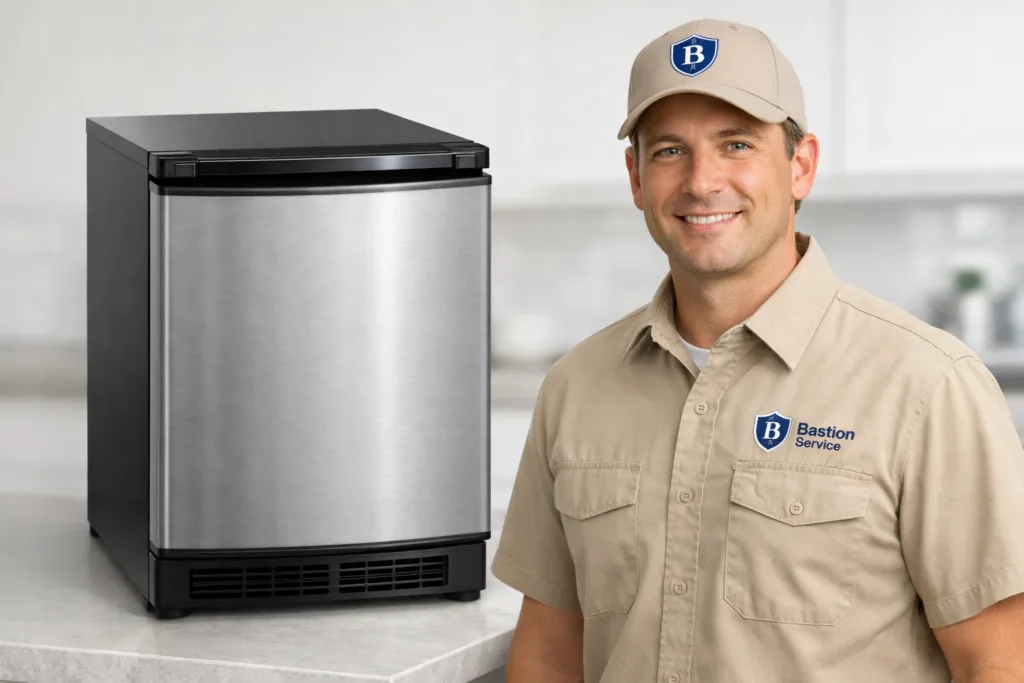
Ice maker problems tend to show up in ways that disrupt daily routines fast: an empty bin, cubes that melt together, water on the floor, or a machine that sounds busy without producing usable ice. With EdgeStar units, the most important step is figuring out whether the problem starts with water supply, drainage, controls, airflow, or cooling performance, because very different faults can create similar symptoms.
Common EdgeStar Ice Maker Problems in West Los Angeles Homes
Many household ice maker issues begin gradually. A machine may produce less ice each day, take longer to finish a batch, or start making cubes that look thinner, softer, or uneven. In other cases, the change is sudden, such as a leak under the unit or a complete stop in production. Either way, symptom patterns matter because they help narrow the cause before parts are changed.
No ice production
If the unit has power but the bin stays empty, possible causes include a restricted water line, inlet valve trouble, a fill issue, a sensor or control problem, or a cooling fault that keeps the evaporator from reaching the right temperature. When an EdgeStar ice maker runs without forming ice, the question is not just whether it turns on, but whether it is filling, freezing, and harvesting normally.
Slow ice production
Slow output often points to a developing issue rather than a total failure. Restricted airflow, scale buildup, partial water blockage, weak temperature performance, or inaccurate sensing can all stretch out the ice-making cycle. Homeowners in West Los Angeles often notice this problem first when the machine still works, but no longer keeps up with normal household use.
Small, hollow, cloudy, or misshapen cubes
Cube quality says a lot about what is happening inside the appliance. Hollow or undersized cubes can suggest low water fill or pressure problems. Cloudy ice may point to buildup or water quality issues affecting the freeze cycle. Misshapen cubes can happen when the machine is not level, the fill pattern is uneven, or freezing conditions are inconsistent from cycle to cycle.
Water leaking around the machine
Leaks may come from supply connections, internal tubing, poor drainage, a cracked reservoir, or melting caused by weak cooling. Even a small amount of water deserves attention because it can affect flooring, cabinetry, and surrounding finishes. In built-in installations, what looks like a minor drip can actually be a sign of a larger internal freeze-up or drain problem.
Ice clumping in the bin
When cubes freeze together or turn into a solid mass, the unit may be producing ice that is melting and refreezing, or the harvest cycle may not be completing consistently. This can happen with temperature instability, door seal issues on certain designs, poor bin conditions, or controls that are not responding correctly.
Constant running or repeated cycling
An ice maker that keeps trying to run may have trouble detecting bin level, reaching the correct temperature, or completing a harvest cycle. Constant operation adds wear to pumps, fans, and cooling components. It can also hide an underlying fault by making it seem like the machine is still working when it is actually struggling through incomplete cycles.
Buzzing, clicking, rattling, or grinding sounds
Changes in sound can come from the inlet valve, circulation pump, fan motor, or compressor-related components. Some noise is normal during filling and harvesting, but a new or louder sound paired with poor performance usually means the machine needs attention before the issue affects additional parts.
Why Symptom-Based Diagnosis Matters
Ice makers rely on several systems working together: water delivery, freezing, harvest, drainage, controls, and ventilation. That is why one visible symptom does not always reveal the actual failure. A machine that is not making ice may look like it needs a water part, yet the true problem may be poor cooling. A leak may appear to come from a connection, while the root cause is internal ice buildup caused by a sensor or airflow issue.
For an EdgeStar ice maker, repair decisions should be based on what the machine is actually doing during each stage of operation. That approach avoids unnecessary part replacement and helps determine whether the problem is isolated or part of broader wear inside the unit.
What to Check Before Service
There are a few basic conditions homeowners can look at before scheduling a repair:
- Make sure the unit has power and has not been switched off accidentally.
- Check whether the water supply line appears kinked or shut off.
- Look for visible water around the front, sides, or underneath the machine.
- Notice whether the machine is warm, unusually noisy, or constantly cycling.
- Observe the ice itself if any is being produced, including size, clarity, and shape.
These simple observations do not replace diagnosis, but they do help identify whether the problem looks more like filling, freezing, draining, or control failure.
When to Stop Using the Ice Maker
Continued use can make some problems worse. If the machine is leaking, not draining correctly, freezing up internally, or running nonstop, it is usually better to turn it off until it can be checked. Ongoing operation under those conditions can increase scale buildup, strain the pump or fan, worsen internal icing, and lead to more water exposure around the appliance.
This is especially important when performance changes are paired with heat, odor, repeated resetting, or partial batches that melt together in the bin. Those signs often point to a fault that will not correct itself with normal use.
Repair or Replace an EdgeStar Ice Maker?
Repair is often worthwhile when the issue is limited to a valve, drain component, sensor, pump, fan, control fault, or blockage in the water path. Those types of failures are often more straightforward than a major cooling-system problem and may restore normal use without replacing the appliance.
Replacement becomes a stronger consideration when the unit has severe corrosion, repeated failures across multiple systems, or a major sealed-system issue. Age and overall condition matter too. A machine with one isolated fault is different from one showing signs of widespread wear.
For households in West Los Angeles, the best choice usually depends on the confirmed failure, the condition of the appliance as a whole, and whether the repair is likely to return stable day-to-day performance.
What a Service Visit Typically Focuses On
A thorough ice maker service call usually centers on how the appliance fills, freezes, releases ice, senses bin conditions, and drains water. That may include checking water flow, looking for restrictions or buildup, evaluating temperature behavior, inspecting visible hoses and fittings, and testing key control functions.
Once the symptom pattern is matched to the failed system, the next step is much clearer. The fix may involve a specific component, correction of a drainage or installation issue, or a recommendation against repair if the machine has broader cooling or age-related problems.
Choosing Timely EdgeStar Ice Maker Repair in West Los Angeles
It is usually best to schedule service when the machine first shows a meaningful change in output, cube quality, drainage, or operating sound rather than waiting for complete failure. Early attention can help limit water damage, reduce unnecessary wear, and improve the chances that the repair stays focused and cost-effective.
When an EdgeStar ice maker is diagnosed based on its actual symptoms instead of guesswork, homeowners can make a better repair decision and avoid spending money on the wrong fix.