KitchenAid Ice Maker Repair in West Los Angeles

KitchenAid ice maker repair in West Los Angeles for no ice, slow ice production, leaks, clumped ice, and fill issues.

Local West Los Angeles service 90-Day warranty Licensed & insured
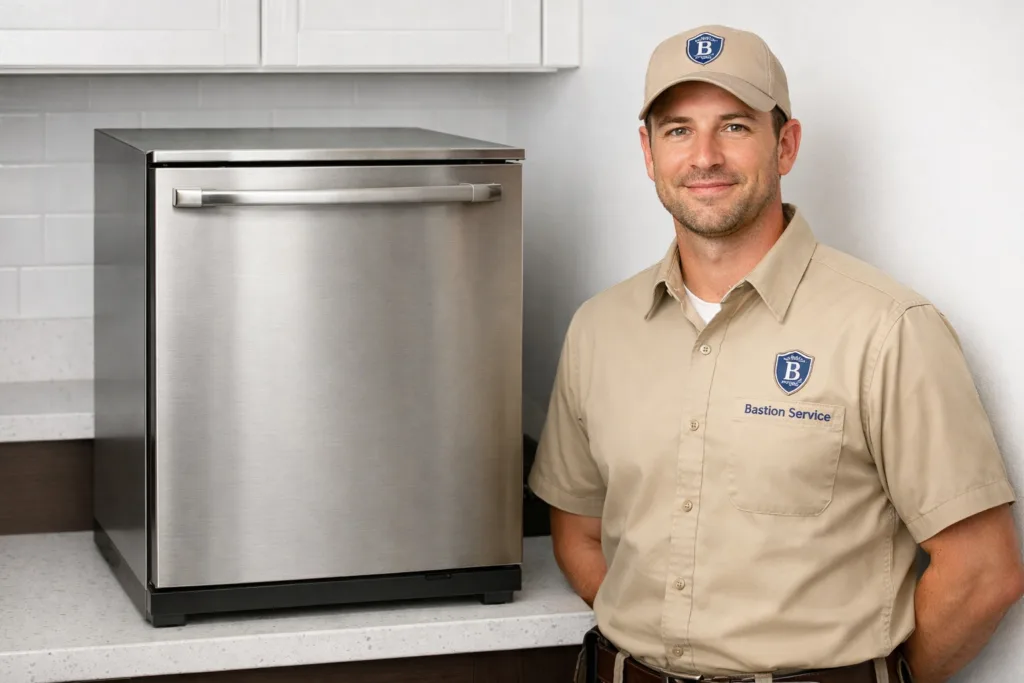
KitchenAid Ice Maker repair technician in West Los Angeles
Wliey Richardson review profile photo Carlos Lopez review profile photo James Marostica review profile photo Nu Wade review profile photo Rodney McElrath review profile photo
Real Google feedback 5.0 out of 5 80+ Google reviews
  • KitchenAid ice maker support in West Los Angeles
  • Clear diagnosis before repair decisions
  • Warranty for labor and parts
  • Fast scheduling based on availability
KitchenAid Ice Maker Repair

KitchenAid Ice Maker repair in West Los Angeles for focused household appliance problems

When a KitchenAid ice maker starts acting up in West Los Angeles, the most helpful first step is a clear diagnosis and a practical repair plan based on the exact symptom pattern.

Bastion Service helps West Los Angeles homeowners diagnose KitchenAid ice maker problems and decide whether repair is practical based on the symptom, appliance condition, and repair path.

KitchenAid ice maker repair support for West Los Angeles homes.

Ice maker failures are often symptom-driven, but the same symptom can come from several different causes. A KitchenAid unit that stops producing ice may have a water supply issue, a frozen fill tube, a faulty inlet valve, a cycling problem inside the ice maker assembly, or a temperature problem affecting the freezer compartment. Sorting out which condition is actually present is what makes repair decisions more accurate.

Common KitchenAid ice maker problems in West Los Angeles homes

No ice production

If no ice is being made at all, start with the simplest possibilities: the ice maker may be switched off, the shutoff arm may be out of position, or the bin may not be seated correctly. Beyond that, complete loss of ice production often points to a blocked water path, a failed fill valve, a frozen tube, or an ice maker that is no longer advancing through its cycle. In some cases, the ice maker itself is fine but the freezer is running just warm enough to interrupt production.

Slow ice production

Slow production is common when water flow is reduced or the freezer temperature is borderline. A partially restricted valve, low household water pressure, a filter issue, or light frost buildup can all reduce output. Homeowners sometimes notice this first during warmer weather or when the refrigerator doors are being opened more often, but a persistent slowdown usually means the unit needs inspection.

Small, hollow, or irregular cubes

When cubes come out undersized or misshapen, the mold typically is not filling properly. That can happen because of low water pressure, sediment affecting the valve, a kinked line, or an inconsistent fill cycle. In daily use, this often leads to weak cubes that melt faster, stick together in the bin, or break apart during dispensing.

Clumped or fused ice in the bin

Ice that freezes into large clusters usually means there is intermittent melting or overfilling. Temperature fluctuation inside the freezer, a seeping valve, or irregular harvest timing can allow cubes to soften and refreeze together. If the bin repeatedly develops a solid mass of ice, the problem is usually beyond simple old ice and should be checked before it affects other components nearby.

Leaks, drips, or overflow

Water under the bin or ice forming in sheets can indicate an overfill condition, a valve that is not closing fully, or a fill tube that is sending water in the wrong direction. This is one of the more urgent symptoms because continued leaking can create frost buildup, damage plastic parts, and leave moisture around the refrigerator area.

Clicking, grinding, or repeated cycling noises

Some sound during harvest is normal, but repeated clicking, grinding, or failed cycling noises are not. These sounds can happen when the ejector mechanism is struggling, cubes are jammed in the mold, or the motor is trying to complete a cycle that never finishes. If the noise repeats without fresh ice appearing, a mechanical or electrical fault is likely.

What these symptoms usually point to

KitchenAid ice maker problems generally fall into a few categories: water delivery, freezing temperature, ice maker mechanism, or controls. Water-related issues include restricted supply lines, weak inlet valves, and frozen fill tubes. Temperature-related issues can involve airflow problems, frost patterns, or a freezer section that is not staying cold enough for normal ice production. Mechanical issues usually involve the mold, motor, ejector, or internal cycling components. Control-related faults can prevent the ice maker from receiving the signals it needs to fill or harvest correctly.

That distinction matters because replacing the ice maker assembly will not solve a water pressure problem, and changing a valve will not restore production if the freezer temperature is unstable.

Why accurate diagnosis matters

A bin full of clumped ice can look like an isolated ice maker problem when the real issue is temperature fluctuation. No ice at all may seem like a failed assembly when the actual fault is a blocked fill path. A useful service visit should confirm whether the unit is receiving water, whether the mold is filling correctly, whether the harvest cycle is advancing, and whether the freezer environment is supporting normal operation.

For homeowners in West Los Angeles, this helps answer the most important question: is the issue limited to the ice maker system, or is it part of a broader refrigeration problem that changes the repair path?

Signs the problem may be tied to freezer performance

Ice makers depend on stable freezer conditions. If you notice soft food near the top of the freezer, heavier frost than usual, frost around vents, or ice production that comes and goes, the symptom may not begin at the ice maker itself. KitchenAid refrigerators can show ice maker trouble first because the system is sensitive to small temperature changes.

  • Ice production stops, then briefly returns
  • Cubes are wet or partially melted in the bin
  • Frost appears around the ice maker area
  • The freezer seems usable, but ice output keeps dropping

When these signs appear together, checking overall cooling performance becomes just as important as checking the ice maker components.

When to schedule service

Service is usually worth scheduling when the unit has stopped making ice consistently, cubes are coming out too small, the bin keeps freezing into a solid block, or water is appearing where it should not. If the symptom started right after a filter change, a water shutoff, or moving the refrigerator, that detail can help narrow the cause. Air in the line, a disturbed connection, or a shifted supply tube can all affect performance.

If the issue developed gradually over weeks or months, wear in the valve, controls, or internal ice maker mechanism becomes more likely.

When continued use can make things worse

Some ice maker problems stay inconvenient for a while, but others lead to added damage. Overflow can freeze around moving parts and crack plastic housings. A slow leak can create water around the refrigerator area. Repeated failed cycles can put more strain on a weakening motor or gear set. If you are seeing standing water, thick frost, or repeated jammed harvest attempts, limiting use until the problem is checked is often the safer choice.

Repair versus replacement

Many KitchenAid ice maker issues are repairable when the refrigerator is otherwise cooling normally and the fault is confined to the fill system, valve, controls, or ice maker assembly. Replacement becomes a more realistic discussion when the refrigerator has broader cooling issues, recurring temperature instability, or multiple worn components that would need to be addressed together.

The decision usually comes down to the age and condition of the refrigerator, whether the ice maker problem is isolated, and whether the expected repair is likely to restore consistent everyday use without turning into repeated part replacement.

What homeowners should expect from a focused service visit

A productive service call should do more than confirm that the ice maker is not working. It should identify whether the problem is coming from water supply, freezing conditions, harvest operation, or electronic control. That means checking fill behavior, inspecting for blockages or frost, confirming freezer temperature conditions, and testing whether the ice maker is attempting to cycle normally.

Once those basics are verified, the next step becomes much clearer. That is the most reliable way to decide whether the fix is straightforward, whether another refrigeration issue is involved, and whether repair is the right move for the appliance in your West Los Angeles home.

Service options

KitchenAid appliances we service in West Los Angeles

Choose the KitchenAid appliance type you need serviced in West Los Angeles.

Customer reviews

Real customer feedback

Recent customer feedback for Bastion Service.

Sam Al review profile photo
Sam Al
Google review

“After other place said it couldnt be fixed, this place fixed it. On time, very reasonable price, Profesional, refrigerator works perfectly, was willing to work on the weekend”

Romana Mikel review profile photo
Romana Mikel
Google review

“Andy knows exactly how to diagnose and fix the problems to your appliances competently and efficiently at reasonable cost. Very nice and helpful as well. I highly recommend him👍”

Carlos Lopez review profile photo
Carlos Lopez
Google review

“We had been having issues with our washer for a while now, but we still continued to use it until the day came where it finally gave up on us. I found AndyFix repair online and was able to schedule a visit to our home the same day. Andrew diagnosed the problem with our washer and ordered a new part and was able to install it as soon as possible. After having a faulty washer for a long time, it was nice to see the repairs Andrew did made a big difference. Now, the washer works as well as it did as when we first bought it. Good, fast service and reasonable pricing as well as a 2 month warranty for our washer. Definitely recommend.”

Jason Lavea review profile photo
Jason Lavea
Google review

“Andy was on time, cleaned and maintained my dryer. Will definitely be using to repair my appliances.”

Carole Merwin review profile photo
Carole Merwin
Google review

“Oven problems right before Thanksgiving. They saved the day. Had to order new parts. He was in and even offered to come early Thanksgiving morning if the parts came in late. Who does this? Was blown away by great customer service. I was ready to host Thanksgiving with 2 fixed broken ovens. I cannot thank him enough!!”

Ana Barragan review profile photo
Ana Barragan
Google review

“Andy was great from the diagnosis to the repair itself. I am very happy and satisfied with the service he provided. Friendly, kind, and knowledgable. He even sent me a link to buy a dryer vent cleaner.”

FAQ

KitchenAid Ice Maker Repair questions

Answers about diagnosis, repair options, timing, and next steps.

Why is my KitchenAid ice maker not making ice in West Los Angeles?

The most common causes are a water supply issue, a frozen fill tube, a faulty inlet valve, a cycling failure in the ice maker assembly, or freezer temperature that is too warm. Diagnosis helps separate an ice maker problem from a broader refrigeration issue.

Should I stop using my KitchenAid ice maker if it is leaking?

Yes. Continued use can create more ice buildup, overflow, or water around the refrigerator. If the ice maker is leaking or overfilling, it should be inspected before normal use continues.

Can small or hollow ice cubes mean my KitchenAid ice maker needs repair?

Yes. Small or hollow cubes often indicate restricted water flow, low fill, valve trouble, or pressure-related issues. If the problem continues after basic checks, service is usually the next step.

When is replacement more practical than KitchenAid ice maker repair?

Replacement is more worth considering when the refrigerator has broader cooling problems, the ice maker issue keeps returning, or several major components are failing at once. If the problem is isolated, repair is often the more practical option.

Ready to schedule?

Schedule KitchenAid Ice Maker Repair in West Los Angeles

Schedule KitchenAid ice maker repair in West Los Angeles with clear diagnosis, practical repair guidance, and dependable local service.

Call (323) 433-6360