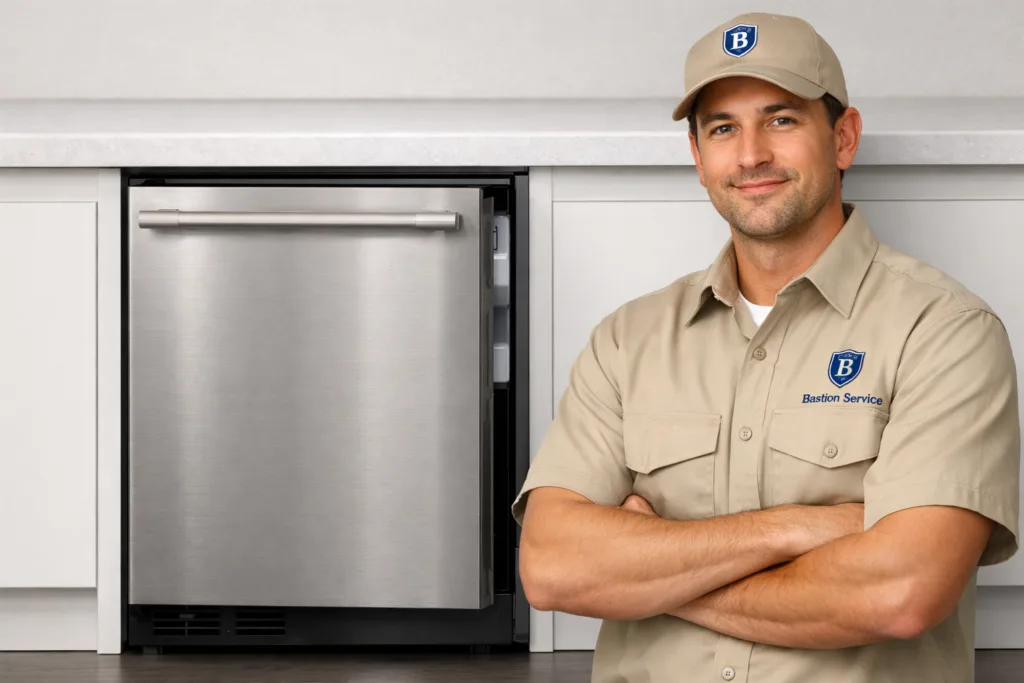
Most Marvel ice maker failures follow a pattern, and the pattern usually says a lot about where the problem starts. The key is to look beyond the surface symptom. A unit that seems to have “just stopped making ice” may actually be dealing with a temperature problem, restricted water flow, a drain issue, or a failing control component.
Common Marvel ice maker symptoms and what they can mean
No ice production
If the bin stays empty, the problem may involve the incoming water supply, the fill valve, an internal sensor, or the cooling side of the machine. In some cases, the unit powers on and sounds normal but never gets cold enough to complete the freeze cycle. In others, water never enters the mold at all.
This symptom is especially important when the machine has been gradually slowing down for days or weeks before stopping completely. That progression often points to a developing fault rather than a one-time interruption.
Slow ice production
When a Marvel ice maker still makes ice but does so much more slowly than usual, the issue may be related to weak water fill, poor airflow, scale buildup, partial freezing problems, or inconsistent temperature control. Slow production is easy to overlook in a busy household, but it often appears before a full breakdown.
If the unit used to keep up with normal use and now struggles to refill the bin, it is worth having the operating cycle checked before the problem spreads to other components.
Small, hollow, or clumped ice
Ice shape tells you a lot. Small or hollow cubes often suggest low water fill or inconsistent delivery. Clumped ice may mean the cubes are melting slightly between cycles, which can point to temperature fluctuation, sealing issues, or a problem in the harvest and storage process.
These symptoms do not always mean the same part has failed, which is why testing matters more than guessing from appearance alone.
Water leaking from the unit
Leaks can come from a damaged line, a loose connection, an issue with drainage, or ice buildup that later melts and spills where it should not. Even a minor leak should be taken seriously because undercounter and built-in installations can hide moisture until cabinetry or flooring starts to show damage.
If you see water near the kickplate or under the appliance, it is best to stop treating it as a minor nuisance and have the cause identified.
Bad odor, cloudy ice, or off taste
Not every ice quality complaint points to a failed part. Odor and taste changes can come from stale ice, residue inside the unit, water quality concerns, or low-use conditions. Cloudy appearance can sometimes be normal, but when it arrives with other changes in production or performance, it may be part of a larger issue.
A service visit can help determine whether the unit needs cleaning, adjustment, or an actual repair.
Buzzing, clicking, grinding, or repeated cycling
Unusual noise often means the machine is trying to move from one stage of operation to the next and cannot complete the cycle correctly. Depending on the sound and timing, the problem may involve a pump, valve, fan, or harvest-related component.
Repeated cycling without normal ice output usually means the machine is working harder than it should, which can increase wear over time.
Why symptom-based diagnosis matters
Marvel ice makers are compact systems, and several different failures can look similar from the outside. A leak does not always start with plumbing. Slow production does not always mean the machine “just needs cleaning.” Empty bins are not always caused by a bad ice maker assembly.
That is why a proper evaluation focuses on the stage where the process is breaking down:
- Water fill
- Freezing
- Harvest
- Bin storage
- Drain or meltwater management
Once that stage is identified, it becomes much easier to tell whether the issue is mechanical, electrical, installation-related, or tied to wear inside the appliance.
When to stop using the ice maker and schedule service
Some problems can wait a short time. Others should not. If the machine is leaking, making new mechanical noises, or running constantly without producing normal ice, continued use can lead to added stress on surrounding parts or moisture damage around the installation.
It makes sense to schedule service when you notice any of the following:
- No ice at all
- Very slow or inconsistent production
- Leaking water
- Clumped or misshapen ice
- Heavy frost or drainage symptoms
- Repeated failed cycles or unusual sounds
Homeowners in West Los Angeles often call after the unit has worked “a little bit” for too long. Partial operation is rarely a sign that the problem is resolving on its own. More often, it means the machine is still trying to run despite an underlying fault.
Repair versus replacement for a residential Marvel ice maker
Repair is often the better choice when the problem is limited to a serviceable part or a specific operating fault, such as a valve issue, pump failure, sensor problem, control fault, or drain-related restriction. If the cabinet is in good condition and the cooling system is otherwise stable, fixing the unit may make solid sense.
Replacement becomes more likely when there are multiple problems at once, signs of advanced wear, recurring cooling trouble, or repair costs that approach the value of keeping the current machine in service. Water damage around the unit can also affect the decision if the installation itself has been compromised.
In West Los Angeles homes, the most useful factors are usually:
- Age of the appliance
- Overall cabinet and interior condition
- Whether the cooling system is still operating properly
- Extent of leak or moisture-related damage
- Availability of the needed part
What a service visit should clarify
A good appointment should do more than confirm that the ice maker is not working. It should identify the failed part of the cycle, explain why the symptom appeared, and outline whether repair is practical based on the condition of the unit.
For a household in West Los Angeles, that usually means getting a straightforward answer to three questions:
- What is causing the current symptom?
- Is continued use likely to cause more damage?
- Is repair the sensible next step for this machine?
That kind of practical repair guidance is especially helpful with undercounter ice makers, where performance issues can affect both the appliance and the surrounding space.
Useful early warning signs to watch for
Some Marvel ice maker problems show up subtly before they become obvious. Paying attention to smaller changes can help you avoid a full loss of ice production or a surprise leak.
- The machine takes longer than usual to refill the bin
- Cubes start coming out thinner, smaller, or less uniform
- You hear longer run times or more frequent cycling
- Moisture appears near the unit even when no visible leak is present
- Ice begins sticking together shortly after it drops
If one or more of these signs is showing up consistently, the machine is usually telling you that a component or system condition is starting to drift out of normal operation.
Focused help for Marvel ice maker issues in West Los Angeles
When a Marvel ice maker starts acting unpredictably, the most useful next step is to match the symptom to the failing stage of operation and then decide whether repair is worth pursuing. That keeps the process focused, reduces trial-and-error part replacement, and gives you a better sense of what the unit needs to return to reliable household use.