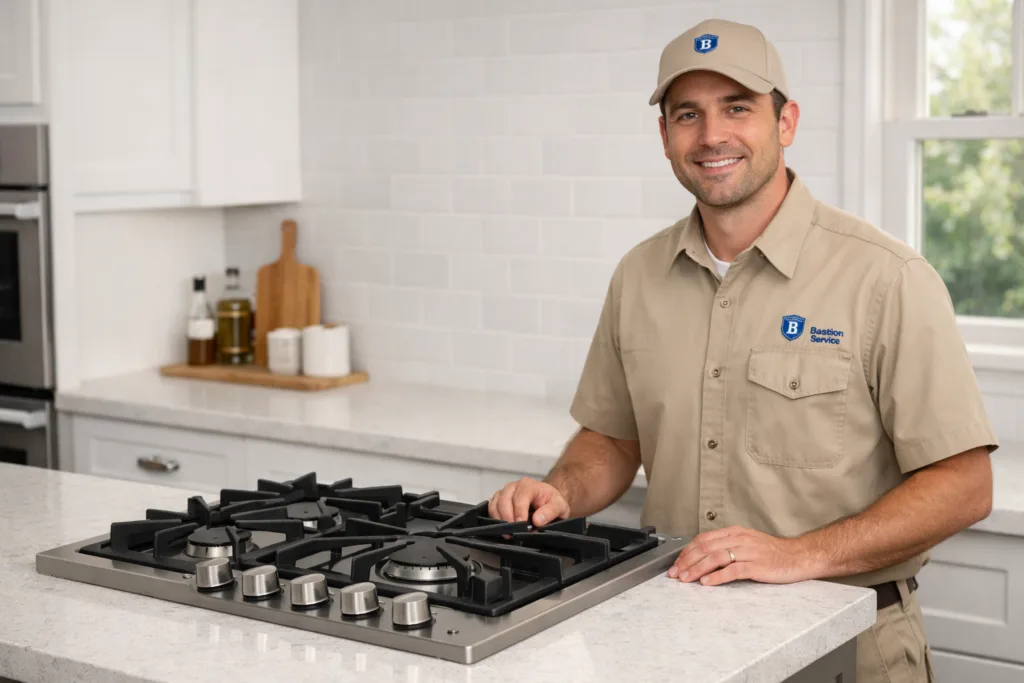
Cooktop problems often look similar at first, but the cause can be very different depending on whether the unit is gas or electric. A burner that will not heat, a control that responds inconsistently, or constant clicking during ignition can come from a worn switch, damaged wiring, a clogged burner assembly, a failed igniter, or a problem beneath the surface. Sorting out the actual fault early usually prevents unnecessary part replacement and helps homeowners in Rancho Park decide whether the repair is straightforward or more involved.
Common cooktop symptoms and what they may indicate
One of the most frequent complaints is a burner that does not turn on at all or does not reach the selected heat. On electric cooktops, that can point to a failed element, a bad receptacle, a damaged terminal block, or a control issue that interrupts normal power delivery. On gas cooktops, a burner that clicks but does not light may have debris in the burner ports, moisture around the igniter, or an ignition component that is no longer working reliably.
Uneven heating is another common issue. A burner may cycle too aggressively, stay too cool for simmering or boiling, or run hotter than the setting suggests. That kind of symptom can mean the element is weakening, the switch is no longer regulating properly, or internal connections are deteriorating. If heating problems involve the oven cavity too, Oven Repair in Rancho Park may be the better place to start.
Glass cooktops deserve special attention when there is visible cracking, impact damage, or signs of overheating under the surface. Even if the appliance still turns on, hidden damage can affect sensors, wiring, and the way heat transfers to cookware. In some cases, a burner may seem to work normally for a while and then shut down unexpectedly as damaged components warm up.
Persistent sparking, a hot electrical smell, buzzing, or a breaker that trips during use should not be ignored. Those symptoms can indicate an electrical fault, failing insulation, switch damage, or another condition that makes continued use risky. A strong gas odor is different from a routine ignition complaint and should be treated as a safety issue first by stopping use and contacting the gas utility or emergency service if needed.
Gas and electric cooktops fail in different ways
Gas cooktops usually show trouble through ignition problems, delayed lighting, weak flame, uneven flame pattern, or burners that continue clicking after they ignite. Food buildup, moisture, misaligned burner caps, and worn ignition parts are common reasons. In other cases, the burner lights but does not maintain a stable flame, which can point to a deeper issue with gas flow or ignition continuity.
Electric cooktops more often show failures through dead burners, inconsistent temperature control, visible sparking, or heating levels that no longer match the dial or touch controls. Radiant elements can weaken over time, and connections beneath the top can overheat from repeated use. If the symptom affects both surface burners and the oven in one combined appliance, Range Repair in Rancho Park may be more relevant.
When the problem may not be limited to the cooktop
Some households are dealing with a kitchen appliance that looks like a cooktop problem but actually involves a larger cooking setup. For example, if the top burners are acting up and the lower cooking compartment also has temperature or ignition issues, the unit may need to be evaluated as a stove rather than as a separate cooktop. In that situation, Stove Repair in Rancho Park may fit the symptoms better.
This distinction matters because the repair path depends on the appliance design. A standalone cooktop, a full range, a traditional stove configuration, and a built-in wall oven setup all use different component layouts, control systems, and access points. Getting that part right helps avoid confusion about parts, labor, and the expected repair timeline.
Signs it is time to schedule service
It is usually time to schedule service when a burner works only intermittently, ignition becomes unreliable, heat settings stop matching real performance, or the unit shows signs of electrical stress. A repair visit is also worth arranging when the cooktop still operates but has clearly changed in day-to-day use, such as taking much longer to boil water, struggling to hold a simmer, or shutting off without warning.
- Burners that will not light or heat consistently
- Clicking that continues after ignition
- Heat levels that do not match the control setting
- Cracked glass or visible surface damage
- Controls that feel loose, unresponsive, or erratic
- Burners that trip the breaker or produce a burning smell
Built-in kitchens can also make appliance identification less obvious. If the surface unit seems fine but baking, broiling, or temperature problems are coming from a separate built-in unit nearby, Wall Oven Repair in Rancho Park may be the more appropriate service path.
What a diagnosis should clarify
A useful service diagnosis should answer a few basic questions: which component is failing, whether continued use is safe, whether the problem is isolated or spreading, and whether the repair is practical compared with replacement. That is especially important with cooktops because a single visible symptom can have several possible causes, and guessing can lead to replacing the wrong part.
For Rancho Park homeowners, the most sensible approach is to treat changing cooktop performance as a real appliance issue rather than a minor annoyance. Early attention can prevent added damage to switches, igniters, wiring, burner assemblies, or the cooking surface, while also making it easier to restore normal daily cooking without extended disruption.