
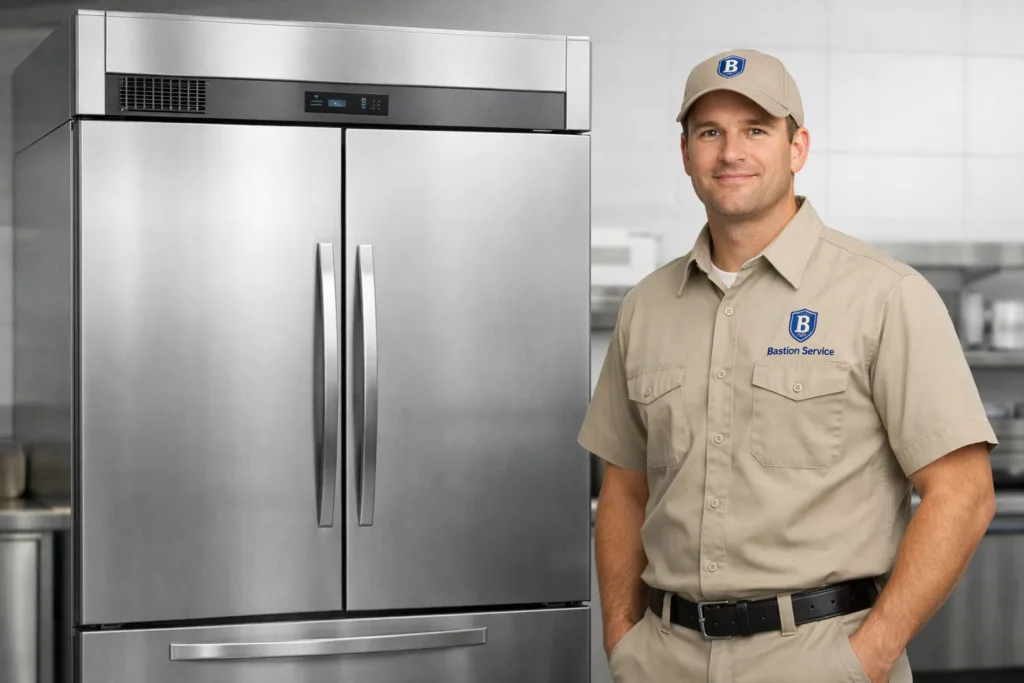




Warm sections, inconsistent cabinet temperature, pooled water, and heavy run times often look like separate problems, but they frequently trace back to a small group of causes. In a commercial refrigerator, airflow restrictions, door seal wear, fan motor failure, sensor drift, defrost faults, and control problems can all produce similar symptoms. That is why the most useful first step is narrowing down what the unit is doing, when it happens, and whether the issue is isolated to one compartment or affecting the entire cabinet.
Related commercial equipment paths in Torrance include Beverage-Air Refrigerator Repair in Torrance.
What Common Refrigerator Symptoms Usually Mean
A refrigerator that runs warm during busy hours may be dealing with more than simple overuse. Blocked condenser coils, reduced evaporator airflow, failing fans, and inaccurate temperature sensing can all prevent normal recovery after frequent door openings. If temperatures climb slowly and the compressor seems to run longer than usual, the problem may be tied to heat exchange, controls, or a developing sealed-system issue rather than a single obvious part failure.
Temperature swings are also important to interpret correctly. A cabinet that cools normally overnight but struggles during operating hours may point to loading practices, door traffic, or airflow obstruction inside the unit. A cabinet that never reaches set temperature at any time is more likely to have a mechanical, electrical, or refrigerant-side fault that needs prompt attention.
Frost, Condensation, and Airflow Clues
Frost buildup inside a commercial refrigerator does not always mean the same thing. It can indicate a defrost problem, but it may also result from poor door sealing, moisture intrusion, or restricted air circulation. When frost is concentrated around the evaporator area or cooling issues are centered in the freezer compartment, Commercial Freezer Repair in Torrance may be more relevant for businesses trying to isolate whether the trouble is in a separate frozen-storage section rather than the refrigerator cabinet itself.
Condensation on shelves, around door frames, or under the unit can point to gasket failure, clogged drains, or temperature imbalance within the cabinet. If moisture is being created faster than the system can manage it, that extra humidity can affect product condition, increase frost formation, and force the unit to run harder just to stay near target range.
Leaks, Noise, and Constant Running
Water on the floor is often blamed on the refrigerator as a whole, but the source can be surprisingly specific. Drain restrictions, overflow from defrost cycles, cracked water-related components, and poor leveling can all create leaks. Locating when the water appears matters: a leak after heavy cycling may suggest condensation or defrost drainage, while a steady leak may indicate a line, fitting, or valve issue.
Noise changes are another useful diagnostic clue. Buzzing, rattling, fan scraping, and louder-than-normal compressor operation each point in different directions. A noisy unit that is also struggling to hold temperature should be checked sooner rather than later, because mechanical strain can increase wear and turn a manageable repair into a more disruptive outage.
If the refrigerator seems to run constantly without reaching set temperature, continued operation can make the situation worse. Excessive run time increases stress on motors and cooling components, raises energy use, and can put stored product at risk if the cabinet drifts outside safe holding conditions.
When the Problem May Involve the Ice System
Some refrigeration complaints in commercial kitchens and foodservice spaces actually overlap with ice production equipment. If the main concern involves slow ice output, water supply irregularities, fill problems, or leaks centered around the ice-making side of the operation, Commercial Ice Machine Repair in Torrance may be the better service path than refrigerator repair alone.
This distinction matters because water inlet problems, drainage issues, and temperature-related complaints can appear connected even when they originate in different equipment. Separating refrigerator symptoms from ice-system symptoms helps avoid wasted downtime and directs service where it will have the most impact.
When Continued Use Becomes Risky
Some units can remain in limited service while diagnosis is underway, but others should be addressed immediately. A refrigerator that trips breakers, overheats, fails to restart reliably, or cannot maintain safe storage temperatures should not be treated as a minor inconvenience. In a commercial setting, delay can mean product loss, workflow disruption, and added damage to components that are already under strain.
Businesses in Torrance often face a practical decision: keep the unit in service temporarily, move product, or take the equipment offline. That decision should be based on actual temperature performance, not just whether the refrigerator is still making noise or appearing to cool. A cabinet that is technically running but not holding temperature is still a serious operational problem.
How to Decide Between Repair and Replacement
Repair is often the right choice when the cabinet structure is sound and the problem is limited to controls, fan motors, door hardware, drainage, or other serviceable parts. These issues can interrupt operations, but they do not always justify replacement if the unit is otherwise in good condition and the repair restores stable performance.
Replacement becomes more worth considering when breakdowns are frequent, temperature performance remains unstable after prior service, or major cooling-system concerns are involved. Age, parts availability, energy use, and the cost of downtime should all factor into the decision. For many Torrance businesses, the real question is not just repair cost, but whether the unit can return to dependable daily use without repeated interruptions.
Signs It Is Time to Schedule Service
- The cabinet is running warm or recovering too slowly after doors open.
- Temperatures fluctuate without a clear loading or traffic explanation.
- Frost appears where it should not, especially near vents, panels, or door openings.
- Water is collecting inside the cabinet or on the floor nearby.
- The refrigerator is louder than normal, short cycling, or running almost nonstop.
- Controls, sensors, or displayed temperatures do not match actual cabinet conditions.
What a Useful Service Visit Should Clarify
A productive diagnosis should determine whether the fault is primarily airflow-related, electrical, mechanical, control-based, or connected to the cooling system itself. It should also clarify whether the problem has already affected product safety, whether temporary operation is realistic, and what repair path makes the most operational sense.
For commercial refrigerator repair in Torrance, that kind of assessment helps businesses make faster decisions about uptime, product protection, and next steps without relying on guesswork. When symptoms are interpreted correctly from the start, repair planning becomes more straightforward and disruptions are easier to manage.


