
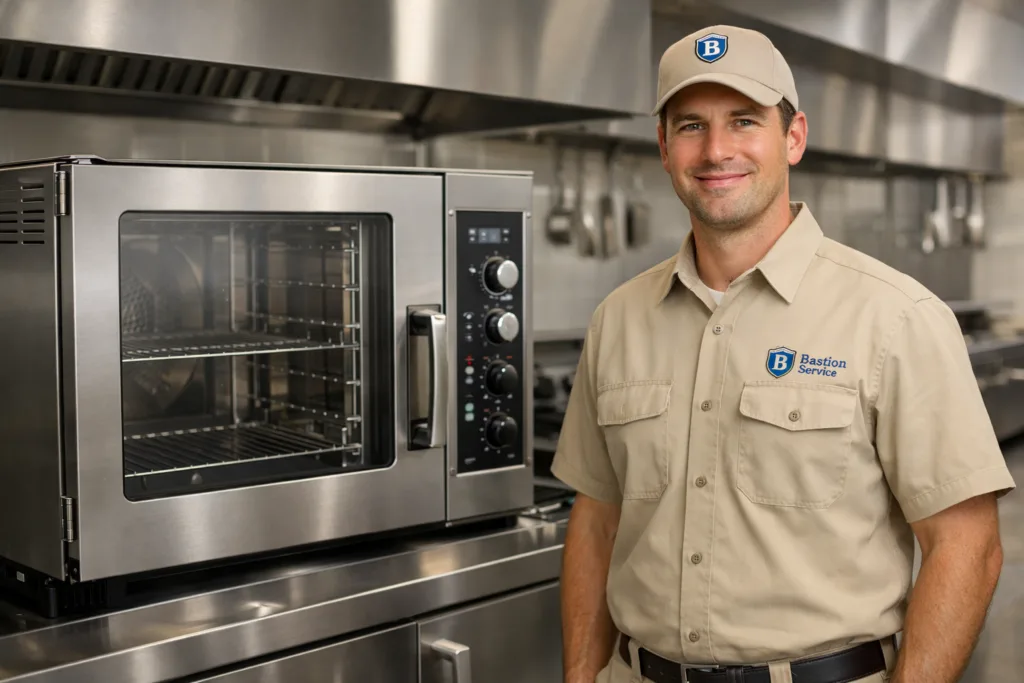




Temperature drift, slow preheat, and mid-cycle shutdowns usually point to more than one possible fault, which is why symptom-based guessing often leads to extra downtime. On a commercial oven, the same complaint can come from a failed heating element, weak igniter, inaccurate sensor, sticking relay, airflow problem, damaged wiring, or a control issue that only appears once the unit is under load.
Related commercial equipment paths in Venice include Blodgett Oven Repair in Venice and Southbend Oven Repair in Venice.
Common oven problems and what they often mean
An oven that does not reach set temperature may have trouble generating heat or trouble regulating it. Electric units may be dealing with element failure, contactor wear, or voltage problems, while gas models may show weak ignition, delayed burner lighting, or unstable flame performance. In either case, the result is the same for the kitchen: longer cook times, inconsistent output, and added pressure on staff to compensate manually.
Uneven baking or roasting often points to airflow and heat-distribution problems rather than a simple thermostat complaint. Convection fan failure, restricted vents, worn door gaskets, and hot or cold zones inside the cavity can all affect product consistency. When staff start rotating pans constantly or shifting rack positions just to get usable results, the oven is no longer performing to a commercial standard.
Intermittent shutdowns, tripped protection, or fault-code behavior usually deserve prompt attention. Those symptoms can reflect overheating, failing safety limits, electrical supply issues, board faults, or wiring damage caused by repeated heat exposure. If the unit restarts after cooling down and then fails again later, that pattern often suggests a component breaking down during operation rather than a one-time disruption.
Signs the problem is getting worse
Some ovens continue running while performance steadily declines. A kitchen may notice slower recovery after the door opens, more pronounced temperature swings during busy periods, or batches that come out differently from one rack to the next. These are early warnings that the unit is losing control of heat, and continued use can increase wear on igniters, relays, fans, and control components.
Noises and smells also matter. A fan that suddenly sounds rough, a control panel that behaves erratically, or a burnt electrical odor near the oven should not be treated as minor nuisances. Those symptoms can indicate mechanical wear or heat-damaged electrical parts that may cause a larger failure if the equipment stays in service.
When an oven issue starts affecting kitchen workflow
Commercial ovens rarely fail at a convenient time. What begins as a temperature complaint can quickly affect prep schedules, ticket times, holding plans, and product quality. In a business setting, the real cost is often not just the repair itself but the disruption created when cooks can no longer trust the equipment to deliver the same result from one cycle to the next.
It makes sense to schedule service when the oven will not preheat normally, cannot hold a stable setpoint, cooks unevenly, shuts off without warning, or requires repeated resets to stay operational. Businesses in Venice also benefit from early service when the unit is technically still heating but output quality has become unpredictable, because that stage often allows the underlying fault to be addressed before it becomes a full outage.
If the cooking line is also showing oil-heating or recovery problems on separate equipment, Commercial Fryer Repair in Venice may be the better service path for that part of the issue while the oven is diagnosed on its own symptoms.
Symptoms by system
Heating and ignition
On gas ovens, no-heat and weak-heat complaints may involve igniters, gas valves, flame sensing, burner crossover, or ignition timing. Delayed ignition should be checked promptly because it can worsen reliability and create rough startup behavior during service hours. On electric ovens, failed elements, loose connections, and switching problems can produce partial heat, slow preheat, or incomplete temperature recovery.
Temperature control
If the display shows one temperature but actual cooking results suggest another, the issue may involve the sensor, thermostat calibration, electronic control response, or relay operation. Temperature problems are especially costly in commercial settings because they do not always stop production immediately; instead, they quietly reduce consistency until waste, remakes, or customer-facing quality problems become obvious.
Airflow and chamber performance
Convection systems depend on fans, motors, and unobstructed airflow to move heat evenly through the cavity. When those parts begin to fail, operators may see browning differences from side to side, longer bake times, or products finishing unevenly across the same load. Door seal wear can make the problem worse by letting heat escape and forcing the oven to work harder to recover.
Repair or replacement?
Repair is often the sensible option when the oven is structurally sound and the failure is limited to serviceable parts such as igniters, sensors, elements, relays, switches, fan components, or controls. Replacement becomes more likely when there is extensive chamber deterioration, repeated wiring damage, major control failure across multiple systems, or a long pattern of breakdowns that keeps interrupting production.
The right decision depends on age, condition, part availability, usage level, and how critical the oven is to daily output. A unit that supports core menu items may justify repair quickly if the expected result is stable, repeatable performance. A unit with recurring faults across several systems may be costing more in lost time and inconsistency than it is worth to keep in rotation.
What a service visit should clarify
A productive commercial oven service call should identify the actual failed component or system, verify whether the unit can heat safely and consistently, and explain whether the recommended repair is likely to restore dependable operation. That includes confirming whether the complaint is isolated or part of a larger wear pattern involving controls, airflow, ignition, or electrical supply.
For businesses in Venice, the goal is not just to restore heat for a single shift. It is to understand whether the oven can return to reliable daily use without ongoing workarounds, excess monitoring, or repeated interruptions that affect kitchen pace and product quality.


